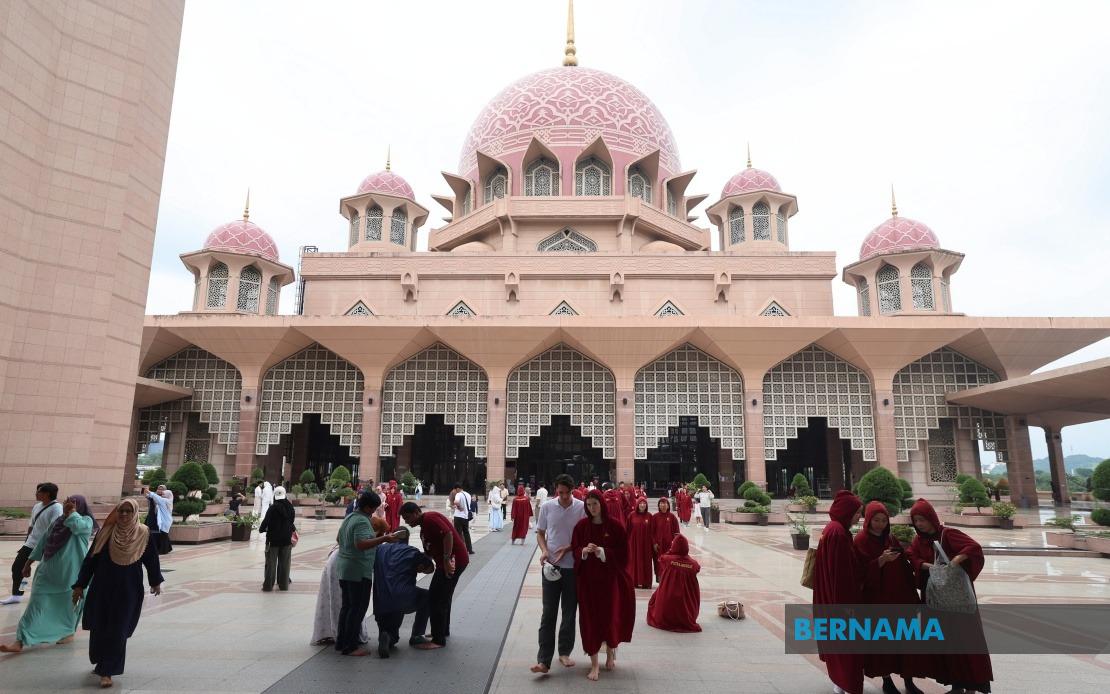
The National Maal Hijrah celebration marking the Islamic New Year 1448H/2026 will draw approximately 5,000 participants from Malaysia and abroad to Putrajaya's Putra Mosque. This significant religious and cultural observance brings together government officials, international dignitaries, and the Malaysian Muslim community to commemorate an important milestone in the Islamic calendar and reflect on the spiritual significance of Prophet Muhammad's migration to Medina.
Sultan Nazrin Shah of Perak will preside over the occasion, lending royal patronage to the event. His presence underscores the continued support from Malaysia's institutional leadership for meaningful religious observances that foster national cohesion and Islamic consciousness. Joining the Sultan will be a distinguished gathering that includes Deputy Prime Ministers Datuk Seri Ahmad Zahid Hamidi and Datuk Seri Fadillah Yusof, alongside various Cabinet ministers, foreign envoys, departmental heads, and senior civil servants, reflecting the wide representation across Malaysia's government apparatus.
The centrepiece of the morning gathering involves the Sultan's address to the assembled guests, setting the tone for deeper reflection on Maal Hijrah's spiritual dimensions. Following the royal remarks, the event will feature the presentation of the National and International Tokoh Maal Hijrah Awards, recognising outstanding individuals whose contributions extend beyond their professional achievements to encompass exemplary character and significant advancement of Islamic knowledge and practice.
These prestigious awards operate within a rigorous framework designed to identify and honour those who have distinguished themselves through deep expertise in their respective domains, demonstrated moral integrity, and meaningful work that elevates Islam's role in both Malaysian society and the wider international community. The selection process reflects Malaysia's commitment to celebrating Islamic leadership that bridges local and global contexts, particularly relevant as the nation positions itself as a moderate Islamic voice on the world stage.
The Department of Islamic Development Malaysia (JAKIM) selected the 1448H theme to inspire the Muslim population to embody the forward-thinking ethos of Prophet Muhammad's Hijrah, an event that catalysed the development of Islamic civilisation and continues to offer lessons about transformation, resilience, and community building. By encouraging contemporary reflection on this historical moment, organisers seek to connect spiritual heritage with present-day challenges and aspirations facing Malaysian Muslims.
A novel programmatic addition this year has been the Tausiyyah @ Maal Hijrah initiative, held at Putra Mosque on the preceding day, which emphasises Quranic contemplation and interpretation. Rather than passive listening, participants engaged with distinguished qari in exploring the deeper meanings, ethical wisdom, and practical guidance embedded within selected Quranic passages, then applied these lessons to their everyday circumstances. This pedagogical approach acknowledges that religious observance gains meaning when believers actively connect scriptural teachings to their lived experience.
The Tausiyyah programme demonstrates evolving approaches within Malaysia's Islamic institutional framework to deepen public engagement with religious texts and principles. By facilitating direct interaction between scholars and participants, and emphasising reflection over rote learning, the initiative reflects contemporary methods of religious education that resonate with diverse audiences, from university students to working professionals and retirees seeking spiritual enrichment.
Looking ahead, a complementary lecture series will convene at the Putrajaya Islamic Complex Auditorium tomorrow beginning at 9 am, designated as the National and International Tokoh Maal Hijrah Lecture 1448H/2026. This follow-up engagement provides award recipients with a platform to articulate their experiences, methodologies, and insights to a broader audience, effectively transforming the recognition ceremony into an educational forum where leading Islamic thinkers and practitioners share knowledge that can influence policy, institutional practices, and community initiatives across multiple sectors.
The multi-day structure of this Maal Hijrah observance illustrates how Malaysia's Islamic affairs establishment has expanded the scope of national religious celebrations beyond ceremonial formality to include participatory learning and knowledge dissemination. For Malaysian readers, this emphasis on reflection, scholarly dialogue, and community engagement offers a model of how religious tradition can be honoured while fostering intellectual growth and practical application of Islamic principles in contemporary society.
For the broader Southeast Asian context, Malaysia's hosting of international guests at this celebration signals the region's continued interest in Islamic thought and leadership. The participation of foreign representatives and international award recipients positions Malaysia as a venue for cross-cultural Islamic dialogue and cooperation, reinforcing its role as a bridge between Muslim-majority and multi-faith societies navigating shared challenges of governance, social cohesion, and ethical development in an interconnected world.