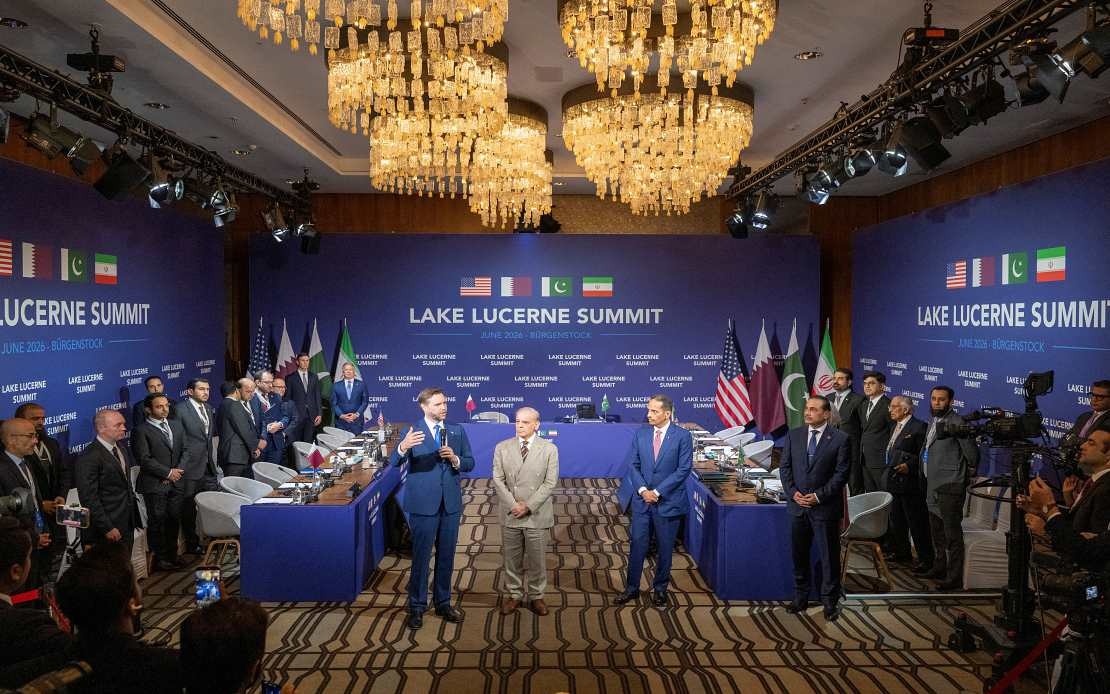
Mediation efforts between Washington and Tehran have entered a new phase following the opening session of what both Qatar and Pakistan are describing as a promising round of negotiations at the Lake Lucerne Summit in Switzerland. The two regional powers, serving as intermediaries in what has become an increasingly complex diplomatic process, jointly announced on Monday that the first day of talks had unfolded in a positive atmosphere marked by tangible progress on multiple fronts.
The establishment of a formal mechanism to sustain technical discussions represents one of the clearest indicators that both sides are prepared to move beyond preliminary positioning toward substantive engagement. This institutional framework signals that negotiators believe sufficient common ground exists to warrant the creation of dedicated structures for detailed negotiations, a step that typically precedes breakthrough agreements in sensitive international disputes.
Beyond procedural mechanisms, the parties have created a high-level oversight committee tasked with shepherding the political dimensions of the broader mediation initiative. This tiered approach reflects international best practice in complex multilateral diplomacy, where senior officials maintain strategic direction while technical teams handle granular details. The committee will receive regular briefings from lead negotiators and exercise supervisory authority over specialised working groups, ensuring coherence across multiple negotiation streams.
Three primary working groups will focus specifically on issues that have long defined the US-Iran standoff: the Iranian nuclear programme, sanctions architecture, and mechanisms for ensuring compliance with any eventual agreement. The nuclear question has remained the fulcrum of contention for years, with the United States maintaining that Iran's atomic ambitions pose regional security risks while Tehran insists on its right to peaceful nuclear development. Sanctions relief, conversely, constitutes perhaps the most immediate incentive for Iranian participation, as punitive measures have severely constrained the country's oil exports and foreign commerce.
The negotiators have established an ambitious 60-day timeline for concluding a final agreement, a relatively compressed schedule that underscores both the sense of urgency and the belief among intermediaries that momentum has genuinely shifted toward resolution. This deadline carries symbolic weight as well; a successful conclusion within this window would vindicate the mediation efforts of Qatar and Pakistan and potentially reshape regional geopolitical alignments in the Middle East and beyond.
The memorandum of understanding signed in preceding negotiations has apparently provided the baseline framework upon which these talks are building. Notably, the parties have established a dedicated communications channel designed to mitigate the risks of accidental escalation, a reflection of serious concerns about the Strait of Hormuz and freedom of navigation. This waterway, through which approximately one-third of globally traded oil passes, has repeatedly surfaced as a flashpoint in US-Iran tensions, with each side periodically threatening to disrupt commercial shipping in the event of wider conflict.
For Southeast Asian nations including Malaysia, these developments carry material significance beyond academic interest in Middle Eastern affairs. Any lasting resolution to US-Iran hostilities would stabilise energy markets and reduce the risk of supply shocks that ripple through regional economies heavily dependent on oil imports. Malaysia, as a maritime nation with substantial interests in global shipping lanes, has a vested interest in the normalisation of passage through the Strait of Hormuz without the prospect of military interference or terrorism.
Furthermore, the successful mediation by Qatar and Pakistan demonstrates the continuing centrality of regional powers in resolving major international disputes, a model that resonates with ASEAN's own principle of centrality in managing regional affairs. The demonstration that sustained diplomatic engagement can achieve progress on seemingly intractable issues offers a template of sorts for other pressing regional challenges, from South China Sea disputes to bilateral tensions elsewhere in Asia.
The joint statement emphasising a "positive and constructive atmosphere" during opening sessions provides essential psychological and momentum scaffolding for negotiations destined to confront fundamental disagreements. International relations scholars recognise that the tenor and tone of early sessions often predicts ultimate outcomes; acrimony and recrimination early on frequently portend failure, while collegiality and mutual respect create space for compromise. The evident commitment of both sides to persisting with structured dialogue, rather than reverting to rhetorical confrontation or military posturing, marks a departure from patterns that characterised earlier periods.
The coming weeks will test whether this encouraging opening can translate into substantive accords on the most contentious issues. The devil, as diplomatic practitioners understand well, invariably resides in implementation details. Agreement on broad principles represents only the first stage; bridging the technical and verification gaps that separate preliminary accord from functioning treaties demands painstaking work and mutual goodwill.