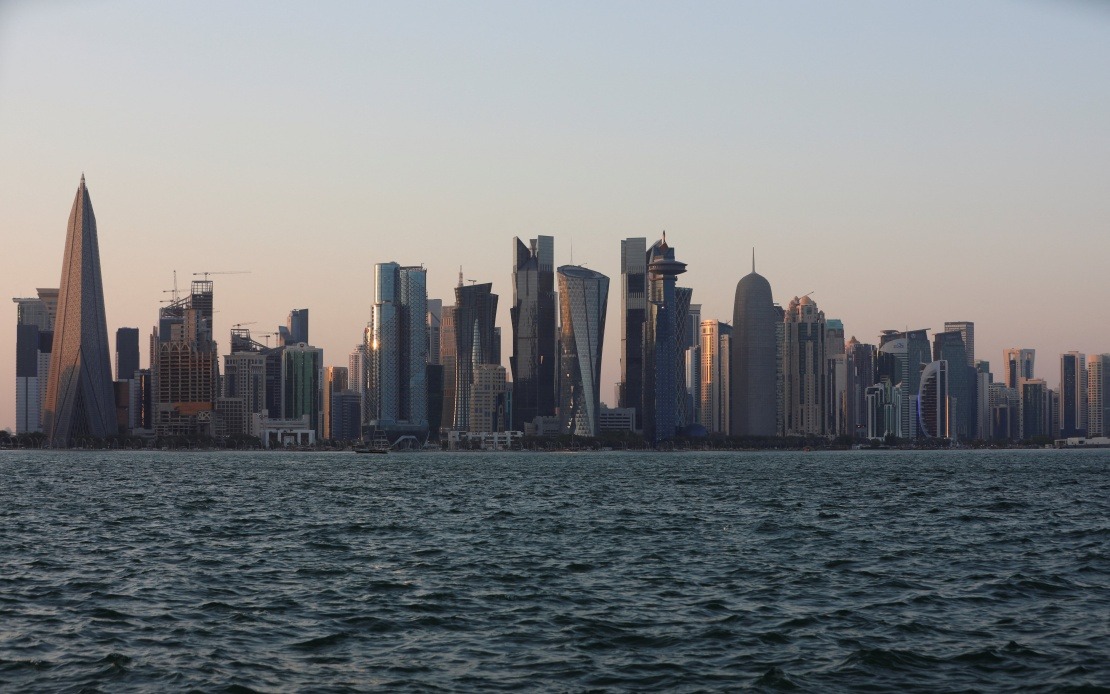
Qatar has issued a categorical denial of Israeli media reports claiming the Gulf state agreed to participate in military operations targeting Iran, underscoring its commitment to maintaining diplomatic neutrality in a region already scarred by escalating tensions. The International Media Office in Doha released a statement on Thursday dismissing the allegations as deliberate attempts to manipulate public perception and draw the nation into a deepening conflict that threatens regional stability.
According to Qatar's official response, those circulating such reports are motivated by a desire to undermine Doha's established role as a trusted mediator in disputes across the Middle East. The statement emphasised that any such mischaracterisation threatens to extinguish the fragile diplomatic channels that Qatar has painstakingly built with regional and international actors. By suggesting Qatari involvement in military operations, the reports appear designed to compromise the credibility that Doha has cultivated through years of careful shuttle diplomacy.
The Qatari government reiterated its longstanding position that it has neither participated in nor will participate in military operations directed at any neighbouring state. This commitment extends across all potential scenarios and reflects a broader strategic philosophy that privileges negotiation and dialogue over military confrontation. The consistency of this messaging—repeated since the inception of the US-Iran conflict—demonstrates that Qatar views military non-alignment as fundamental to its ability to operate as an honest broker.
Qatar's statement warned that allowing such misleading allegations to gain traction could fundamentally damage its diplomatic efforts aimed at resolving the underlying conflict. The International Media Office made clear that Doha intends to continue leveraging its good offices in coordination with both regional and international partners to achieve a comprehensive agreement that addresses the legitimate concerns of all sides. This approach reflects Qatar's understanding that sustainable peace requires acknowledgment of each party's core interests and security requirements.
The context for these denials lies in the volatile recent history of US-Iran confrontation in the Gulf region. Since February, when the United States and Israel launched coordinated military operations against Iran, the strategic landscape has been characterised by tit-for-tat escalations. Iran responded to these strikes with its own barrage of missiles and drone attacks targeting facilities in Gulf nations that host American military assets, fundamentally altering the calculus of regional security. This cycle of action and retaliation has created an environment where miscalculation becomes increasingly dangerous.
Recent diplomatic efforts have offered some glimmer of hope for de-escalation. Iran and the United States reached a Pakistan-mediated memorandum of understanding last month that was explicitly designed to terminate their conflict and establish a framework for lasting peace. The agreement represented a significant breakthrough, suggesting that even amid deep mistrust, both Washington and Tehran recognised the catastrophic risks posed by unconstrained military escalation. However, this nascent progress has been repeatedly tested by fresh crises.
Escalations along the Strait of Hormuz have become particularly concerning in recent days, with both Washington and Tehran engaging in provocative manoeuvres and direct attacks on shipping and military assets. The Strait represents one of the world's most critical chokepoints for global energy trade, meaning that any serious disruption could send shockwaves through the international economy. For Malaysia and other Southeast Asian nations dependent on oil and gas passing through these waters, such tensions carry direct economic implications.
Qatar's role as a mediator between the United States and Iran has been unique among Gulf states, partly reflecting its willingness to maintain diplomatic relationships across ideological and geopolitical divides. Unlike some neighbours, Doha has resisted pressure to align exclusively with Washington and has instead positioned itself as a bridge between conflicting parties. This positioning, while sometimes controversial domestically, has enabled Qatar to host negotiations and maintain channels of communication that might otherwise be completely severed.
The allegations that Qatar had agreed to participate in military operations against Iran appear designed to shatter this carefully maintained neutrality. By implicating Doha in anti-Iran operations, such reports would effectively remove one of the few remaining mediators with credibility across the regional divide. This suggests a deeper struggle over the trajectory of Middle Eastern politics—whether the region moves toward further militarisation and polarisation or whether diplomatic solutions can be pursued through patient negotiation.
For Southeast Asian observers, Qatar's predicament illustrates broader challenges facing smaller states in regional systems dominated by larger military powers. Malaysia and other ASEAN nations have experience with similar pressures to take sides in great power competitions. Qatar's experience suggests that maintaining principled neutrality while investing in mediation carries significant risks but offers potential benefits for international stability. The Qatari approach, though tested, demonstrates that non-alignment remains a viable strategic option even in highly polarised environments.

