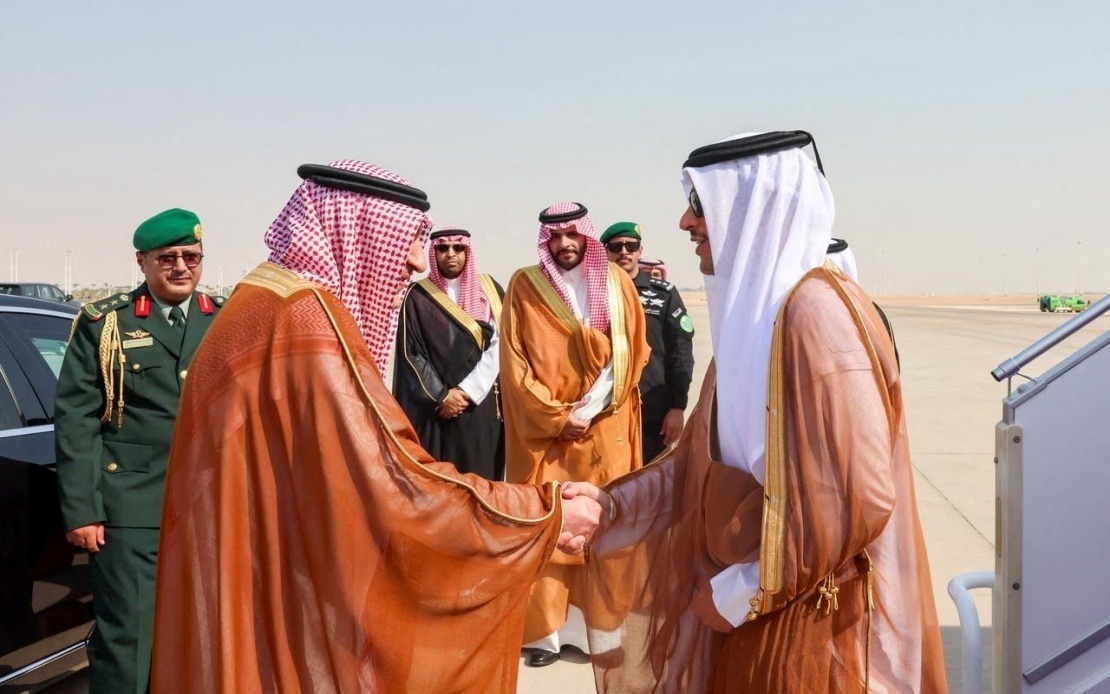
Qatar's Prime Minister Sheikh Mohammed bin Abdulrahman bin Jassim Al Thani touched down in Riyadh on Wednesday for a state visit centred on advancing diplomatic solutions to the region's mounting security challenges. The visit underscores the two Gulf nations' commitment to working through channels of negotiation rather than confrontation, a significant gesture given the complex geopolitical landscape that has defined recent years in the Middle East.
During his time in the Saudi capital, Sheikh Mohammed held substantive discussions with Saudi Foreign Minister Faisal bin Farhan, focusing on the bilateral relationship between Doha and Riyadh as well as pressing regional developments. The Qatari Foreign Ministry characterised the talks as covering "diplomatic efforts to de-escalate tensions and enhance security and stability," reflecting a shared concern about the direction of Gulf politics. This dialogue represents a continuation of improving ties between the two capitals, which had experienced strain in previous years over foreign policy differences.
Both delegations reaffirmed their commitment to resolving interstate disputes exclusively through diplomatic mechanisms, a statement that carries particular weight given the region's tendency toward military escalation. The emphasis on dialogue-first approaches reflects a maturing recognition among Gulf leadership that security cannot be achieved through military means alone, and that sustained channels of communication are essential for maintaining stability. This principle extends beyond bilateral relations to encompass the broader architecture of Gulf security.
A central theme of the discussions involved coordinating regional and international efforts to prioritise meaningful dialogue on outstanding issues. The two nations recognised that effective crisis management requires not only their own commitment but also alignment with other stakeholders, both within the Gulf Cooperation Council and beyond. This coordination reflects the interdependence of Gulf states and their shared vulnerability to external shocks and regional conflicts that inevitably affect their collective interests.
Maritime security emerged as a particularly urgent agenda item for both sides. Sheikh Mohammed and Foreign Minister Faisal bin Farhan stressed the importance of safeguarding shipping lanes in the Arabian Gulf and Red Sea, crucial waterways through which billions of dollars in global trade flows annually. The emphasis on protecting maritime navigation speaks to tangible economic concerns affecting Malaysia and other Southeast Asian nations that depend heavily on these sea routes. Disruptions to these lanes directly impact export-oriented economies across the region, making Gulf stability an issue of genuine concern for trading partners thousands of kilometres away.
The arrival procedure itself carried diplomatic significance. Sheikh Mohammed was formally welcomed by Saudi Deputy Foreign Minister Waleed bin Abdulkarim Al-Khereiji, a gesture that conveyed the Saudi government's regard for the visit and its importance to the bilateral relationship. Such ceremonial elements, though sometimes overlooked in news reports, carry weight in diplomatic culture and signal the priority each side assigns to the engagement.
The timing of this visit occurs against the backdrop of intensifying regional tensions involving Iran and the United States, with Saudi Arabia positioned as a longstanding partner of Washington. This context frames Qatar's diplomatic initiative not as an isolated bilateral engagement but as part of a broader effort to manage great power competition that threatens Gulf security. Qatar, despite its own complex relationship with some Western powers, recognises that de-escalation serves its national interests far better than further polarisation.
For Malaysia and other Southeast Asian nations maintaining balanced relationships across the Middle East, the success or failure of such diplomatic initiatives carries indirect but measurable implications. Regional instability in the Gulf directly affects shipping costs, energy prices, and the overall investment climate affecting Southeast Asia's export-dependent economies. Each successful diplomatic engagement reduces the risk of sudden crises that could disrupt supply chains and financial markets throughout the region.
The absence of specific details regarding the visit's duration in official statements suggests a working visit focused on substantive engagement rather than ceremonial pageantry. This pragmatic approach reflects the urgency with which both capitals view the need for constructive dialogue. The Qatari Prime Minister's dual role as foreign minister adds significant weight to his participation in these discussions, indicating that the highest levels of foreign policy decision-making are directly involved.
Looking forward, this visit may represent the opening of a sustained diplomatic channel addressing some of the region's most pressing challenges. The explicit focus on de-escalation and enhanced security represents a hopeful signal at a time when Middle Eastern politics often seem dominated by confrontational rhetoric and military posturing. For regional and international observers, including Southeast Asian governments carefully monitoring Gulf developments, such initiatives offer a basis for cautious optimism that dialogue remains viable even amid profound strategic differences.

