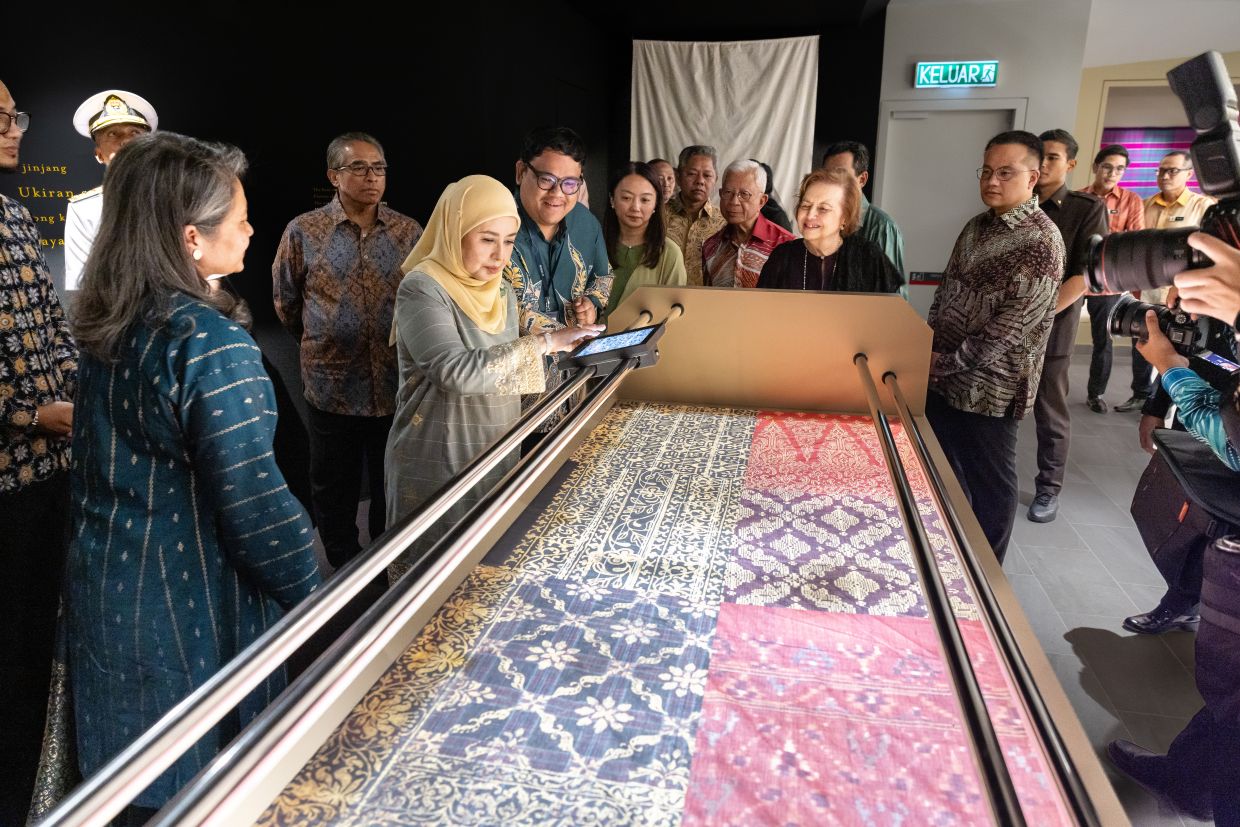
Her Majesty Raja Zarith Sofiah, Queen of Malaysia, officially opened the Merdeka Textile Museum yesterday in the grounds of Menara Merdeka Maybank in Kuala Lumpur, marking a significant moment for the nation's cultural preservation efforts. The ceremonial launch underscores a growing recognition among Malaysia's leadership that textile arts and traditional craftsmanship represent vital components of national identity that warrant formal institutional support and public engagement.
The institution, developed by PNB Merdeka Ventures Sdn Bhd—a subsidiary wholly owned by investment arm Permodalan Nasional Berhad—aims to function as both a repository and a living educational space. Rather than treating textiles as static artifacts confined behind glass, the museum's curatorial approach embraces contemporary storytelling techniques and immersive cultural experiences designed to make the subject matter relevant to modern audiences. This methodology reflects evolving international museum practice that recognises historical collections achieve greater impact when presented through interactive frameworks that encourage visitor participation and personal reflection.
In remarks conveyed through Sultan Ibrahim Sultan Iskandar's social media, Her Majesty articulated a philosophy of cultural stewardship centred on intergenerational responsibility. She emphasised that every nation possesses a distinctive heritage requiring active appreciation, deliberate preservation, and conscious transmission to younger cohorts. Her Majesty's observations position cultural continuity not as nostalgic backward-looking but as an essential process for maintaining societal identity and cohesion in an era of rapid globalisation. This framing carries particular relevance for Malaysia, where plural communities maintain distinct textile traditions reflecting centuries of regional exchange and cultural synthesis.
The Queen specifically highlighted the museum's potential significance for Malaysian women, expressing hope that it might inspire contemporary and future generations to recognise textile arts as a domain worthy of serious engagement and study. This gendered perspective acknowledges historical reality: across Southeast Asia, women have traditionally served as primary custodians of weaving knowledge, fabric production, and costume traditions, though these contributions often remain undervalued in mainstream historical narratives. By positioning textiles centrally within national heritage discourse, the museum creates space for women's cultural labour and creativity to receive institutional validation.
The museum's foundational collection derives from the personal accumulation of the late Sharifah Azah Syed Mohammed Alsagoff, known as Azah Aziz, widow of the late Prof Diraja Ungku Abdul Aziz Abdul Hamid and mother of former Bank Negara Malaysia governor Tan Sri Dr Ungku Zeti Akhtar Aziz. The Azah Aziz family's donation of 240 individual garments and 69 traditional jewellery pieces represents a substantial contribution to Malaysia's public cultural holdings. These items encompass significant categories of Malay dress heritage including songket sarong—the heavily brocaded wraparound garment requiring extraordinary technical skill to produce—alongside Limar Baju Kurung and Tekat Emas pieces, examples of embroidered formal wear that remain central to Malaysian formal and ceremonial dress codes.
Beyond its collection of material objects, the museum draws conceptual and scholarly grounding from Azah Aziz's own research contributions to textile studies. This scholarly foundation distinguishes the institution from museums that treat artifacts merely as curiosities, instead positioning textiles within frameworks of academic inquiry and documented historical knowledge. The curatorial approach thus bridges popular engagement with scholarly rigour, enabling visitors to encounter objects within interpretive contexts informed by serious research.
The physical infrastructure supporting the museum's mission spans eight distinct galleries distributed throughout the Menara Merdeka Maybank compound. Complementing the exhibition spaces, a dedicated study centre provides researchers and specialists with practical facilities essential to textile scholarship. The conservation laboratory addresses the practical challenge of preserving delicate historic fabrics exposed to Malaysia's humid equatorial climate—a technical necessity often invisible to casual visitors but fundamental to an institution's long-term viability. A fabric library and textile knowledge centre extend the museum's utility beyond exhibition-focused activities, positioning it as a working resource for designers, academics, and cultural practitioners seeking to understand and engage with Malaysia's textile traditions.
The event's attendees reflected the museum's positioning within Malaysia's institutional and political landscape. Minister in the Prime Minister's Department (Federal Territories) Hannah Yeoh's presence represented the federal government's cultural portfolio. Tan Sri Shamsul Azri Abu Bakar, the Chief Secretary to the Government, symbolised the civil service's commitment to heritage preservation as a state function. Raja Tan Sri Arshad Raja Tun Uda, PNB group chairman, embodied the private sector's role in funding and developing cultural infrastructure. This multi-sectoral attendance pattern suggests the museum emerged through collaborative frameworks rather than isolated government initiative, potentially indicating sustainability prospects for long-term operations and programming.
For Malaysia more broadly, the Merdeka Textile Museum's establishment reflects broader regional patterns whereby Southeast Asian nations increasingly develop formal institutions dedicated to textile heritage. Thailand, Indonesia, and Vietnam have similarly invested in textile museums and research facilities, responding to both domestic recognition of cultural value and international tourism demands. Malaysia's entry into this landscape positions the nation alongside regional peers in asserting textile arts' significance within national narratives. Beyond domestic benefits, such institutions facilitate intra-regional scholarly exchange and cultural diplomacy, creating networks through which Southeast Asian countries engage in dialogue regarding shared textile traditions, historical trade patterns, and contemporary creative expression.
The museum's emphasis on women's heritage, its integration of scholarly research with public engagement, and its deployment of contemporary exhibition techniques together suggest an institution responsive to twenty-first-century heritage expectations. Rather than presenting Malaysian textile traditions as historical remnants requiring preservation in amber-like stasis, the Merdeka Textile Museum positions textiles as living cultural phenomena worthy of ongoing study, creative reinterpretation, and public investment. For Malaysian visitors, particularly younger generations navigating rapid social change, the institution offers structured opportunities to engage meaningfully with cultural foundations while recognising textiles' continued relevance to contemporary Malaysian identity and creative expression.

