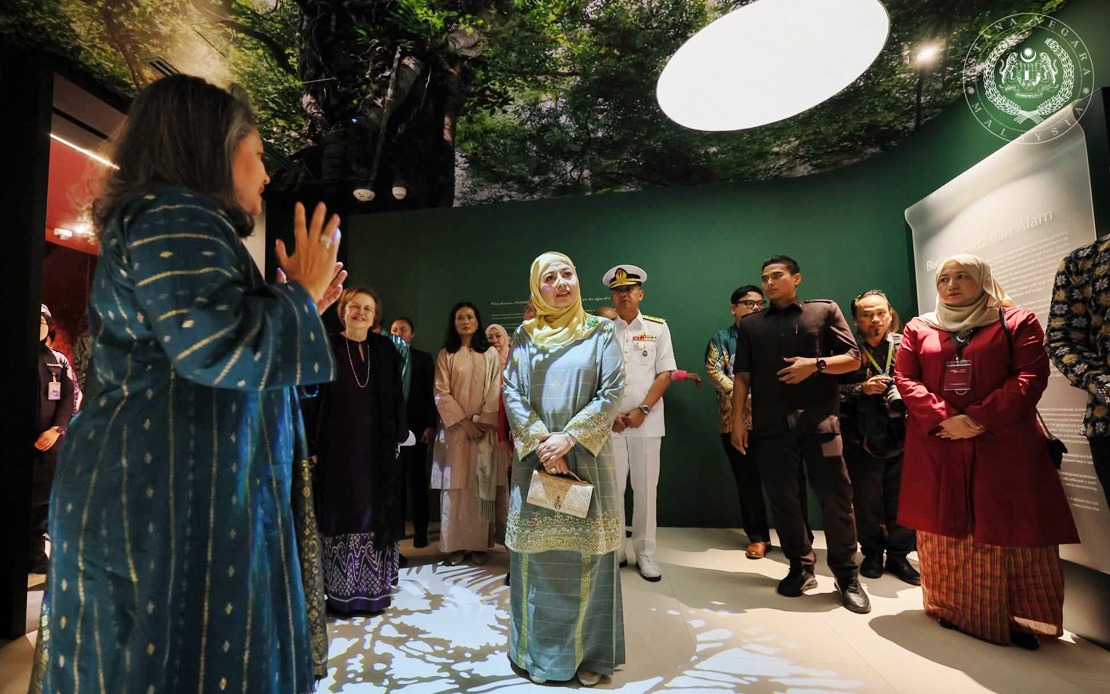
Her Majesty Raja Zarith Sofiah, Queen of Malaysia, formally opened the Merdeka Textile Museum on August 21 at the Menara Merdeka Maybank complex in Kuala Lumpur, marking a significant milestone in Malaysia's effort to safeguard its rich cultural legacy. The inauguration underscores the nation's commitment to documenting and celebrating the textile traditions that have long been integral to Malay identity and craftsmanship.
PNB Merdeka Ventures Sdn Bhd, a subsidiary entirely owned by Permodalan Nasional Berhad, spearheaded the museum's establishment with a clear mandate: to preserve the textile heritage of the Malay world by employing scholarly storytelling techniques and immersive cultural programming. This institutional approach distinguishes the museum from conventional heritage displays, positioning it instead as a dynamic space where visitors can engage with textile traditions through multiple sensory and intellectual entry points.
During the ceremony, the Queen articulated a vision that resonates across Southeast Asia's multicultural societies. She emphasised that every nation bears a responsibility to recognise, protect, and transmit its cultural inheritance to succeeding generations. By framing textile preservation as a matter of national stewardship, Her Majesty elevated the museum's work beyond academic curiosity to a pressing societal duty.
The Queen further contextualised this initiative within broader discussions of national identity. Cultural practices, she noted, fundamentally express the beliefs and principles that constitute a society's foundation. The Merdeka Textile Museum, in this interpretation, serves not merely as a repository of historical objects but as a mirror reflecting Malaysian values and social cohesion. This perspective aligns with regional conversations about cultural preservation amid rapid modernisation and globalisation.
Addressing young Malaysians specifically, the Queen articulated hopes that the institution would inspire future generations to treasure their nation's artistic inheritance. She voiced concern that without deliberate preservation and educational initiatives, cultural knowledge risks disappearing entirely—a phenomenon recognised across Southeast Asia as generations become increasingly disconnected from traditional practices. The museum's establishment therefore represents a preventative measure against cultural erosion.
The collection anchoring the museum originated from Sharifah Azah Syed Mohammed Alsagoff, known as Azah Aziz, a notable figure whose personal accumulation of textile treasures now forms the institution's foundational holdings. The late Azah Aziz, widow of Ungku Abdul Aziz Abdul Hamid and mother of former Bank Negara Malaysia governor Tan Sri Dr Ungku Zeti Akhtar Aziz, evidently possessed both resources and discernment in acquiring significant examples of traditional Malaysian dress and adornment. Her family's decision to donate these materials to public stewardship ensures their accessibility for scholarly examination and public education.
The Azah Aziz collection comprises 240 clothing items and 69 pieces of traditional jewellery, encompassing various forms of traditional Malaysian dress. Songket sarongs, representing the intricate gold-threaded weaving technique practised across the Malay Archipelago, feature prominently alongside Limar Baju Kurung examples and garments decorated with Tekat Emas embroidery. These artefacts document not only aesthetic traditions but also social practices, economic activities, and cultural values embedded in textile production and consumption.
The museum's architectural and programmatic scope reflects institutional ambitions extending considerably beyond simple artefact display. Eight interconnected galleries provide thematic frameworks for engaging with textiles, while supporting facilities—including a conservation laboratory, fabric reference library, and textile studies centre—position the institution as a research destination. The conservation laboratory is particularly significant for Southeast Asian contexts, where tropical climate challenges and resource constraints often compromise heritage preservation efforts. This facility enables systematic care of fragile materials and training of conservation specialists.
The fabric library function distinguishes this museum within the regional museum landscape. Rather than restricting access to archived textiles, the institution facilitates hands-on engagement with material samples, enabling designers, scholars, and cultural practitioners to study weaving techniques, dye compositions, and structural characteristics directly. This educational accessibility supports contemporary artisans seeking to revitalise traditional practices and helps fashion professionals grounding modern designs in authentic cultural references.
Government support for the institution appeared substantial, reflected in the attendance of prominent officials. Hannah Yeoh, Minister in the Prime Minister's Department overseeing Federal Territories, the Chief Secretary to the Government Tan Sri Shamsul Azri Abu Bakar, and PNB group chairman Raja Tan Sri Arshad Raja Tun Uda all participated in the inauguration. Their presence signalled endorsement at multiple governance levels, suggesting the museum aligns with broader federal and corporate strategies for cultural development and national branding.
For Malaysian readers, particularly those engaged with fashion, design, education, and cultural sectors, this museum represents both a scholarly resource and a venue for reconnecting with textile traditions. The institution arrives at a moment when global interest in traditional craftsmanship and sustainable fashion practices has intensified, positioning Malaysia's textile heritage as potentially valuable intellectual property. The Merdeka Textile Museum thus serves simultaneously as a guardian of cultural memory and as infrastructure supporting contemporary creative industries rooted in traditional knowledge.

