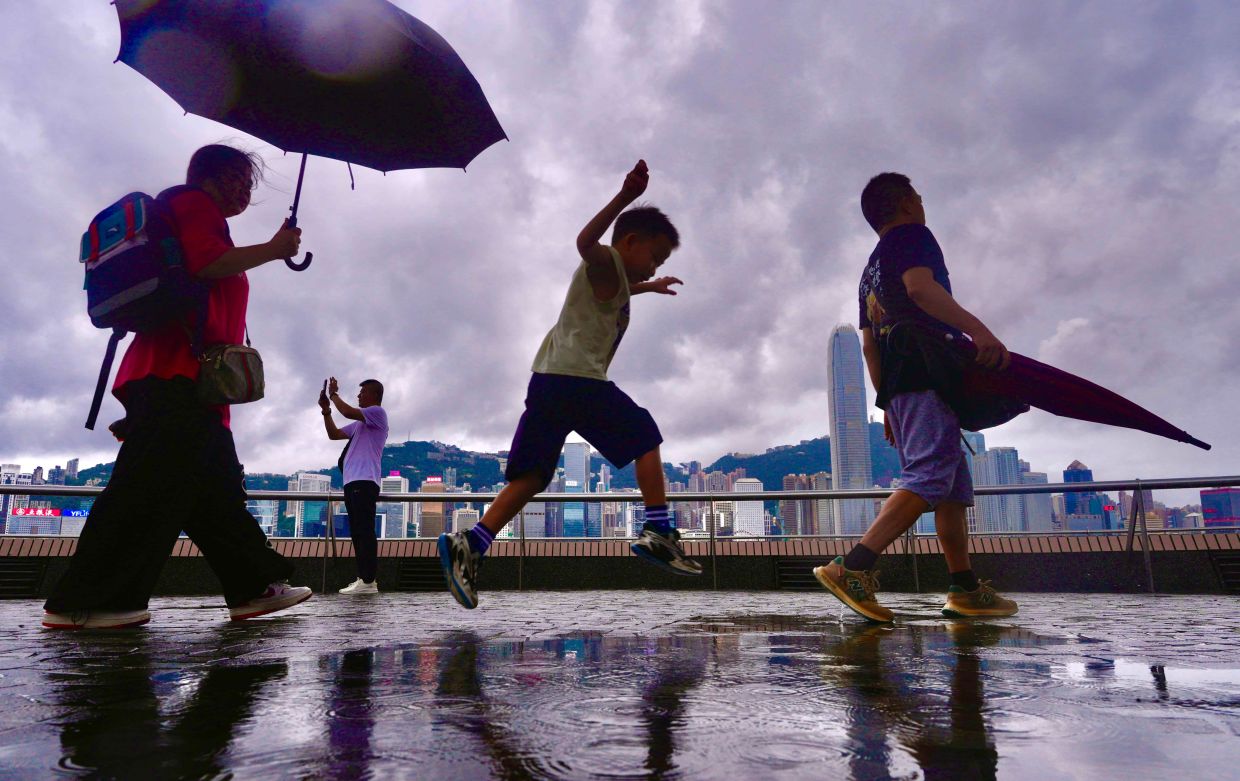
Hong Kong's residents finally caught a break from sweltering conditions on Friday morning as widespread rain swept across the territory, delivering the first significant relief after more than a week of relentless heat. The long-awaited precipitation prompted meteorological authorities to activate the lowest-tier amber rainstorm warning, signalling the shift in weather patterns that residents had desperately awaited. The rainfall, though brief, marked a turning point in what had become an exceptionally brutal climate episode for the densely populated city.
Weather experts attributed the rainfall to a combination of upper-air disturbances and a southwesterly airstream that redirected moisture towards Hong Kong. The Hong Kong Observatory issued the amber alert at 8:40 am on Friday, though conditions stabilised enough to cancel the warning just three hours later. The meteorological shift brought scattered showers and thunderstorms throughout the day, providing temporary relief from the oppressive conditions that had dominated the previous seven days.
The preceding week had tested the limits of human tolerance, as temperatures soared consistently above 34 degrees Celsius across multiple districts throughout the metropolitan area and surrounding regions. This sustained heat had created dangerous conditions for outdoor workers, the elderly, and those without adequate air conditioning. Streets typically bustling with pedestrian traffic emptied during peak daylight hours, with residents retreating indoors to escape the extreme conditions.
The Hong Kong Observatory's continuous monitoring revealed a particularly striking phenomenon: the maximum temperature at the observatory's main station remained at 33 degrees Celsius or higher for nine consecutive days. This streak established a new benchmark for the longest uninterrupted hot period recorded during the month of August in Hong Kong's meteorological history. The significance of this record cannot be overstated for a subtropical city accustomed to summer heat, as nine consecutive days of such extreme temperatures represented a departure from historical norms.
The pinnacle of this heat wave occurred on Sunday, when the observatory recorded a peak temperature of 36.9 degrees Celsius. This reading stands as the highest temperature documented since the observatory began maintaining systematic records in 1884—a span of nearly 140 years. The magnitude of this achievement underscores how exceptional current climatic conditions have become, surpassing even the extreme episodes experienced during previous centuries of record-keeping. For context, such temperatures challenge public infrastructure, strain electrical grids, and create genuine health emergencies in urban environments.
Following the Friday morning rainfall, forecasters predicted variable conditions for the weekend ahead. Saturday's weather pattern was expected to feature morning thunderstorms in certain localities, with the afternoon and evening clearing to sunny intervals. This typical post-storm pattern would allow some solar heating to resume, though temperatures would remain substantially below the preceding week's extremes. The transition suggested a moderation of the most dangerous heat rather than a complete stabilisation of conditions.
However, residents should not expect permanent relief from the intense heat. Meteorological projections indicated that very hot weather would return to the territory during the early portion of the following week, accompanied by scattered showers in isolated areas. This pattern—extreme heat punctuated by brief rainfall episodes—reflects broader climatic trends affecting Hong Kong and the broader Southeast Asian region during peak summer months. The recurrence of intense heat suggests that the week of relief would prove temporary rather than conclusive.
The implications of such extreme heat waves extend beyond immediate discomfort. For Malaysia and other Southeast Asian nations, Hong Kong's experience serves as an instructive case study in urban climate vulnerability. The record temperatures illuminate how densely populated metropolitan areas face escalating risks from heat-related illness, strain on energy infrastructure, and economic disruption. Construction sites, outdoor manufacturing facilities, and agricultural operations all face significant productivity losses when temperatures exceed physiological tolerance limits.
Climate scientists increasingly attribute such heat waves to anthropogenic climate change and regional warming trends. Hong Kong's position on the Pacific margins exposes it to both tropical maritime influences and continental heating patterns that can intensify during certain atmospheric configurations. The August 2024 episode—if that is indeed the timeframe of this event—aligns with documented global trends toward more frequent and more intense heat waves in subtropical and tropical regions. For Malaysia, which shares similar latitudes and climatic characteristics, the implications warrant close attention to heat management strategies in urban planning, infrastructure design, and public health preparedness.
The broader Southeast Asian region has witnessed similar extreme weather patterns in recent years, including devastating heat waves in Thailand, record temperatures in Laos, and intense heat events affecting agricultural production across the Mekong Basin. Hong Kong's experience underscores how major metropolitan centres must develop comprehensive heat mitigation strategies, from building design standards that enhance heat dissipation to early warning systems and public education campaigns regarding heat-related health risks. The frequency and intensity of such events suggests they will become regular rather than exceptional phenomena in the coming decades, necessitating fundamental shifts in urban infrastructure and emergency response planning across the region.

