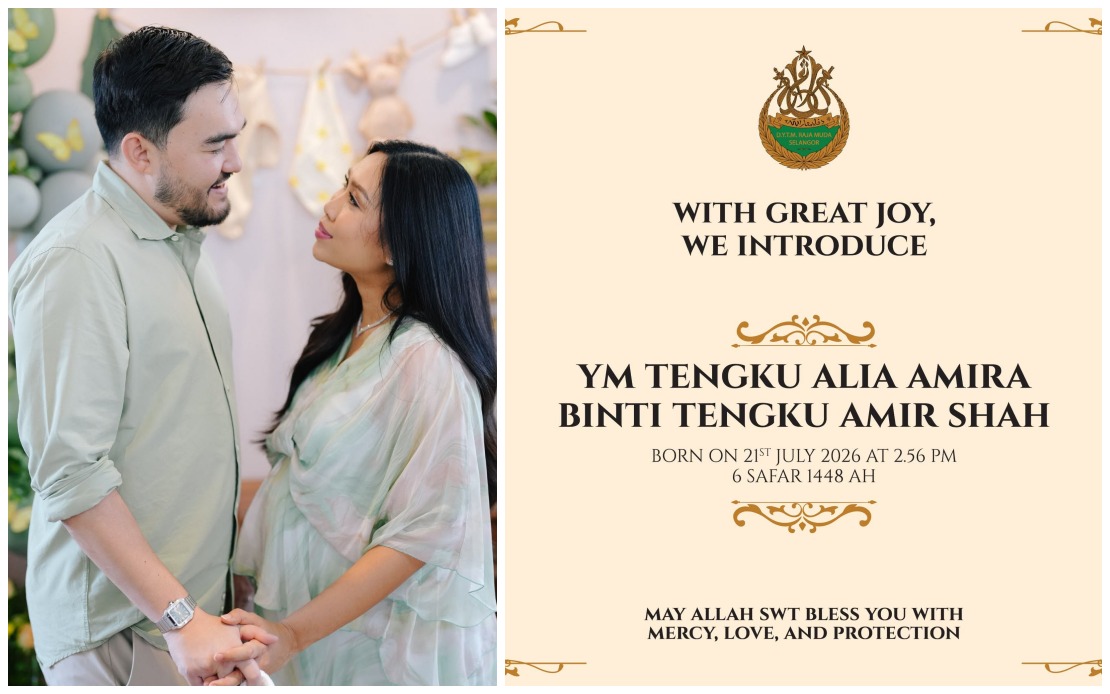
The royal household of Selangor marked a significant milestone on Thursday with the announcement of a new addition to the state's royal family. Tengku Amir Shah Sultan Sharafuddin Idris Shah, the Raja Muda of Selangor, and his spouse Datin Paduka Seri Afzaa Fadini Abdul Aziz welcomed their first child, a daughter named Tengku Alia Amira Tengku Amir Shah, born on July 21, 2026, at 2:56 pm. The joyful announcement came through the Raja Muda's official Instagram account, sharing the momentous news with the broader public and well-wishers across Malaysia and beyond.
In his heartfelt message posted on social media, Tengku Amir Shah expressed profound gratitude to the Almighty, invoking Islamic tradition in celebrating the arrival of his daughter. The young royal couple's announcement reflected both personal joy and formal acknowledgment of the significance this birth holds for Selangor's royal succession line. Their public expression of thanks extended to all those who had offered prayers and support to the growing family during this period, demonstrating the interconnected nature of Malaysia's royal institutions with their subjects and the broader community.
The birth represents continuity within Selangor's royal lineage, one of Malaysia's most prominent and historically significant sultanates. As the Raja Muda, Tengku Amir Shah occupies a crucial position within the state's constitutional framework, serving as heir apparent to the throne. The arrival of his daughter adds another generation to the royal household and carries implications for the succession structure of one of the country's most economically and politically important states. The timing of this announcement also comes at a moment when the Selangor sultanate maintains considerable prominence in Malaysian public affairs.
The royal couple's marriage itself was a formal and ceremonially significant event that had taken place just nine months earlier. Their solemnisation ceremony occurred on October 2, 2025, at Masjid Istana Diraja within Istana Alam Shah in Klang, the official royal mosque and seat of the Selangor monarchy. The wedding was conducted according to established royal customs and Islamic traditions, with the ceremony officiated by Selangor Mufti Datuk Dr Anhar Opir. The presence of senior royal witnesses, including Tengku Panglima Raja Selangor Tengku Ahmad Shah Alhaj and Tengku Indera Pahlawan Diraja Tengku Datuk Setia Putra Alhaj, underscored the ceremonial importance of the union within the state's royal hierarchy.
The October wedding also received the gracious presence and blessing of the Sultan of Selangor, the supreme head of state, alongside Tengku Permaisuri Norashikin, the royal consort. This high-level participation reflected the institutional significance attached to the Raja Muda's marriage and the formation of a new branch within the royal family. The ceremonial nature of the occasion, conducted in strict adherence to royal protocols and Islamic requirements, demonstrated how Malaysia's constitutional monarchies maintain formal ceremonial traditions whilst navigating contemporary society.
Datin Paduka Seri Afzaa Fadini Abdul Aziz brings her own family background and connections to this union, becoming an integral member of Selangor's royal household. Her elevation to the status of Raja Muda's consort places her in a position of considerable prominence within the state's social and ceremonial life. The arrival of their daughter now extends these family connections into the next generation, creating new dynamics within the royal structure and potentially influencing the future trajectory of Selangor's constitutional arrangements.
For Malaysian readers and observers of the nation's royal institutions, the birth of Princess Tengku Alia Amira carries broader significance beyond the personal joy of the immediate family. The event demonstrates the ongoing vitality and continuity of Malaysia's sultanate system, which remains central to the constitutional framework of the nine monarchical states. Selangor, as the nation's commercial and economic heartland, holds particular importance in this regard. The health and stability of its royal institution contribute to the state's broader political and social cohesion.
The announcement also reflects how Malaysia's royal families engage with contemporary communication channels whilst maintaining traditional protocols. The use of social media to share this significant announcement represents a modernisation of royal communication practices, making the royal family more accessible to ordinary Malaysians whilst preserving the formal dignity associated with such occasions. This balance between tradition and modernity characterises much of how the nation's constitutional monarchies function in the twenty-first century.
For Selangor specifically, the birth of the Raja Muda's daughter carries implications for succession planning and the future composition of the state's leadership. Whilst male primogeniture historically governed succession in most Malaysian sultanates, contemporary discussions around gender equality and merit-based advancement have prompted reconsideration of these traditional arrangements in some instances. The arrival of this child will add to the complexity of succession discussions within the state's royal institution, particularly as Malaysia grapples with questions about how traditional institutions can evolve whilst maintaining their constitutional and symbolic roles.
The couple's rapid establishment of their own family also reflects the personal maturity and readiness that the Raja Muda has demonstrated in his public role. His engagement with state affairs, combined with his capacity to manage the private responsibilities of family life, suggests a comprehensive preparation for the potentially expanded duties that may lie ahead. The support and involvement of the Sultan in acknowledging and celebrating this birth further reinforces the cohesion and strength of Selangor's royal family structure at a time when such institutional stability carries considerable national significance.

