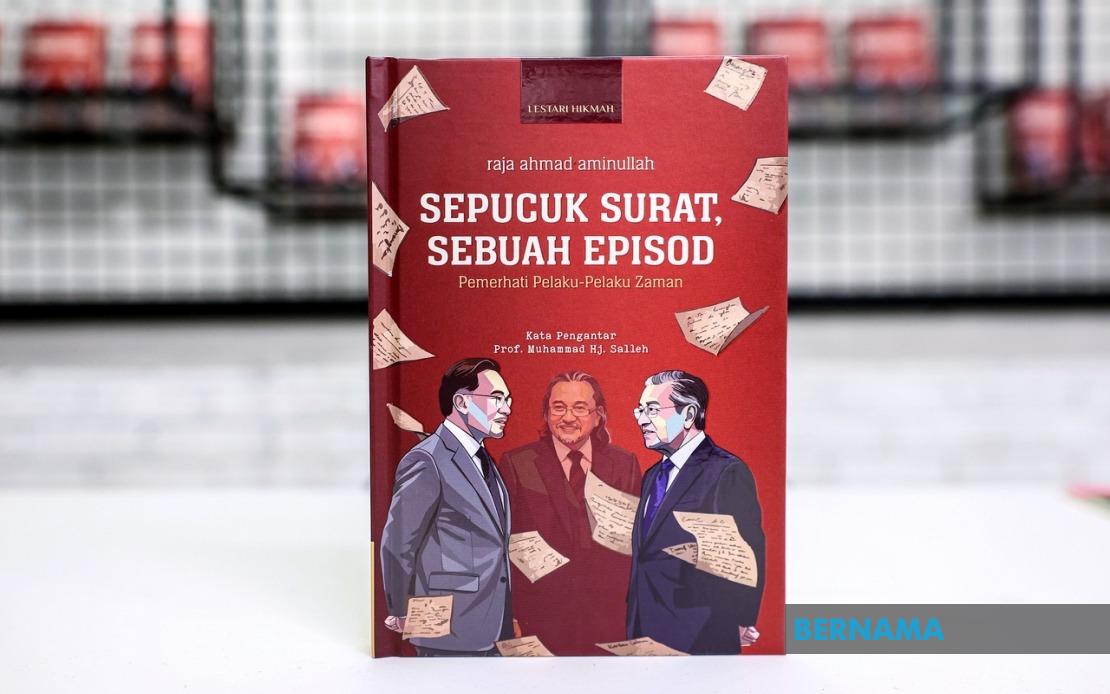
Celebrated cultural commentator Raja Ahmad Aminullah, widely known as Pak Engku, has released a substantial documentary work that assembles decades of personal correspondence with Malaysia's most influential figures. The book, titled "Sepucuk Surat Sebuah Episod: Rakaman Pelaku-Pelaku Zaman" (One Letter, One Episode: A Record of Historical Actors), was officially launched in Kuala Lumpur by Mohd Khair Ngadiron, director of the National Book Council of Malaysia, drawing together artists, academics, and long-time associates of the author.
At its core, the 169-page publication represents a deliberate departure from conventional political biography or partisan analysis. Raja Ahmad was explicit in characterising his work as an exercise in socio-cultural documentation rather than political commentary, explaining that he has consistently focused his intellectual efforts on observing broader societal patterns and community dynamics rather than engaging with partisan disputes or institutional machinery. His stated approach reflects a methodological commitment to recording lived experiences and social phenomena as they unfolded, creating an archival resource for future reflection and scholarly inquiry.
The correspondence contained within the volume spans approximately 25 years, capturing a significant period of Malaysian national development through the lens of personal exchanges with figures instrumental in shaping institutional, cultural, and intellectual trajectories. Rather than positioning any single individual for particular portrayal or favourable interpretation, Raja Ahmad framed the collection as a neutral historical record, one designed to preserve evidence of a specific era that might otherwise be lost to institutional memory. This archival impulse reflects growing recognition within Malaysian intellectual circles of the value in preserving primary source material from recent decades before such documentation becomes permanently inaccessible.
Raja Ahmad's explicit disclaimer regarding the work's scope proved particularly significant. He clarified that the book neither serves as a biographical study of former Prime Minister Tun Dr Mahathir Mohamad nor concentrates on contemporary Opposition leader Datuk Seri Anwar Ibrahim, naming two figures whose prominence in recent Malaysian political history might have suggested their centrality to any comprehensive historical study. Instead, the author positioned himself as merely instrumental to the recording process, emphasizing that his own role remained secondary to the broader documentary purpose. This methodological transparency indicates an awareness among Malaysian cultural producers of sensitivities surrounding historical interpretation and political neutrality.
The thematic coherence of the collection rests upon its foundation as a record of social observation rather than political analysis. Raja Ahmad described his consistent intellectual practice as one of watching and documenting patterns in human behaviour, institutional dynamics, and community responses to broader historical forces, rather than engaging with the mechanics of political competition or ideological contestation. This distinction carries important implications for how Malaysian readers might approach the material, positioning it as suitable for those interested in understanding sociological dimensions of recent history rather than those seeking conventional political narratives or insider accounts of policy formation.
From a practical publishing perspective, the work circulates through multiple distribution channels reflecting contemporary Malaysian book marketing practices. Published by Lestari Hikmah, the volume appears in two formats: a softcover edition priced at RM30 and a more durable hardcover version at RM80, with availability through conventional bookstores, selected cultural events, and online retail platforms. This pricing strategy and distribution approach positions the publication within Malaysia's mid-tier publishing market, targeting educated readers with interest in cultural and historical materials rather than pursuing mass-market circulation.
For Malaysian audiences with professional interest in history, literature, and social sciences, the publication offers distinct methodological value. Rather than presenting interpretation through conventional narrative biography or analytical frameworks, the compilation of actual correspondence preserves linguistic texture and authentic voice from exchanges that occurred in their original historical moment. This primary-source approach provides researchers and students with direct access to written interaction patterns, rhetorical strategies, and epistolary conventions characteristic of correspondence among Malaysia's intellectual and political elite during the referenced 25-year period.
The book launch event itself constituted a meaningful cultural moment within Malaysia's intellectual sphere, attracting participants from multiple constituencies including creative practitioners, academic specialists, and individuals who maintained sustained personal relationships with Raja Ahmad throughout his extended engagement with Malaysian cultural life. This gathering reflected the author's significant standing within Malaysia's cultural establishment, accumulated through decades of work in documentation, observation, and intellectual production focused on socio-cultural phenomena.
Raja Ahmad's framing of the work as a resource for "lessons that may be learned" suggests an underlying pedagogical intent beneath the ostensibly neutral archival purpose. By preserving these interactions and making them available to subsequent generations, the publication implicitly invites readers to extract broader principles regarding human behaviour, institutional functioning, and social change that might possess relevance beyond their original historical context. This interpretive invitation reflects assumptions about cyclical patterns in human affairs and the enduring relevance of documented contemporary experience to future readers facing novel circumstances.
The publication's timing and positioning within Malaysia's contemporary intellectual landscape deserve consideration. As Malaysia navigates ongoing political realignments and shifts in institutional legitimacy, the emergence of socio-cultural documentary work that explicitly distances itself from partisan interpretation suggests a broader appetite among educated Malaysian readers for historical understanding that transcends conventional political categories. Raja Ahmad's work participates in this intellectual movement toward recuperating and examining recent Malaysian experience through frameworks emphasizing social observation, community dynamics, and human interaction rather than exclusive focus on political institutional developments.
For regional Southeast Asian readers with interest in Malaysian cultural and intellectual history, the publication offers insights into how prominent Malaysian figures communicated across generational and ideological boundaries during a transformative period in the nation's development. The epistolary genre itself provides particular value, as letter writing preserves communicative patterns, degrees of formality, and relational dynamics that formal political speech or memoirs typically mask or reshape according to retrospective interpretation. This textual authenticity distinguishes the collection from secondary accounts and positions it as a distinctive contribution to Malaysian historical documentation.

