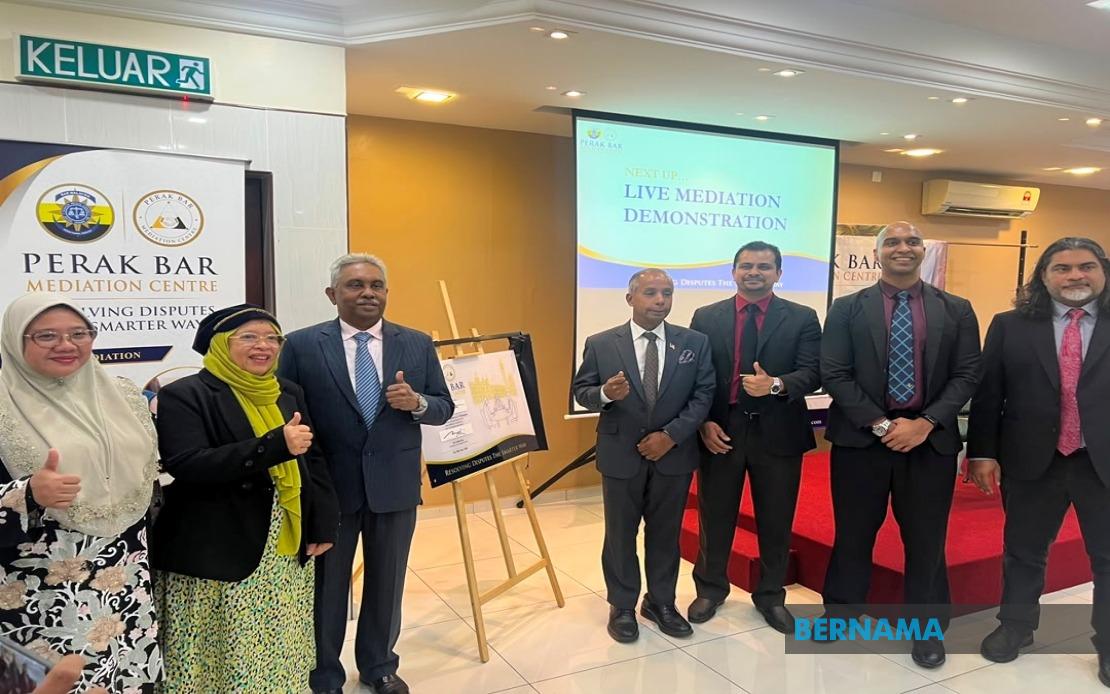
Malaysia's push to democratize access to commercial dispute resolution gained momentum this week with the announcement that 158 pro bono mediators have now signed up for the Asian International Arbitration Centre's (AIAC) Pro Bono Commercial Mediation Initiative. Deputy Minister in the Prime Minister's Department (Law and Institutional Reform) M. Kulasegaran revealed the registration figures during his address at the launch of the Perak Bar Mediation Centre in Ipoh, underlining the legal profession's substantial commitment to expanding pathways for ordinary citizens to resolve commercial conflicts outside the traditional courtroom setting.
The initiative, formally established on May 18 under the umbrella of the MADANI Mediation Centre, represents a significant structural intervention in Malaysia's civil dispute landscape. By offering free commercial mediation services across more than 26 distinct categories of commercial disputes, the scheme specifically targets claims valued below RM250,000—a threshold that covers the vast majority of small and medium-sized business disagreements and consumer complaints. This targeted approach recognizes that whilst larger corporations often possess the resources to navigate lengthy litigation or hire private mediators, smaller enterprises and individual business owners frequently lack the financial capacity to pursue formal court proceedings, leading many valid disputes to remain unresolved or settled on unfavorable terms.
Since formally commencing operations in May, the AIAC has begun processing actual cases under the new framework. Kulasegaran indicated that approximately ten matters have already entered the mediation process, suggesting early adoption and proof of concept for the voluntary mediator network. This modest caseload, whilst small in absolute terms, demonstrates that awareness of the initiative is spreading through business and legal circles and that potential users view the service as credible and worth attempting. The deputy minister signalled his intention to accelerate momentum by engaging the Bar Council in formal discussions aimed at expanding outreach, improving publicity, and ensuring that ordinary Malaysians become fully aware of this new avenue for dispute resolution.
Kulasegaran's broader commentary on mediation revealed a government perspective that views litigation as an increasingly inefficient mechanism for resolving commercial disagreements. Drawing on his personal experience as a practicing lawyer, he articulated the sobering reality that High Court cases can spawn multiple appeals and consume a decade or more of calendar time—a burden that compounds the already substantial financial costs of engaging counsel and navigating procedural complexity. Mediation, by contrast, allows parties to collaborate in reaching mutually acceptable settlements within weeks or months rather than years, significantly reducing both the emotional toll and the cumulative legal expenses associated with protracted disputes. This characterization aligns with international experience in jurisdictions that have successfully promoted alternative dispute resolution mechanisms as superior alternatives to adversarial court-based outcomes.
The launch event in Perak brought together key figures from Malaysia's legal ecosystem, including Malaysian Bar president Anand Raj, Malaysian Bar vice-president and Malaysian International Mediation Centre (MIMC) chairperson Murshidah Mustafa, and Perak Bar leadership. This institutional alignment suggests that the initiative enjoys broad endorsement from representative bodies within the legal profession, a prerequisite for long-term success. The professions's participation also provides an infrastructure for ongoing recruitment of volunteer mediators—experienced practitioners willing to donate their expertise toward facilitating settlements for cases that cannot afford market-rate mediation fees.
For Malaysian business owners, the practical implications are substantial. Companies facing contractual disputes, partnership disagreements, or supplier conflicts can now access structured mediation conducted by qualified legal professionals at no cost, removing a critical barrier to timely conflict resolution. Small enterprises that previously faced the choice between accepting unfavorable settlements or incurring prohibitive legal costs now possess a credible third option. The existence of this pathway also creates incentives for businesses to invest in clearer contract drafting and dispute prevention mechanisms, knowing that if disagreements do arise, they can be resolved efficiently and affordably.
The initiative also reflects a broader regional trend toward formalizing and professionalizing alternative dispute resolution mechanisms. Singapore, Thailand, and other Southeast Asian jurisdictions have similarly invested in expanding mediation capacity and promoting mediation culture within their business communities. By establishing AIAC's pro bono framework, Malaysia positions itself alongside these neighbors as a jurisdiction where modern, efficient dispute resolution infrastructure is accessible across all economic strata. This positioning carries competitive implications for corporate and commercial activity, as businesses making locational decisions increasingly factor in the quality and accessibility of dispute resolution mechanisms.
Kulasegaran's separate comments regarding CCTV footage from Taiping Prison illustrated the government's broader commitment to transparency tempered by recognition of legal constraints. He indicated that whilst he personally favors parliamentary access to the video documenting a detainee death in early 2023, the matter requires careful handling given ongoing court proceedings and the sub judice rule prohibiting public commentary on matters before the courts. The government is awaiting Cabinet direction before determining whether the footage can be released. This measured approach reflects the administration's attempt to balance accountability demands against proper legal procedure—a recurring tension in governance reform.
Moving forward, the success of the AIAC Pro Bono Commercial Mediation Initiative will depend substantially on continued recruitment of volunteer mediators and aggressive public education about the scheme's availability and processes. Kulasegaran's commitment to convening the Bar Council suggests that senior leadership recognizes the gap between formal program establishment and practical utilization. Without sustained outreach to small business associations, trade chambers, and professional bodies, the initiative risks remaining a boutique service known primarily to legally sophisticated actors rather than becoming a genuinely accessible resource for the broader business community.
The initiative also signals potential longer-term implications for Malaysia's dispute resolution architecture. If the pro bono mediation program demonstrates strong take-up and positive outcomes, the government may consider extending subsidized or free mediation services to other dispute categories, including employment disagreements, consumer matters, and neighborhood conflicts. The MADANI framework explicitly emphasizes expanding access to justice as a foundational principle, suggesting that this pilot initiative represents merely an opening phase of broader institutional reform aimed at making Malaysia's justice system more responsive to the needs of ordinary citizens and smaller economic actors.

