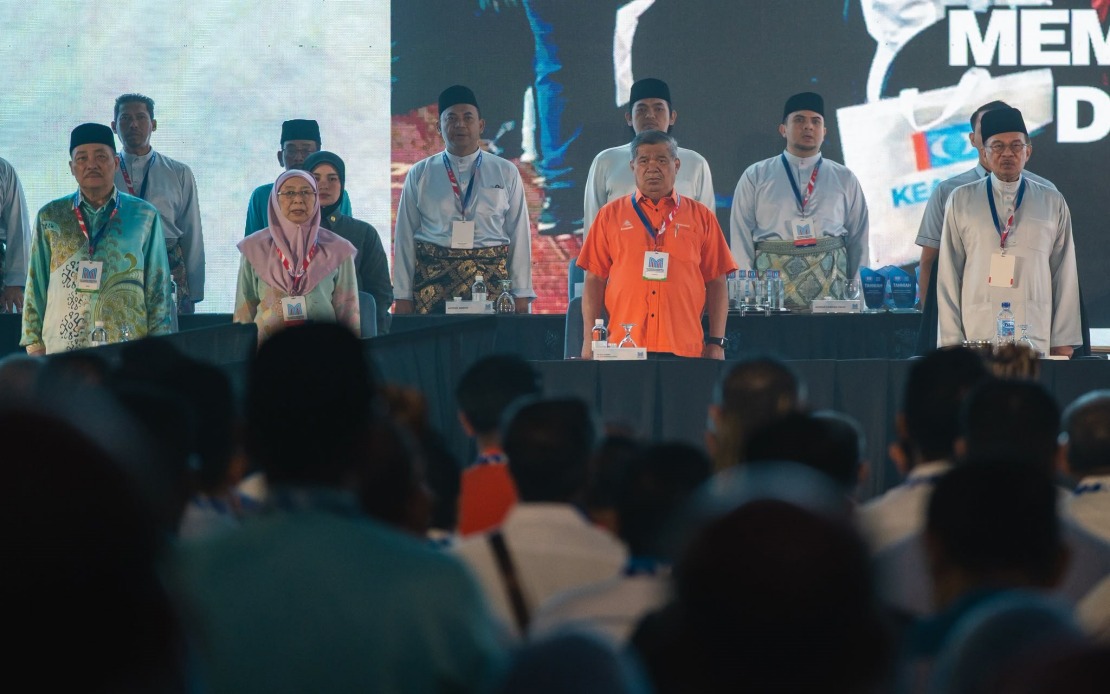
Datuk Seri Mohamad Sabu, president of Parti Amanah Negara, has underscored that securing electoral victory does not mark the endpoint of Malaysia's reform efforts, but rather a fresh beginning for intensifying anti-corruption measures and enhancing public governance. Speaking during the 2026 Parti Keadilan Rakyat National Congress at the Melaka International Trade Centre in Ayer Keroh, the current Agriculture and Food Security Minister stressed that political parties must translate the mandate given by voters into tangible outcomes through sustained work and demonstrable action.
The Amanah leader's remarks carry particular significance as Malaysia navigates its ongoing political transition and consolidation of the reform trajectory initiated after the 2022 general elections. Mohamad Sabu's insistence that reform represents far more than campaign rhetoric reflects growing recognition within the ruling coalition that public expectations have fundamentally shifted. Voters increasingly demand accountability and substantive change rather than accepting promises at face value, making follow-through on reform commitments essential for maintaining political legitimacy and coalition cohesion.
Central to Mohamad Sabu's message is an uncompromising stance against those who misappropriate public resources, regardless of their political affiliation or official standing. This implicit acknowledgment that corruption risks penetrating even reform-minded administrations demonstrates awareness of systemic challenges that transcend simple electoral change. He emphasised that personal connections or hierarchical position must never shield individuals engaged in financial misconduct from investigation and prosecution. Such declarations from senior coalition figures help establish normative expectations about accountability within government institutions.
The statement emerges during a critical juncture when the ruling coalition faces mounting pressure to demonstrate that reform commitments translate into meaningful improvements in citizens' everyday lives. Beyond the symbolic value of rooting out high-profile corruption, Malaysians increasingly judge government performance by tangible metrics: inflation management, wage growth, housing affordability, and job creation. The Amanah president's acknowledgment that economic growth figures alone cannot serve as success indicators reveals sophisticated understanding of public sentiment and suggests coalition leaders recognise the need for broader-based prosperity rather than aggregate GDP improvements.
Modhamad Sabu's comments occurred during remarks that touched on complementary policy priorities across the ruling coalition. Parti Keadilan Rakyat president Datuk Seri Anwar Ibrahim's address at the same congress emphasised continuity of the reform agenda, indicating alignment among major coalition partners on this foundational commitment. This synchronisation across party leadership regarding reform's ongoing necessity helps establish shared institutional culture and accountability mechanisms that transcend individual ministerial portfolios.
Economic governance emerges as a secondary but equally important theme within the discourse. The Agriculture and Food Security Minister highlighted that while economic expansion carries strategic importance, translating growth into improved living standards requires deliberate policy intervention. This framing implicitly critiques previous administrations that prioritised headline growth statistics while workers' purchasing power eroded and inequality widened. For Malaysian voters, particularly lower and middle-income households grappling with persistent cost pressures, such acknowledgments signal recognition of material hardships and commitment to distributional concerns alongside aggregate economic expansion.
Governance frameworks affecting Malaysia's federal structure also feature prominently in the coalition's current agenda. Mohamad Sabu reiterated government commitment to implementing the Malaysia Agreement 1963, which governs the constitutional arrangements and fiscal relationships between the federal centre and the East Malaysian states of Sabah and Sarawak. This emphasis reflects persistent regional sensitivities and the political necessity of demonstrating federal attentiveness to East Malaysian interests within the broader national coalition. Proper MA63 implementation carries implications for resource distribution, autonomy, and political stability across Malaysian federalism.
Higher education policy represents another domain where the government has positioned itself as advancing reform objectives. The repeal of the Universities and University Colleges Act 1971 signifies meaningful expansion of campus-level freedoms and student autonomy after decades of restrictive governance. Mohamad Sabu's characterisation of this legislative change emphasises its role in creating intellectual and organisational space within university communities. For younger voters and their families, such moves carry symbolic weight beyond immediate practical implications, suggesting governmental alignment with demands for greater pluralism and reduced state paternalism.
The minister's remarks fundamentally rest on the premise that electoral mandates impose obligations extending far beyond the parliamentary term. This conception of democratic accountability emphasises continuous engagement with voters and ongoing demonstration of commitment through policy outcomes rather than cyclical campaign-driven promises. For Southeast Asian governments operating within competitive electoral frameworks, such framing helps establish institutional legitimacy when economic conditions prove challenging or when particular reforms face implementation obstacles.
Moving forward, Malaysia's reform trajectory will face testing through multiple vectors. International and domestic anti-corruption frameworks must yield convictions and recoveries sufficiently visible to maintain public confidence. Economic policies must demonstrably improve household welfare even amid global headwinds beyond governmental control. Coalition unity must withstand inevitable policy disagreements and leadership transitions. Federal-state relationships must accommodate regional aspirations while maintaining overall national coherence. University sector reforms must produce educational outcomes justifying the liberalisation that accompanied regulatory change.
For Malaysian policymakers and the broader Southeast Asian region, Mohamad Sabu's emphasis on reform continuity signals maturation in how electoral victories are conceptualised within the reform narrative. Rather than treating elections as endpoints where mandates are exhausted, contemporary Malaysian political leadership increasingly frames victories as moments of renewed responsibility requiring sustained action across multiple institutional domains. This reconceptualisation reflects genuine lessons from previous cycles where electoral transitions failed to produce durable institutional change, suggesting that future political stability in Malaysia may depend substantially on whether successive governments can deliver meaningful reform outcomes over extended timeframes.

