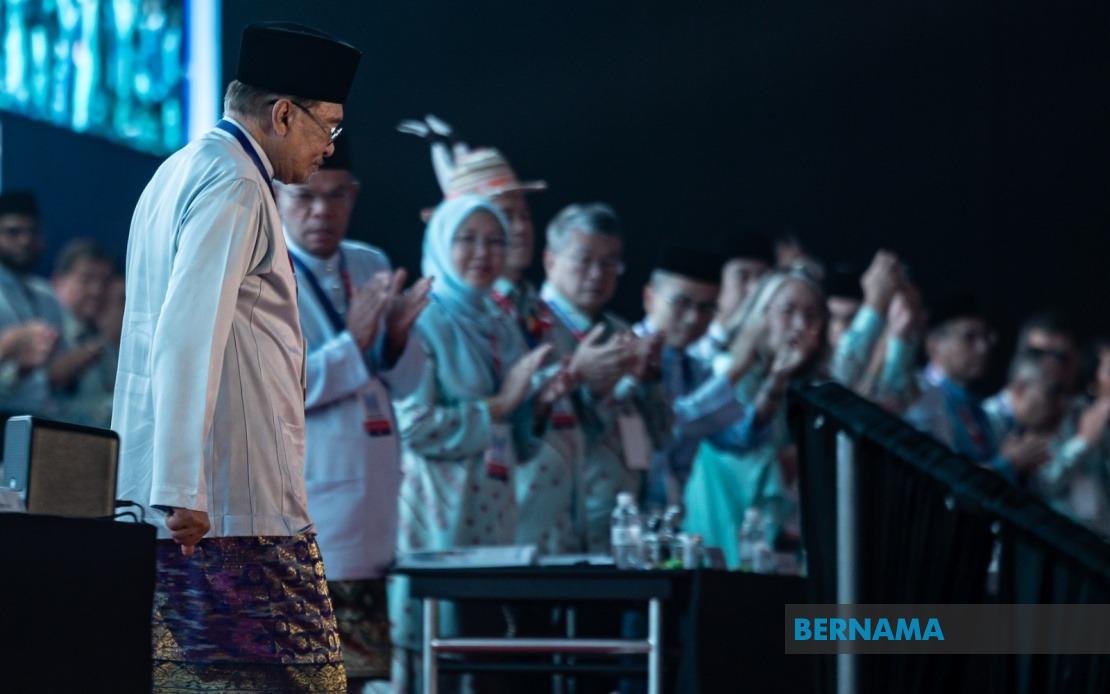
Prime Minister Datuk Seri Anwar Ibrahim has pushed back against critics demanding faster reform, insisting that his administration has achieved tangible progress that should not be overlooked simply because more work remains. Speaking at the 2026 PKR National Congress in Melaka on August 15, Anwar acknowledged both the real accomplishments of his government and the political realities that shape how quickly change can be implemented across Malaysia's institutions.
The Prime Minister's remarks came amid growing pressure from various quarters for more aggressive action on the reform agenda that formed a cornerstone of Pakatan Harapan's campaign promises. In his presidential policy speech at the Melaka International Trade Centre, Anwar sought to frame three years of reform as a substantial achievement when measured against six decades of institutional stagnation before his administration took office. His message was directed at party activists and coalition partners alike, many of whom have grown frustrated with the pace of institutional transformation.
Anwar outlined a concrete list of legislative accomplishments that underscore the scope of change already initiated. Amendments to the Audit Act 1957, overhaul of the Parliamentary Service Act, passage of the Public Finance and Fiscal Responsibility Act 2023, establishment of the Special Task Force on Agency Reform, enactment of the Consumer Credit Act, and new legislation protecting gig workers represent substantive shifts in Malaysia's governance framework. Each of these measures addresses longstanding institutional gaps that advocates had unsuccessfully pushed for decades.
However, the Prime Minister was equally candid about the constraints shaping reform implementation. As both Finance Minister and Pakatan Harapan chairman, Anwar operates within the delicate political architecture of the Unity Government formed after the 2022 General Election. The coalition includes not only PH but also Barisan Nasional, Gabungan Rakyat Sabah, and other partners with distinct institutional interests and political constituencies. This multiparty structure, while essential for maintaining parliamentary stability and preventing political extremism, necessitates continuous negotiation and compromise on contested reform measures.
The distinction between what remains theoretically possible and what is practically achievable within a coalition government has become increasingly visible as reform momentum has slowed. Anwar's acknowledgment that not every government step has been perfect suggests awareness that implementation gaps exist between policy intention and institutional reality. Some reforms have faced bureaucratic resistance, while others have proven more complex to execute than initial legislative passage suggested. The gap between announcing reform and embedding it in practice represents a persistent challenge across Malaysian government agencies.
Anwar's framing of reform as requiring a "phased approach" reflects a deliberate strategic choice rather than mere foot-dragging. The Prime Minister has consistently warned against attempting simultaneous, across-the-board institutional transformation, arguing that sustainable change requires building strong foundations within individual agencies before expanding the scope. This incremental philosophy contrasts sharply with critics who view it as excessive caution, but it aligns with how complex institutional systems actually absorb change without destabilizing core functions.
The political mathematics of the coalition deserve scrutiny here. Pakatan Harapan, as the principal government partner, holds significant influence but cannot unilaterally impose reforms that threaten the institutional interests of coalition partners or provoke resistance from the civil service. Several proposed reforms—particularly those touching judicial independence, executive-legislative relations, or party political finance—remain contested within the coalition itself. These tensions explain why some headline reform commitments remain stalled in consultation phases rather than advancing to legislative drafting.
For Malaysian observers, the substance of reform matters more than the pace. Amendments to financial legislation, protections for informal economy workers, and enhanced parliamentary oversight represent genuine institutional modernization. Yet implementation requires sustained bureaucratic effort, training of enforcement agencies, and cultural shifts within government. An audit law means little without auditors empowered to investigate, and consumer credit legislation requires functional regulatory capacity. Anwar's emphasis on realistic timelines reflects awareness that rushed reforms often collapse when agencies lack capacity or will to enforce them.
The Prime Minister's comments also signal important context for Southeast Asian regional observers. Malaysia's coalition governance model, while often portrayed as a source of political instability, has paradoxically enabled institutional reform that might prove impossible under more centralized leadership. The necessity of negotiating with coalition partners, however frustrating, has prevented capture of the reform agenda by factions with narrow interests. This distributed decision-making creates slower progress but potentially more durable institutional change.
Yet Anwar's defensive posture suggests awareness that patience among reform advocates is finite. Youth activists, civil society organizations, and even segments within PKR itself have expressed frustration with perceived slowness. The gap between the government's reform narrative and ground-level institutional performance creates vulnerability to political attack from both opposition parties and coalition critics. Anwar's appeal for recognition of progress appears designed to rebuild consensus within his coalition before entering the final phase of his current mandate.
The real test of MADANI reforms will emerge in the next two to three years as incomplete measures either advance or stall. The Special Task Force on Agency Reform was supposed to systematically modernize government operations, but visible outputs remain limited. If reforms bog down in bureaucratic implementation, Anwar's three-year track record may appear less impressive in retrospect. Conversely, if phased implementation produces functioning reformed institutions, the gradual approach may vindicate itself. For now, the Prime Minister is asking Malaysian stakeholders to sustain confidence in a process that acknowledges both progress achieved and distance remaining.

