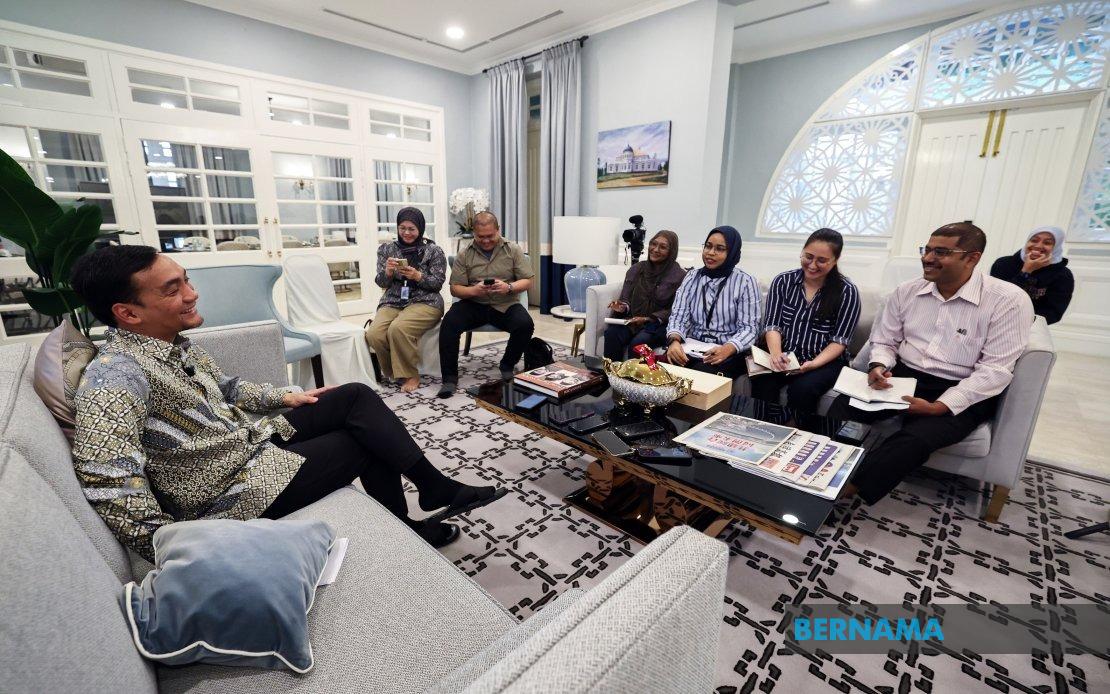
Johor Menteri Besar Datuk Onn Hafiz Ghazi has called on Barisan Nasional members excluded from the candidate list for the state election to sustain their commitment to the coalition's political objectives. Speaking during a media interview at his official residence in Saujana on Monday, Onn Hafiz acknowledged the disappointment many party loyalists experience when bypassed during candidate selection but framed non-selection as a temporary setback rather than a career endpoint.
The messaging reflects a broader reality within Malaysian political parties: candidate selection generates considerable internal tension as ambitious individuals compete for limited parliamentary seats. Onn Hafiz's intervention attempts to manage these expectations while maintaining party cohesion during a critical electoral period. His remarks come as the Johor Barisan Nasional works to consolidate support ahead of nominations on June 27 and polling on July 11.
Onn Hafiz outlined an alternative pathway for those not selected to contest, noting that multiple avenues exist for party contribution beyond electoral candidacy. Members may pursue federal parliamentary seats, assume leadership positions within party machinery, or undertake grassroots organisational roles. This tiered structure allows the coalition to retain experienced political operatives while distributing influence across different institutional levels. The approach acknowledges that not all qualified candidates can field simultaneously given constituency limitations.
The candidate selection process, according to Onn Hafiz, remains fluid even at advanced stages. With approximately 80 percent of selections completed, he cautioned that circumstances can shift dramatically, noting that previously issued appointment letters have been revoked in past elections. This fluidity introduces lingering uncertainty for many hopefuls, suggesting that the window for late-stage adjustments remains open. Onn Hafiz's candour about potential reversals implicitly advises rejected candidates to maintain readiness for unexpected opportunities.
The coalition has adopted selection criteria focused on professional diversity, geographic representation, and local community standing rather than demographic uniformity. Onn Hafiz explicitly rejected age as a determining factor, emphasising instead that candidates must demonstrate genuine capability for constituent service regardless of generational background. This merit-based framing, aligned with the established "WALI" principle—referring to winnability, acceptability, and likeability—signals an intent to balance experience with perceived electability.
Onn Hafiz stressed that candidate selections result from consultative processes rather than unilateral decisions. Final approval rests with Barisan Nasional chairman and UMNO president Datuk Seri Dr Ahmad Zahid Hamidi, alongside senior party leadership. This distributed decision-making framework distributes accountability while ensuring selections reflect broader coalition interests. The arrangement prevents individual aspirations from overwhelming strategic considerations.
Young voters represent a decisive demographic for the July 11 election, with those under 40 comprising between 20 and 40 percent of Johor's voting population. Onn Hafiz indicated that Barisan Nasional has invested substantially in youth engagement, positioning the party as responsive to younger citizens' concerns. This demographic reality underscores why candidate selection increasingly considers generational representation and appeal to first-time voters.
Onn Hafiz issued a broader electoral appeal addressing Johoreans across geographic boundaries, explicitly targeting workers employed in Singapore. His emphasis on maximising voter turnout reflects understanding that election legitimacy correlates with participation rates. Higher turnout ostensibly strengthens any government's claim to represent constituent interests, particularly important in Malaysia's competitive multi-party environment where incumbency no longer guarantees electoral survival.
The Menteri Besar positioned his government's track record as foundation for continued mandate. Describing his administration's efforts as representative of best-faith governance, Onn Hafiz framed another electoral victory as opportunity for consolidating achievements rather than initiating new directions. This approach emphasises stability and proven delivery over transformative promises, potentially resonating with voters prioritising economic security and service continuity over ideological renewal.
Contextually, the Johor election carries significance beyond state-level implications. As Barisan Nasional's traditional stronghold, Johor's electoral performance signals the coalition's resilience following its 2018 federal defeat. A strong Johor outcome would strengthen Zahid Hamidi's position within UMNO and substantiate claims that the coalition retains rural and traditional voter support. Conversely, disappointing results would suggest generational voting shifts favouring opposition parties.
The timing of Onn Hafiz's appeal—approximately three weeks before nominations—allows rejected candidates adequate time to recalibrate expectations and redirect energies toward supporting successful candidates. His public remarks, inevitably circulating within party networks, establish normative expectations that party loyalty transcends personal electoral ambitions. This narrative framing attempts to prevent disgruntled members from undermining campaigns through passive resistance or opportunistic defection.
Final candidate lists remain unconfirmed pending watikah issuance, creating residual uncertainty that discourages premature public complaints. The appointment letter mechanism provides technical cover for late adjustments should party calculations shift. This administrative structure, while potentially frustrating for aspirants, grants leadership flexibility navigating factional pressures and strategic repositioning.