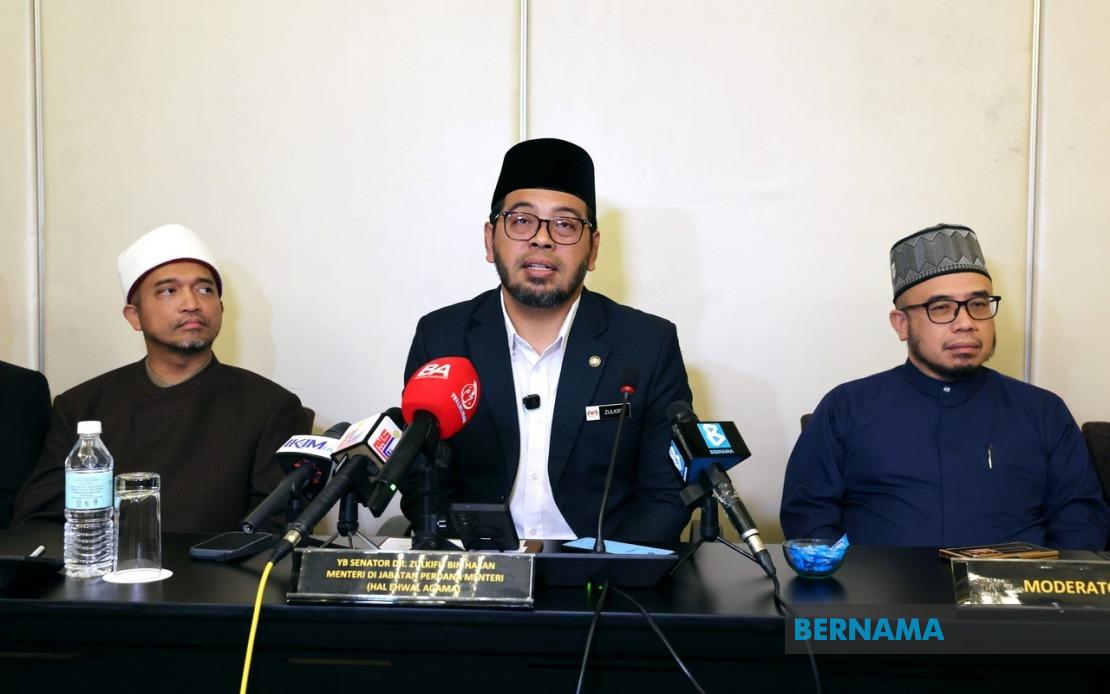
Malaysia's approach to religious terminology and national cohesion took a significant step forward on August 10 when Minister in the Prime Minister's Department (Religious Affairs) Dr Zulkifli Hasan announced that the Arabic term 'kafir harbi' is inappropriate for use within the nation's borders. The declaration emerged from a dedicated roundtable discussion convened to examine the implications and relevance of the term in contemporary Malaysia, reflecting growing official concern about language that could undermine social harmony in a multicultural democracy.
The concept of 'kafir harbi'—a designation traditionally used in Islamic jurisprudence to describe non-believers in a state of war with Muslims—has become a point of contention in Malaysia's increasingly polarized public discourse. Dr Zulkifli's intervention signals that the government views such terminology as fundamentally incompatible with the Malaysian constitutional order, which binds together citizens of diverse faiths under a shared legal and social framework. This position represents an important clarification from the highest levels of the religious establishment, sending a clear message about the boundaries of acceptable religious discourse in the nation.
During the roundtable discussion, participants reached broad consensus that Malaysia's unique constitutional structure and demographic composition make the application of this term both inaccurate and counterproductive. The minister emphasized that Malaysian citizens, irrespective of their religious beliefs, are all subject to the Federal Constitution and bound together by common civic duties and rights. This foundational principle distinguishes Malaysia from the historical contexts in which such Islamic terminology originally developed, making direct application anachronistic and potentially divisive.
Dr Zulkifli articulated a vision of national unity that transcends religious boundaries, noting that Malaysians share a collective responsibility to develop and defend their nation. His remarks underscored the government's recognition that language has real consequences for intercommunal relations in a country where religious identity often intersects with ethnic and political identity. The use of inflammatory or exclusionary terminology, even when rooted in theological concepts, can fragment the delicate social consensus upon which Malaysia's stability depends.
The Department of Islamic Development Malaysia, known as JAKIM, will take the lead in coordinating a broader educational campaign to disseminate this position and clarify the government's stance on the issue. Rather than relying solely on religious authorities to address the matter, Dr Zulkifli emphasized the importance of a whole-of-government approach involving multiple agencies and ministries. This collaborative strategy reflects an understanding that strengthening national integration requires sustained effort across different sectors and cannot be achieved through religious channels alone.
The decision to involve multiple government departments signals recognition that religious terminology often enters public discourse through political channels, social media, and grassroots communities where secular governance institutions also have relevant responsibilities. By coordinating across ministries, the government aims to ensure that messaging about acceptable and unacceptable religious language reaches diverse audiences and is reinforced consistently by trusted institutions. This reflects lessons learned from previous instances where religious rhetoric inflamed communal tensions in Malaysia.
For Southeast Asia more broadly, Malaysia's explicit rejection of 'kafir harbi' as applicable to its own citizens offers an important precedent. The region contains numerous multicultural and multi-religious nations that grapple with balancing religious expression and national cohesion. Malaysia's willingness to have government-convened discussions about problematic religious terminology, and to issue clear guidance from the highest levels, demonstrates one approach to managing these tensions while respecting religious perspectives.
Dr Zulkifli's appeal for Malaysians to strengthen unity, foster brotherhood, respect diverse cultures and religions, and deepen mutual understanding articulates an aspirational vision of national identity that has become increasingly important as Malaysia experiences social fragmentation. The explicit emphasis on working together and building stronger unity suggests government concern about deteriorating communal relations and the role that incendiary religious language plays in driving wedges between communities.
The significance of this intervention lies partly in what it represents institutionally. When a cabinet-level minister responsible for religious affairs explicitly declares certain religious terminology inappropriate for national use, it sends a powerful signal about where the government draws lines in religious discourse. This is particularly meaningful in Malaysia, where religious authority is distributed across federal and state Islamic institutions, and where political actors often deploy religious rhetoric to mobilize constituencies.
However, the practical impact of such declarations depends heavily on enforcement and sustained reinforcement through public institutions, educational systems, and media. Dr Zulkifli's emphasis on collaborative implementation and public awareness campaigns suggests the government recognizes that pronouncements alone will not shift deeply entrenched linguistic and ideological habits. Building a shared understanding across Malaysian society that such terminology is incompatible with national values requires patient, consistent effort over extended periods.
The roundtable discussion model itself merits attention as an institutionalized response to contentious religious issues. Rather than simply issuing directives, the government convened stakeholders to discuss the matter, hear presentations, and exchange views before reaching conclusions. This deliberative approach, while potentially slower than top-down announcements, may generate broader buy-in and more durable consensus among religious scholars, community leaders, and civil society participants.
Looking forward, implementation will prove crucial. Malaysian civil society organizations, religious scholars, political parties, and media outlets will need to absorb and reinforce this message consistently. Educational institutions should incorporate discussions of appropriate religious language and inclusive national identity into curricula. Social media platforms, where much polarizing religious content spreads, face particular challenges in enforcing norms against terminology now officially declared unsuitable for Malaysian contexts.

