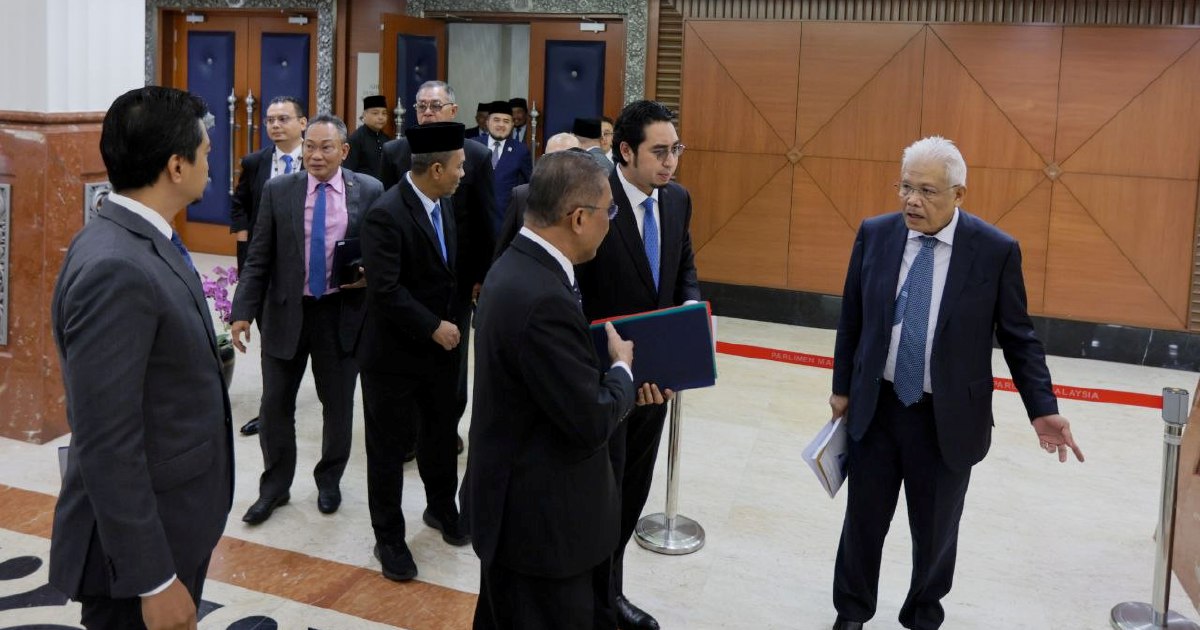
Malaysia's Minister in the Prime Minister's Department (Religious Affairs), Dr Zulkifli Hasan, has publicly appealed to opposition members of Parliament to resume their parliamentary seats and participate in a substantive debate concerning the Royal Commission of Inquiry report into Tabung Haji, the country's statutory body responsible for managing pilgrimage savings for Malaysian Muslims undertaking the hajj pilgrimage.
The call comes at a significant juncture for Tabung Haji, an institution that holds immense importance within Malaysia's Islamic finance ecosystem. The fund, which serves as a dedicated savings mechanism for approximately 1.3 million members across the country, has faced considerable scrutiny following various governance concerns that prompted the establishment of the Royal Commission of Inquiry to investigate its operations and management practices.
Dr Zulkifli's invitation to the opposition reflects broader parliamentary conventions emphasising the importance of cross-party engagement on matters affecting public institutions and the religious community. By explicitly requesting opposition participation, the Religious Affairs Minister appears to be signalling that the government views the Tabung Haji RCI findings as requiring genuine parliamentary scrutiny rather than partisan procedural passage through parliament.
Tabung Haji holds profound significance for Malaysian Muslims, functioning as the primary institutional conduit through which devout citizens save and prepare financially for the obligatory hajj pilgrimage to Mecca. Beyond its practical role as a savings vehicle, the organisation represents a tangible manifestation of state support for religious observance, making governance failures or mismanagement particularly sensitive within the Muslim community.
The establishment of the Royal Commission of Inquiry itself indicates the seriousness with which government authorities have treated reported irregularities within Tabung Haji's operations. Such commissions typically address structural concerns, administrative deficiencies, or financial discrepancies that cannot be adequately addressed through routine oversight mechanisms. The subsequent presentation of its report to parliament marks a crucial moment for institutional transparency and accountability.
Parliamentary debate on the RCI findings would allow lawmakers from both government and opposition benches to examine the commission's recommendations, interrogate the institution's leadership regarding identified shortcomings, and propose legislative or administrative remedies. Opposition participation would ensure that such discussion encompasses diverse perspectives and scrutiny, thereby strengthening the legitimacy of any resulting parliamentary resolutions or reforms.
For Malaysian pilgrims and their families, robust parliamentary engagement with the RCI report could yield meaningful improvements in fund management, enhanced member protections, and strengthened governance frameworks. The religious significance of hajj savings—funds often accumulated through years of disciplined financial commitment—makes institutional integrity particularly paramount from a community welfare standpoint.
The religious affairs portfolio carries substantial influence over institutions serving Malaysia's Muslim-majority population, and Dr Zulkifli's intervention underscores the government's recognition that Tabung Haji matters warrant parliamentary-level attention. Southeast Asia's largest Muslim-majority nation has historically accorded special constitutional and institutional recognition to Islam, making governance of religiously-significant organisations a matter of heightened public interest.
The timing and manner of Dr Zulkifli's appeal also merit consideration within the context of parliamentary attendance patterns and opposition engagement strategies. Parliamentary debates on major institutional reviews typically benefit from full representation, and the Religious Affairs Minister's public call appears designed to emphasise the national importance of the discussion and encourage opposition participation beyond ordinary legislative sessions.
Tabung Haji reform and governance strengthening align with broader government initiatives aimed at enhancing institutional performance across Malaysia's statutory bodies. The RCI process itself demonstrates commitment to independent investigation of governance concerns, and the subsequent parliamentary debate could establish important precedents for how findings from such commissions are publicly discussed and acted upon.
For Malaysian Muslims—both current Tabung Haji members and those who aspire to undertake hajj in coming years—the outcomes of this parliamentary debate carry practical implications. Improved governance frameworks, enhanced financial transparency, and strengthened member safeguards could translate into tangible benefits for pilgrims and their accumulated savings.
The Religious Affairs Minister's outreach to opposition MPs also reflects recognition that institutional governance transcends partisan politics. When statutory bodies serving defined constituencies require reform, the credibility of implemented changes often depends on cross-party consensus and demonstrated commitment to public interest rather than factional advantage.
As parliament prepares to engage with the Tabung Haji RCI report, the quality and comprehensiveness of that parliamentary debate will likely determine whether identified governance concerns receive adequate remediation and whether public confidence in the institution's stewardship of Muslim pilgrims' savings is substantially restored.

