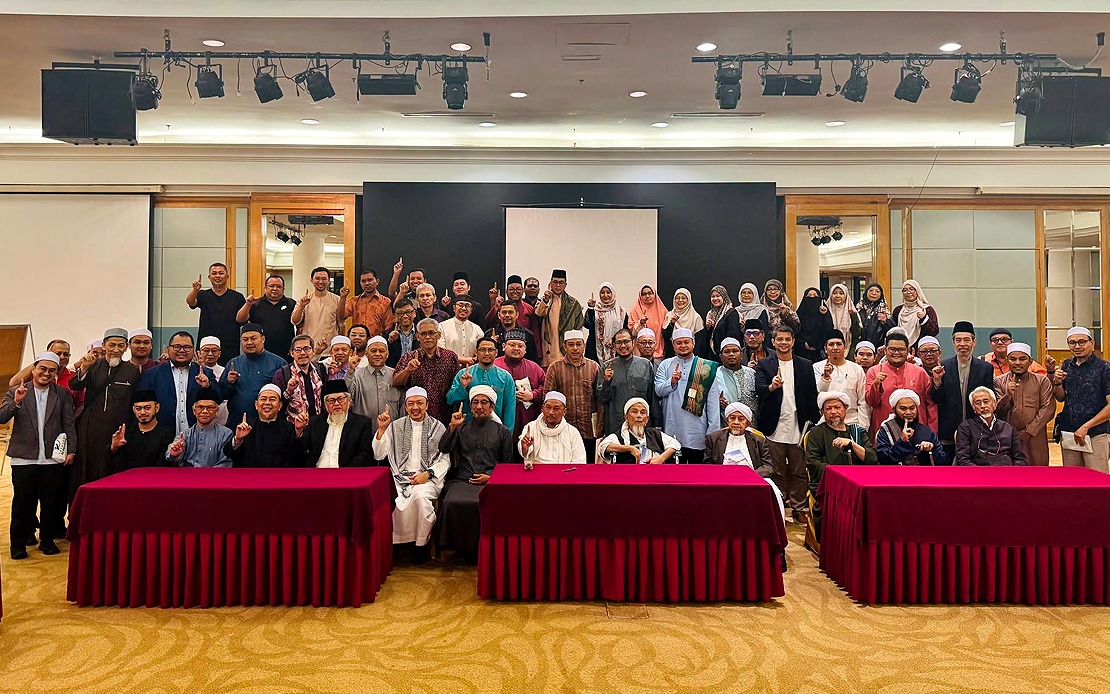
A nationwide awareness initiative involving Islamic scholars and religious leaders is set to educate Malaysians about the findings of the Royal Commission of Inquiry (RCI) into Lembaga Tabung Haji, the institution responsible for managing the savings of 9.7 million Muslim pilgrims. The campaign will utilise multiple platforms including mosques, prayer halls, educational institutions and government agencies to reach the public, according to Datuk Seri Dr Mujahid Yusof Rawa, former Minister in the Prime Minister's Department (Religious Affairs).
The impetus for this broad-based effort came from a special Hifz al-Mal conference held in Ampang that convened over 100 religious scholars and community leaders to deliberate on the RCI's conclusions and the collective duty to protect depositors' funds. The conference, organised by the Malaysian Ulama Secretariat in partnership with Malaysian Ulama Council Mursyid al-'Am Abdul Rahim Abdul Rahman, reflected a multidisciplinary approach to addressing public concerns about institutional governance. Mujahid, who also serves as deputy president of Amanah, emphasised that the dissemination strategy prioritises clarity, institutional integrity, and prevention of future asset mismanagement.
What distinguishes this awareness programme is its composition of expertise spanning religious scholarship, professional accounting, economics, law and community education. The inclusion of chartered accountants, legal practitioners, economic commentators alongside pondok scholars and religious educators ensures that the RCI's technical findings can be explained within both theological and practical frameworks. This multifaceted approach recognises that depositors require understanding of the commission's findings not merely from a faith-based perspective but also from financial, governance and legal angles.
The concept of Hifz al-Mal, or protection of wealth, underpins the entire initiative. This Islamic principle carries particular resonance when applied to Tabung Haji, an institution entrusted with pilgrimage savings representing a significant financial commitment for Malaysia's Muslim population. The RCI's investigation into the institution's deposit management practices has raised questions about accountability and stewardship, making public education essential for restoring confidence among depositors who depend on Tabung Haji's reliability.
The nationwide rollout will leverage established community infrastructure to achieve comprehensive coverage. Mosques and prayer halls serve as natural gathering points for the Muslim community, while educational institutions from schools through universities can integrate the message into formal learning settings. Government departments present another avenue for reaching employees and the general public accessing services. This multipronged distribution strategy acknowledges that effective communication requires meeting audiences within their existing social and institutional contexts rather than expecting them to seek information independently.
For Malaysian readers, this campaign carries implications beyond institutional accountability. Tabung Haji operates at the intersection of religious obligation and financial management, making its governance a matter of both spiritual and economic significance. The RCI findings, whatever their specific conclusions about past management practices, represent an attempt to ensure that a uniquely Malaysian institution serving a predominantly Muslim population operates with the highest standards of transparency and prudence. Understanding these findings becomes crucial for the 9.7 million depositors whose life savings and pilgrimage aspirations depend on institutional integrity.
The emphasis on involving religious figures in explaining the RCI findings reflects recognition that institutional trust often flows through community leaders who command religious authority and social credibility. In the Malaysian context, where religious and cultural identity intersect significantly with financial decision-making, engaging Islamic scholars and community leaders as information intermediaries carries weight that technical reports alone might not achieve. Their involvement signals that addressing Tabung Haji's governance issues represents not merely a bureaucratic exercise but a matter of collective religious responsibility.
Regionally, the campaign also demonstrates Malaysia's approach to institutional accountability within religious frameworks. Other Southeast Asian nations with significant Muslim populations may observe how Malaysia integrates public education about institutional governance with Islamic principles and community engagement. The model of combining professional expertise with religious scholarship offers lessons for managing trust-based institutions in predominantly Muslim societies where financial management and religious obligation become intertwined.
Mujahid's statement that "the facts must be explained, the trust must be upheld, and the misuse of the people's assets must not be allowed to happen again" frames the campaign as preventative action. Rather than viewing the RCI's investigation as merely retrospective accountability, this awareness drive positions it as the foundation for future institutional reform and enhanced oversight mechanisms. By ensuring that depositors understand what happened and why safeguards matter, the campaign seeks to create an informed constituency capable of maintaining pressure for sustained institutional improvement.
The conference's focus on the roles of religious figures and communities in safeguarding institutional trust reflects a partnership model where government investigative bodies, religious authorities, professional experts and ordinary citizens share responsibility for institutional governance. This distributed accountability framework suggests that protecting Tabung Haji's integrity depends not solely on regulatory mechanisms or administrative oversight but on sustained engagement from multiple stakeholder groups operating within their respective spheres of influence and credibility.
For depositors concerned about their savings, the nationwide campaign represents an opportunity to move beyond headlines and speculation toward comprehensive understanding of the RCI's findings. The involvement of diverse professional voices alongside religious scholars should provide both technical clarity and reassurance that the institution's future direction reflects broad expertise rather than narrow interests. Whether the campaign succeeds in fully restoring depositor confidence will likely depend on how thoroughly and transparently the RCI's specific findings are communicated across these various platforms.

