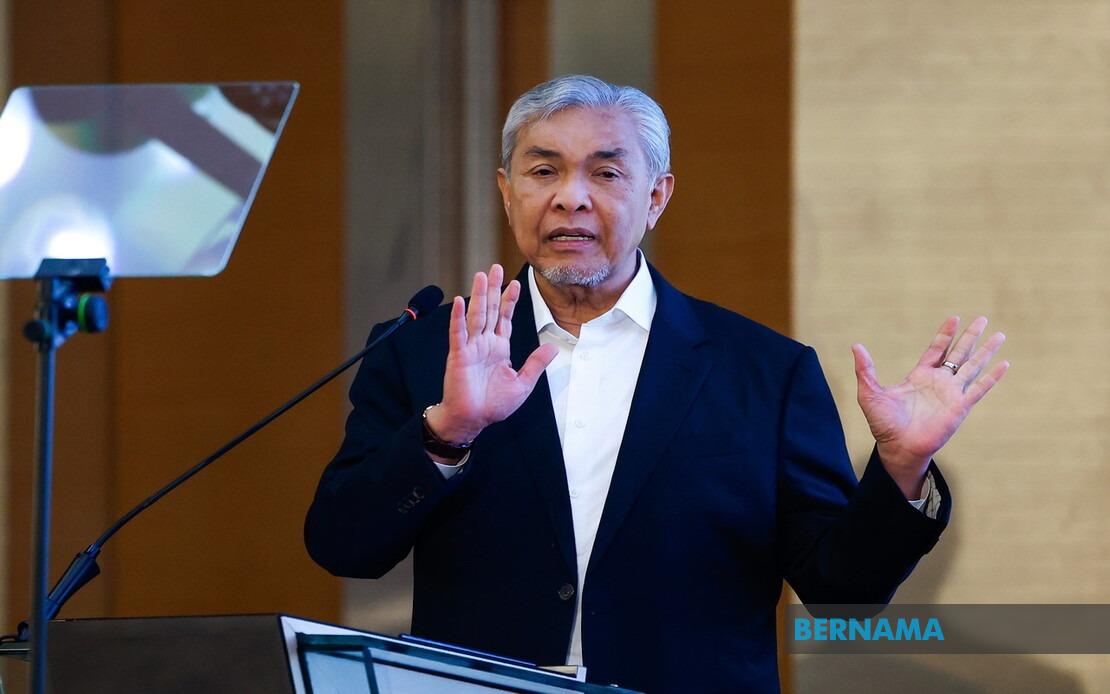
Deputy Prime Minister Datuk Seri Dr Ahmad Zahid Hamidi has issued a fresh reminder to all political parties competing in the Negeri Sembilan state election to safeguard the institution of the monarchy and steer clear of contentious subjects surrounding race, religion and royalty throughout their campaign activities. Speaking in Seremban on July 27, Ahmad Zahid stressed the importance of heeding guidance issued by the Negeri Sembilan Palace, which had explicitly advised contesting parties against involving the royal institution in their political messaging and ceramah sessions.
The Barisan Nasional chairman underscored his coalition's longstanding commitment to defending Malaysia's constitutional monarchy and the institution of the Undang Yang Empat in Negeri Sembilan specifically. According to Ahmad Zahid, BN has maintained a consistent record of respecting royal institutions and has deliberately avoided weaponising matters related to the 3R issues as campaign ammunition. This principled stance, he argued, should serve as a benchmark for other political contestants in the state election.
The timing of Ahmad Zahid's statement reflects growing sensitivity surrounding the conduct of electoral campaigns across Malaysia. State elections inevitably attract heightened political activity and passionate discourse, yet the intersection of electoral politics with sensitive constitutional institutions requires careful navigation. The Palace's proactive issuance of guidance demonstrates institutional concern that campaign rhetoric might inadvertently or deliberately encroach upon matters that carry constitutional significance and cultural weight within the state.
Ahmad Zahid's remarks carry particular weight given BN's position as the incumbent coalition and its historical relationship with the monarchy across Malaysia. The emphasis on never having utilised 3R matters as campaign material appears designed to position BN as the responsible custodian of constitutional norms, contrasting implicitly with other political forces that might be tempted to exploit divisive social narratives for electoral advantage. This framing reflects a broader conversation in Malaysian politics about the relationship between competitive electoral democracy and the preservation of institutional stability.
The Negeri Sembilan context adds specific dimensions to this discussion. As one of Malaysia's smaller states with its own unique constitutional arrangements and royal lineage, Negeri Sembilan has particular reason to guard the sanctity of its traditional institutions. The Undang Yang Empat system, distinct from other state structures, represents a historical configuration that commands respect across the state's political spectrum. The Palace's intervention, therefore, should be understood not merely as procedural guidance but as a substantive statement about institutional boundaries that all contesting parties are expected to observe.
During the same gathering at the Negeri Sembilan Entrepreneurs Gathering Programme, Ahmad Zahid also addressed speculation about tensions between BN and Perikatan Nasional, categorically dismissing claims that disputes between the two coalitions had derailed cooperation. He characterised their relationship as continuing to operate on the basis of mutual understanding, with no underlying grievances complicating their interactions. This assertion, while seemingly tangential to the royalty discussion, underscores broader themes about political civility and institutional respect that BN wishes to project ahead of electoral contests.
The appearance of Deputy Rural and Regional Development Minister Datuk Rubiah Wang and MARA chairman Datuk Dr Asyraf Wajdi Dusuki at the gathering highlighted the cross-coalition support for Ahmad Zahid's messaging. Their presence signalled that the appeal to respect constitutional boundaries and avoid inflammatory campaigning enjoys backing across senior political circles. This alignment is significant in a Malaysian context where political fragmentation sometimes complicates efforts to establish shared standards for electoral conduct.
For Malaysian and Southeast Asian observers, Ahmad Zahid's intervention reflects a distinctive feature of Malaysian democracy: the coexistence of competitive electoral politics with strong respect for constitutional institutions that lie outside the direct reach of electoral contestation. Unlike purely democratic systems where all governmental entities become campaign fodder, Malaysia's constitutional monarchy occupies a protected space. This reflects both legal constraints, including laws against sedition and defamation of the Yang di-Pertuan Agong and state rulers, and deeper cultural commitments to institutional stability.
The practical implications of this approach warrant careful consideration. While protecting royal institutions from electoral exploitation serves important constitutional purposes, it simultaneously constrains public discourse about matters that directly affect governance. In Negeri Sembilan, state administration operates within parameters set partly by the Undang Yang Empat system, meaning that criticisms of governance might sometimes touch upon institutions that campaign guidelines consider off-limits. Political parties must therefore exercise considerable sophistication in distinguishing between legitimate policy critique and inappropriate commentary on constitutional arrangements.
The broader regional context also merits attention. Neighbouring countries in Southeast Asia employ varying approaches to safeguarding traditional institutions during electoral periods. Malaysia's explicit Palace guidance mechanism represents a formal institutional response that differs from less structured approaches elsewhere in the region. As Malaysia increasingly positions itself as a democratic exemplar within Southeast Asia, the manner in which it manages this balance between electoral freedom and institutional protection carries implications for how other democracies in the region approach similar challenges.
Looking forward, Ahmad Zahid's remarks establish clear expectations for campaign conduct in Negeri Sembilan. Political parties that wish to maintain credibility within Malaysia's political establishment will likely heed the guidance voluntarily, recognizing that violations carry both legal risks and reputational costs. However, the statement also implicitly invites scrutiny of whether all contestants will adhere equally to these standards, leaving open the possibility of accusations that some parties have breached the accepted boundaries. This dynamic—where formal guidance creates both aspiration and potential grievance—represents a recurring feature of Malaysian electoral politics.

