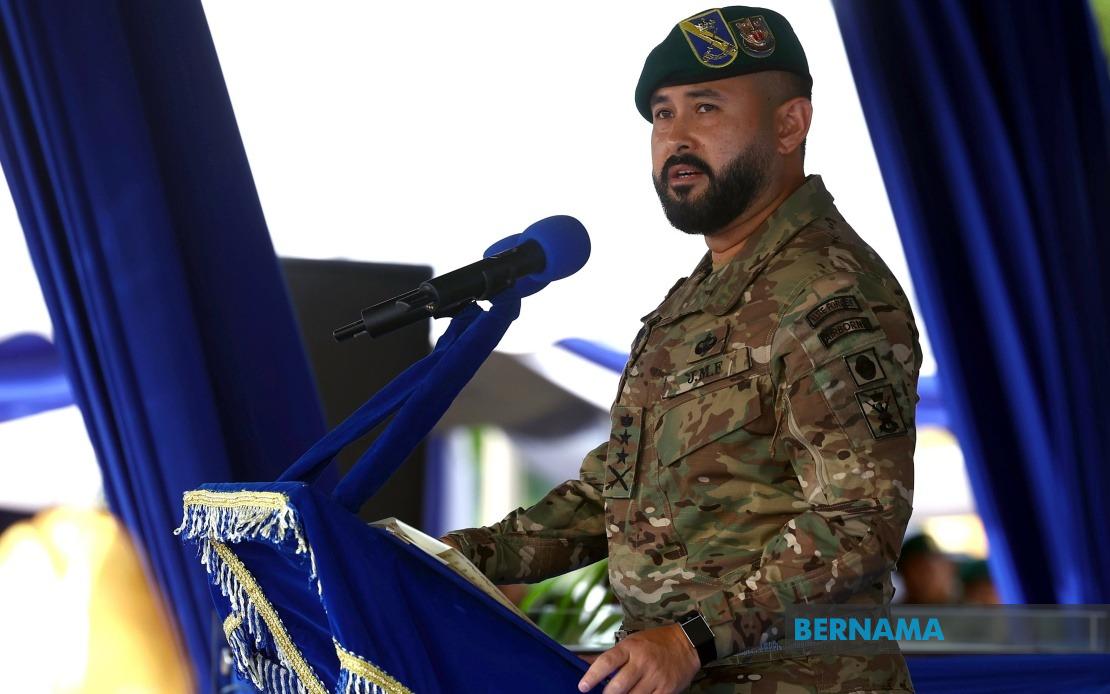
The Johor Regent, Tunku Mahkota Ismail, has issued a stern warning that all stakeholders involved in the development of the Regimen Gerak Khas (RGK) must strictly adhere to plans already approved by His Majesty Sultan Ibrahim, King of Malaysia, and resist any temptation to alter these decisions to serve sectional interests. Speaking at a ceremony commemorating the unit's 61st anniversary in Mersing on Tuesday, the Regent emphasised that the RGK's strategic direction has been carefully considered and approved at the highest level, and any deviation would undermine the integrity of the decision-making process.
The Regent's remarks underscore growing concerns about the institutional integrity of Malaysia's elite commando unit, which serves as the primary rapid response force for the Armed Forces. By invoking the King's role as Colonel Commandant of the RGK, Tunku Mahkota Ismail framed his warnings within the framework of constitutional hierarchy and Royal authority, making clear that departures from approved plans amount to a challenge to the monarchy itself. This rhetorical positioning reflects the seriousness with which the Regent views any attempts to compromise the RGK's strategic independence.
Central to the Regent's concerns is what he characterised as institutional "cancer" within the Ministry of Defence and broader Malaysian Armed Forces. While declining to specify the nature of these problems, Tunku Mahkota Ismail indicated he had identified specific individuals responsible and intended to address the matter directly. His willingness to publicly criticise the defence establishment suggests that factional tensions and competing interests at the ministry level may be threatening the coherence of military modernisation efforts. The implicit acknowledgement that knowledge of problematic actors exists at senior levels raises questions about accountability mechanisms within the defence bureaucracy.
The Regent placed particular emphasis on ensuring that the RGK's equipment, weaponry, mobility, technological systems, and operational assets remain at the highest standards possible. This concern reflects the evolving security landscape across the Indo-Pacific region, where geopolitical tensions between major powers and developments in the South China Sea have created increasingly complex operational requirements. Malaysia, as a Southeast Asian nation with significant maritime interests and exposed to multiple security pressures, must ensure its most capable rapid response unit maintains cutting-edge capability to address emerging threats effectively.
Tunku Mahkota Ismail urged the government to prioritise all RGK development and procurement initiatives under the 13th Malaysia Plan (13MP), with particular attention to adopting latest technologies, ensuring cost-effectiveness, and guaranteeing operational suitability for current and anticipated future demands. This emphasis on modernisation within a defined fiscal framework reflects awareness that budgetary constraints exist, yet the RGK cannot afford to fall behind in capability development. The Regent's insistence on balancing technological advancement with financial prudence suggests concern that procurement decisions may sometimes privilege cost-cutting over genuine operational needs.
A recurring theme in the Regent's address concerns the dangers of favouritism and vested interests infiltrating the RGK's personnel management systems. He stressed that career advancement, welfare arrangements, and professional development must be determined purely on merit, with transparent criteria and accountability throughout the selection process. The explicit warning against allowing personal relationships or factional loyalties to influence personnel decisions indicates that such problems may have surfaced previously, threatening the unit's meritocratic culture and operational effectiveness. When advancement depends on connections rather than capability, unit cohesion and performance inevitably suffer.
The Regent specifically cautioned that a culture of favouritism or merit-blind considerations in determining personnel futures would have serious implications for the organisation's ability to meet its requirements. This analysis connects personnel management practices directly to operational capability—a link that may not always be obvious to external observers but is critical to military effectiveness. Units staffed according to patronage networks rather than ability cannot maintain the highest standards of readiness and performance demanded of an elite commando force.
Tunku Mahkota Ismail reminded RGK personnel of their responsibilities under the Commando Soldier's Oath, emphasising the need for sustained high skill levels, physical and mental resilience, and unwavering integrity and loyalty to the King and nation. These reminders serve both to reinforce institutional values and to signal that standards will not be compromised. The Regent's emphasis on the oath itself underscores the quasi-sacred character of military service and the transcendent principles that ought to guide conduct.
The Regent characterised the RGK as the "tip of the spear" in confronting national security threats, a designation that carries implications for resource allocation and operational expectations. As Malaysia's premier rapid response capability, the unit operates under demanding conditions and faces pressure to maintain constant readiness against multiple potential threats. This positioning justifies the Regent's insistence on uncompromised standards in training, equipment, and personnel selection.
For Malaysian readers and policymakers, the Regent's warnings carry important implications about governance within the defence establishment. The implicit suggestion that vested interests and institutional dysfunction threaten the RGK's development points to broader challenges in implementing strategic priorities within a complex bureaucracy. The Regent's willingness to publicly identify problems and commit to personal intervention may signal either that normal accountability channels have failed or that the issue requires extraordinary attention due to national security implications.
The speech also reflects the Regent's expanding role in defence and security matters, consistent with historical precedent of Malaysian Regents taking active interest in military affairs. His willingness to criticise defence ministry officials and call for accountability demonstrates the checks that constitutional structures provide against unchecked executive power. This dynamic may also reflect generational change, with the Regent representing a younger cohort more willing to challenge established hierarchies when national security is at stake.

