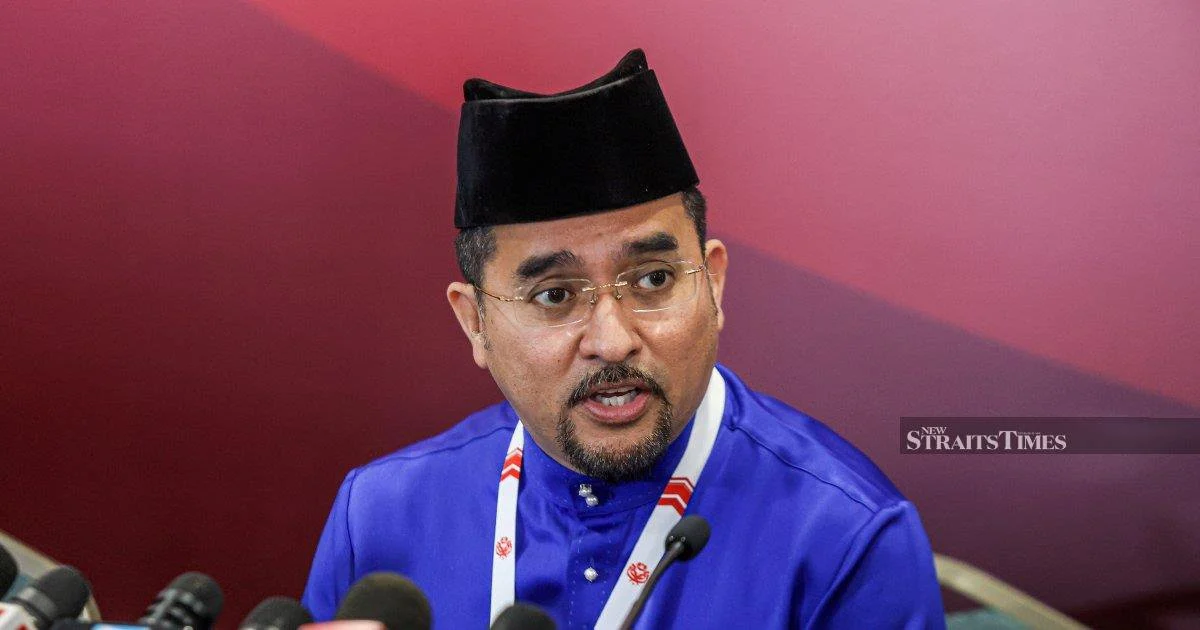
The Barisan Nasional coalition faced public scrutiny over the postponed declaration of its candidates for the Johor state election, but party leadership has now attributed the hold-up to a comprehensive screening mechanism designed to ensure quality selections. Umno secretary-general Datuk Dr Asyraf Wajdi Dusuki revealed that the stringent vetting procedures, rather than internal discord or administrative failures, accounted for the extended timeline before candidates were formally unveiled.
The need for thorough candidate evaluation reflects broader concerns within Malaysian political circles about the calibre of individuals contesting electoral positions. Modern elections increasingly demand that nominated representatives meet elevated standards across multiple dimensions, from financial integrity and professional credentials to community standing and policy competence. By implementing rigorous checks at the coalition level, Barisan Nasional sought to mitigate risks associated with poorly vetted candidates, whose subsequent scandals or failures could damage the broader party machinery and voter confidence.
Johor, as Malaysia's second-largest state by population and a traditional Umno stronghold, carries significant symbolic and practical weight in national politics. The state has served as a proving ground for political innovation and contains crucial swing constituencies that influence federal election outcomes. Consequently, the selection of candidates there cannot be treated as routine administrative work but demands careful consideration of both individual suitability and strategic positioning across the state's diverse demographic and geographic landscape.
The vetting apparatus typically encompasses financial background reviews, scrutiny of past conduct both public and private, assessment of community ties and influence, evaluation of leadership potential, and verification of party loyalty and ideological alignment. For coalition bodies like Barisan Nasional, the process becomes more complex because candidates must satisfy not only Umno's internal standards but also the compatibility requirements of coalition partners who may contest the same constituencies or have overlapping power bases. This multi-layered approval system inevitably consumes more time than unilateral party selection would demand.
Delays in candidate announcements frequently trigger speculation about internal conflicts, succession battles, or disagreements over resource allocation within parties. The Umno leadership's proactive explanation aimed to counter such narratives and present the postponement as evidence of professional diligence rather than organisational dysfunction. By framing extended deliberation as a strength, the party attempted to reset public perception and demonstrate commitment to fielding representatives capable of delivering effective governance.
Regional observers have noted that Southeast Asian political parties increasingly emphasise candidate quality as a differentiator in competitive electoral environments. As Malaysian voters grow more demanding about representative capability and personal integrity, parties face mounting pressure to demonstrate that selection processes filter for substantive merit rather than mere factional allegiance or patronage considerations. Johor, with its educated urban populations and sophisticated business communities, exemplifies constituencies where voter expectations regarding candidate standards run particularly high.
The Johor election represents a crucial test for Barisan Nasional's electoral viability and internal cohesion. Following earlier setbacks in federal elections, the coalition recognises that state contests offer opportunities to rebuild grassroots support and demonstrate renewed competence. Candidate selection therefore assumes heightened importance as a visible indicator of party seriousness and strategic planning. A hastily assembled slate risked conveying carelessness to voters already evaluating whether Barisan Nasional warranted renewed electoral mandates.
Furthermore, the candidate announcement timeline interconnects with broader campaign strategy and voter communication planning. Compressed timelines between candidate unveiling and actual polling dates can disadvantage relatively unknown contenders trying to establish public profiles and campaign momentum. Extended vetting processes, while frustrating to party machinery eager to commence campaigning, theoretically provide more calendar space for candidates to conduct meaningful constituency engagement and media exposure before voters cast ballots. This temporal dimension merits consideration when assessing whether announcement delays reflected strategic calculation or genuine administrative necessity.
Critics within and beyond Barisan Nasional might argue that excessively protracted candidate selection processes signal indecision or weakness, suggesting that party leadership cannot efficiently execute routine functions. However, the explicit articulation of rigorous vetting rationale provides cover against such criticism while simultaneously establishing expectations that selected candidates possess verified qualifications and cleared backgrounds. Should any subsequently appointed representative face scandal, party officials can point to the declared thoroughness of preceding evaluation.
The Johor election context also involves considerations about candidate diversity, representation of underrepresented communities, and balance between experience and fresh perspectives. Comprehensive vetting necessarily requires time to consult stakeholders, evaluate alternative candidates, and build consensus around selections that satisfy multiple constituencies within the coalition structure. Rushing this process could generate resentment among passed-over potential candidates or coalition partners feeling marginalised in decision-making.
Umno's explanation carries significance beyond immediate Johor electoral politics, signalling to the broader Malaysian electorate and international observers that the coalition maintains functioning institutional processes and values candidate accountability. As Malaysian democracy continues evolving and voter sophistication increases, parties that can credibly claim rigorous governance practices gain competitive advantages over rivals perceived as operating through ad-hoc or opaque mechanisms. The framing of candidate selection as evidence of institutional strength rather than weakness represents shrewd political messaging.