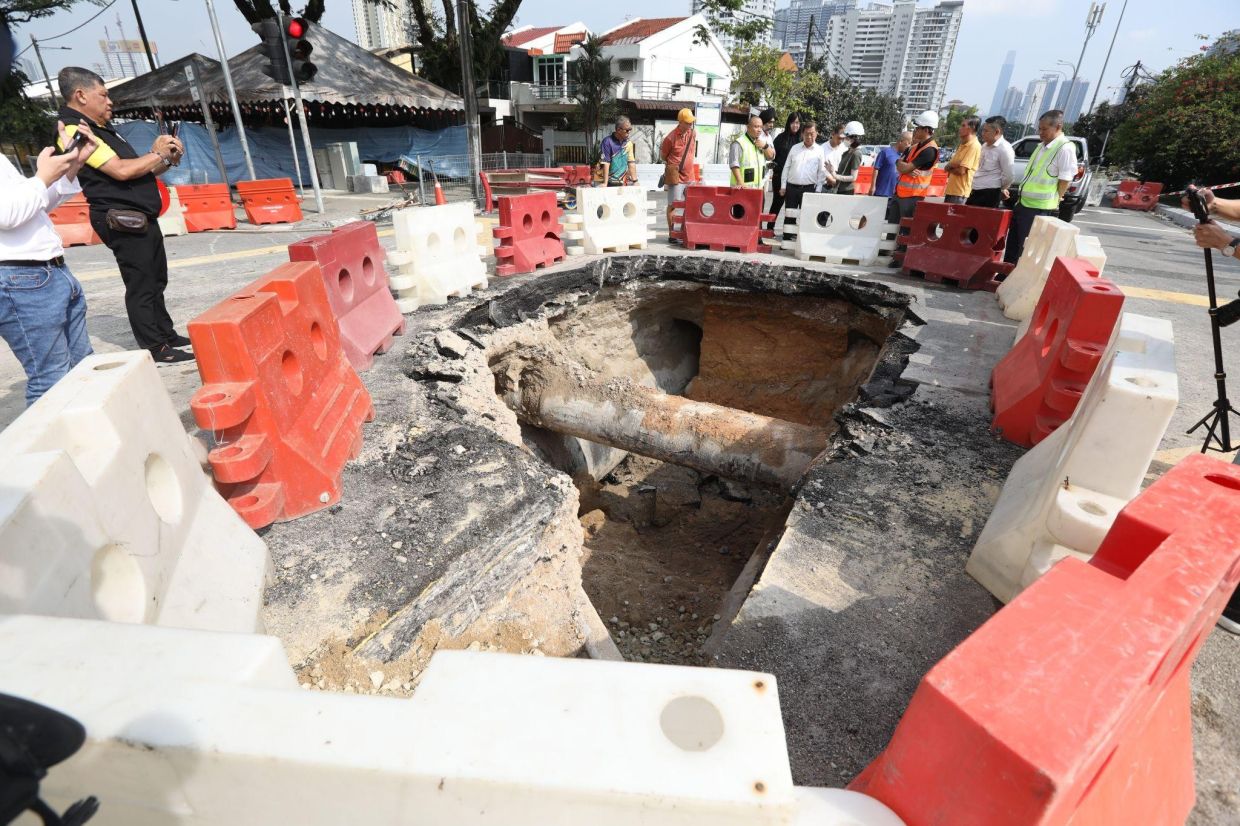
Malaysia's sewerage infrastructure faces mounting pressure from the nation's changing climate, with Indah Water Konsortium (IWK) now prioritising a comprehensive overhaul of underground asset management to combat the rising threat of catastrophic sinkhole incidents. The country's shift towards more intense and unpredictable rainfall patterns has exposed vulnerabilities in decades-old piping systems, prompting the operator to embrace proactive detection and maintenance protocols.
Sinkholes emerge through a complex interplay of geological, hydrological and infrastructural factors rather than any single cause. Natural ground composition, underground water flow patterns, construction disturbances and the structural state of buried utilities all contribute to their formation. Since each incident presents distinct characteristics, specialists must conduct detailed technical analysis to identify the underlying trigger. For Malaysia, where urban development and tropical climate pressures converge, understanding these mechanisms has become essential to public safety planning.
IWK's stewardship extends across approximately 22,500 kilometres of public sewerage pipelines distributed throughout the country. Among these, reinforced concrete trunk sewers with diameters exceeding 600 millimetres command particular scrutiny due to their critical role in transporting high-volume flows. These major arteries operate perpetually at or near maximum capacity, exposing them to severe hydraulic forces and corrosive hydrogen sulphide gas accumulation that gradually weakens concrete structural matrices. The combination of hydraulic stress and chemical degradation creates an environment where pipe failure risk accelerates exponentially over time.
Heavy precipitation fundamentally destabilises surrounding ground through multiple mechanisms. Water saturation reduces soil bearing capacity whilst simultaneously increasing hydrostatic pressure within sewer conduits. When rainfall intensity exceeds design specifications, water infiltration through pipe cracks, joint deterioration and manhole openings overwhelms the system's conveying capacity. This hydraulic surge can rupture ageing pipes or displace them from alignment, triggering blockages and catastrophic leaks. Simultaneously, the saturated soil becomes increasingly unable to support its own weight, allowing displaced sections to sink further and creating voids beneath the surface that eventually manifest as ground collapse.
To counteract these vulnerabilities, IWK has implemented a risk-driven asset management strategy centred on continuous condition evaluation. The operator deploys sophisticated inspection technologies tailored to each pipeline's accessibility and operational context. Ground Penetrating Radar provides subsurface imaging without excavation, whilst closed-circuit television crawler systems document internal pipe deterioration in fine detail. Push rod and pole cameras extend inspection capabilities into locations inaccessible to larger equipment. This technological arsenal enables IWK to identify structural defects before they cascade into public emergencies.
Following inspection discovery of defective sections, IWK executes targeted rehabilitation employing methods ranging from trenchless pipe lining that restores structural integrity without excavation to complete pipeline replacement in severely compromised zones. These interventions aim to restore the sewerage network's functional reliability whilst minimising service disruption to communities dependent upon these essential services. By addressing deterioration systematically rather than reactively, the operator reduces the likelihood of sudden failures that trigger sinkholes and associated property damage.
According to IWK chief executive officer Narendran Maniam, the relationship between extreme weather and underground infrastructure has become critically apparent as Malaysia confronts increasingly erratic climate behaviour. Ground shifting triggered by heavy rainfall can displace and misalign pipes, creating blockages and structural breaks. Simultaneously, the heightened water pressure generated by intense rainfall strains existing pipe networks beyond designed parameters. When aged pipes already weakened by decades of service experience this additional stress, cracking and bursting become probable outcomes requiring expensive full-line replacement.
The precise mechanism linking rainfall to sinkhole formation operates through soil saturation dynamics and their cascading effects on structural support. As groundwater levels rise and soil becomes waterlogged, the matrix loses load-bearing capacity precisely when additional weight from water accumulation increases vertical pressure. Should compromised sewer pipes deteriorate, rupture or shift under these conditions, escaping sewage and groundwater wash away surrounding soil particles, gradually excavating underground cavities. These expanding voids eventually reach a critical size where surface ground can no longer support its own weight, resulting in sudden collapse and the formation of dangerous surface depressions.
To evaluate its operational readiness for major incidents, IWK recently conducted an extensive crisis simulation exercise at its Asian Sewerage Training, Research & Innovation Centre of Excellence (ASTRICE). The controlled scenario modelled a significant sinkhole event involving casualties and substantial damage to major trunk sewer infrastructure. The exercise mobilised operational field teams, crisis management personnel, and coordinated response protocols involving the Fire and Rescue Department, Royal Malaysia Police and related emergency agencies. This realistic testing environment enabled IWK to validate inter-agency communication systems, identify coordination gaps and refine decision-making procedures under simulated emergency conditions.
Narendran emphasised that the simulation strengthened IWK's institutional capacity to respond effectively during actual crises. The exercise provided structured opportunities to test emergency procedures, enhance coordination between internal teams and external agencies, and accelerate critical decision-making during high-pressure situations. Importantly, the controlled environment allowed IWK to document and validate its crisis management standard operating procedures whilst ensuring all personnel understood their roles and responsibilities during emergencies. These refined SOPs now provide employees with clear guidance for responding effectively to major incidents.
As Southeast Asia's climate dynamics continue evolving toward greater weather volatility, Malaysia's sewerage infrastructure must adapt to withstand unprecedented hydraulic and environmental stresses. IWK's multi-layered approach—combining advanced diagnostic technologies, systematic rehabilitation programmes, interagency coordination frameworks and regular emergency preparedness drills—represents a comprehensive risk mitigation strategy proportionate to the challenge. Through sustained investment in preventative infrastructure maintenance and collaborative emergency planning, IWK is positioning Malaysia's sewerage system to maintain service reliability whilst protecting communities from sinkhole-related hazards that increasingly threaten urban areas across the tropics.

