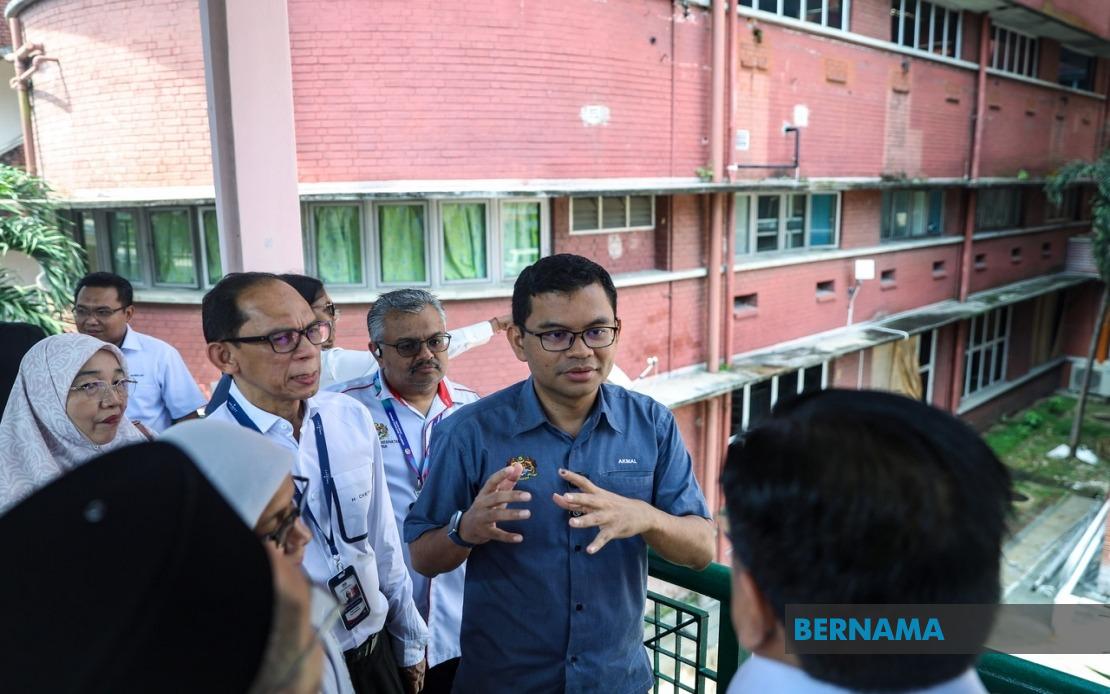
Sultanah Aminah Hospital (HSA) in Johor Bahru is undergoing a comprehensive transformation through seven interconnected development initiatives totalling RM1.139 billion, representing a substantial commitment to expanding and modernising one of the region's key healthcare facilities. Economy Minister Akmal Nasrullah Mohd Nasir announced the ambitious programme during an inspection visit, emphasising the strategic importance of maintaining service continuity while undertaking such extensive construction work.
The modernisation programme encompasses a major electrical infrastructure overhaul, with the upgrading of the main electricity supply and supporting mechanical systems commanding RM159 million of the total investment. This component, already 76.49 per cent complete, forms the foundation for the hospital's expanded operations. Such electrical upgrades are critical infrastructure work that underpins modern hospital functionality, particularly as facilities add capacity and introduce new medical technologies that demand reliable power systems.
The centrepiece of the development agenda is the construction of the Day Care Centre (ACC) coupled with a multi-storey parking facility and the HSA Specialist Clinic Complex, spanning both Phase 1 and Phase 2 initiatives. These components alone account for RM877.54 million of the overall budget, representing the bulk of the capital outlay. The contractor appointment process for this major segment is targeted for completion by February of next year, indicating that visible construction activity should escalate significantly in the coming months.
The specialist clinic complex expansion addresses a critical gap in Johor's healthcare infrastructure. By concentrating specialist services in a dedicated facility within HSA, the hospital can better serve the broader population of Johor and southern Peninsular Malaysia, reducing patient travel and enabling more efficient referral pathways. The Day Care Centre component caters to the growing demand for outpatient and non-inpatient specialist services, reflecting broader demographic shifts and changing patterns of healthcare consumption across Malaysia.
Operating theatre capacity represents another key focus of the development strategy. The hospital will add three new operating rooms, expanding from the current 12 to a total of 15 theatres. For a major tertiary facility serving a population of several million, this 25 per cent capacity increase is significant, allowing HSA to accommodate a higher surgical throughput and reduce waiting times for patients requiring operative intervention. This expansion is particularly relevant given demographic ageing and the rising prevalence of conditions requiring surgical management.
The parking component of the development reflects practical considerations often overlooked in discussions of healthcare infrastructure. Adequate vehicle parking at busy public hospitals remains a persistent challenge in Malaysian urban centres, and the multi-storey parking structure will ease congestion around HSA, improving accessibility for patients, visitors, and staff. This quality-of-life enhancement has tangible implications for patient satisfaction and operational efficiency.
Implementation of such a large, multi-faceted programme presents substantial coordination challenges. Minister Akmal Nasrullah acknowledged that the key challenge lies in preventing construction disruptions to ongoing hospital services. Patients requiring emergency and routine care cannot be displaced, meaning contractors must work around active medical facilities, adding complexity and cost to the endeavour. Phased implementation and careful scheduling are essential to managing this delicate balance.
Johor has experienced remarkable development momentum in recent years as part of broader national initiatives. The minister noted that since 2000, a total of 613 development programmes and projects worth RM56.12 billion have been completed or are underway in the state. These initiatives comprise 154 entirely new projects alongside 459 extension or enhancement schemes, indicating both expansion of services and substantial investment in upgrading existing facilities. The HSA projects form part of this broader development ecosystem.
Budgetary execution data reveals the pace of development implementation across Johor. As of late July, approximately RM2.5 billion, representing 50.51 per cent of the annual allocation of RM4.95 billion, had been expended. This spending trajectory suggests that development activity remains robust, though the ability to maintain momentum depends on sustained funding availability and timely project approvals and contract awards.
The HSA expansion carries significance beyond Johor itself. As Malaysia's health system becomes increasingly strained by rising demand and ageing populations, investments in major public hospital capacity directly influence service availability and waiting times throughout the region. Enhanced specialist facilities at HSA may reduce referrals to Kuala Lumpur-based tertiary centres, allowing better resource distribution across the country. The project also reflects confidence in Johor's continued economic and demographic growth.
For Malaysian healthcare workers, the additional operating theatres and expanded specialist clinics create opportunities for expanded service delivery and potentially improved working conditions by reducing overcrowding in existing facilities. The investment acknowledges the pressures facing public sector healthcare and attempts to build capacity to meet projected future demand. Such infrastructure improvements are essential to retaining skilled medical professionals and preventing burnout within the system.
The minister's emphasis on ensuring smooth project completion reflects broader government development priorities and the political importance of visible infrastructure progress. For ordinary Johoreans, these investments translate into shorter waiting times for specialist consultations, improved surgical scheduling, and access to more modern facilities. The timing of project completion thus carries both technical and political dimensions, with delivery of promised services by stated deadlines becoming a measure of government effectiveness.
Moving forward, the success of the HSA development programme will depend on maintaining coordination between the Ministry of Economy, the Health Ministry, hospital management, and private contractors. External factors including supply chain disruptions, labour availability, and potential cost inflation will test the programme's resilience. Nonetheless, the sustained commitment to healthcare infrastructure investment in Johor signals recognition that modern, adequately resourced public hospitals remain fundamental to Malaysia's development aspirations and social contract.

