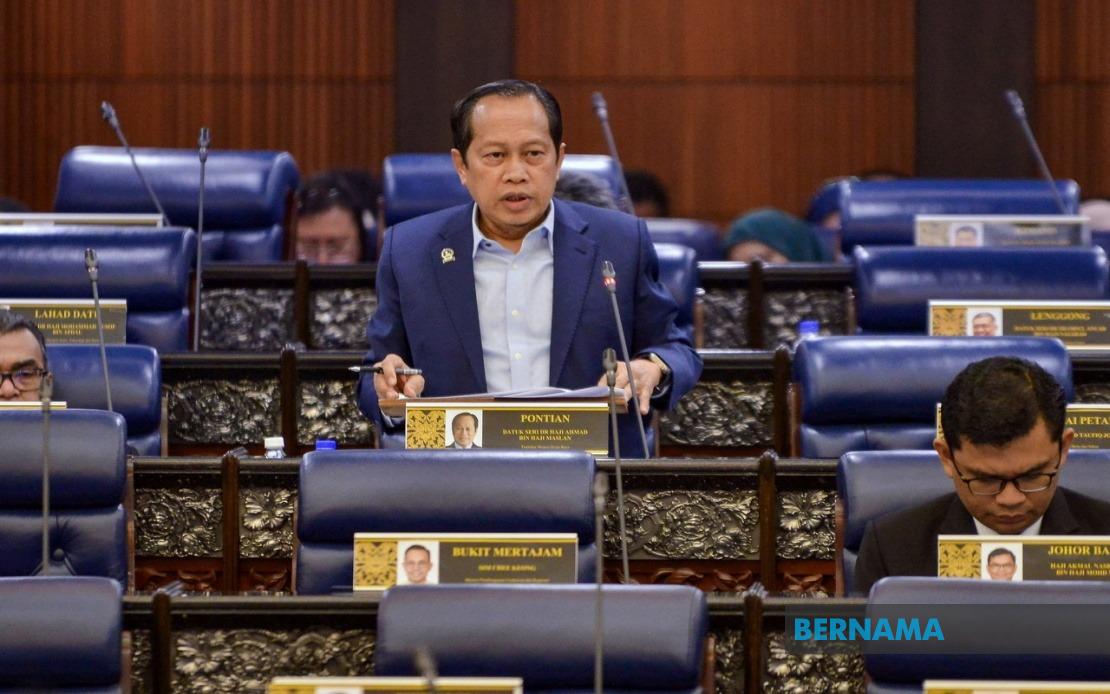
The federal government has disbursed RM1.2 billion in land compensation payments for the Sabah Pan Borneo Highway Phase 1 project to date, Deputy Minister of Works Datuk Seri Ahmad Maslan announced in Parliament. The corresponding Sarawak section of the Pan Borneo Highway has received RM737 million in land compensation, with the federal government absorbing the complete financial burden of all acquisition costs, ancillary losses, and administrative expenses associated with land procurement.
The substantial compensation outlay underscores the government's commitment to protecting landowner interests throughout the massive infrastructure undertaking. By centralising the financial responsibility at the federal level rather than passing costs to project contractors or affected communities, the government aims to prevent economic hardship among property owners whose land forms part of the development corridor. This approach reflects broader policy objectives around ensuring equitable development benefits across Malaysian regions, particularly in Sabah and Sarawak where land ownership patterns and rural economies carry distinct characteristics.
During parliamentary questioning from WARISAN member Isnaraissah Munirah Majilis representing Kota Belud, Ahmad addressed concerns regarding the dramatic escalation of the Sabah Pan Borneo Highway Phase 1 budget. The project cost has climbed to RM24.889 billion, representing nearly double the 2015 initial estimate of RM12.86 billion. This significant variance has drawn scrutiny from lawmakers concerned about fiscal prudence and project management, particularly given the scale of public resources involved in what represents one of Borneo's largest infrastructure initiatives.
The cost escalation stems fundamentally from the government's 2019 decision to terminate the Project Delivery Partner model and transition to the Federal Conventional Contractor approach. Ahmad explained that this pivotal shift, driven by considerations of national interest, necessitated comprehensive reassessment of all remaining works and project scope five years into the original planning cycle. The change in contractual framework and delivery methodology required detailed technical revaluation that substantially altered cost projections and implementation timelines.
From an engineering perspective, Ahmad identified multiple factors contributing to the revised budget. Modifications to project scope and design specifications emerged as primary drivers, alongside unforeseen challenges in geotechnical and soil treatment requirements. Additionally, large-scale utility relocation works—involving the repositioning of electrical, telecommunications, water, and other critical infrastructure networks along the highway corridor—added considerable expense beyond initial estimates. These technical complexities reflect the challenging terrain and existing infrastructure landscape across Sabah that required more sophisticated engineering solutions than initially anticipated.
The Phase 1 structure comprises two distinct segments with separately quantified budgets. Phase 1A encompasses 16 work packages totalling RM10.9 billion in cost, while Phase 1B involves 19 work packages valued at RM13.989 billion. This division enables more granular project management and allows authorities to sequence implementation according to available funding allocations and contractor capacity. The bifurcated approach also provides flexibility for phased completion and opening of different highway sections to traffic.
Beyond the technical recalibration, Ahmad highlighted macroeconomic factors that substantially influenced revised costings. Inflationary pressures across Malaysia's economy between the initial 2015 assessment and present-day implementation have eroded purchasing power for construction budgets. More significantly, global and domestic commodity price volatility has driven steep increases in critical construction materials including iron, bitumen, and cement. These essential inputs, sourced from both Malaysian suppliers and international markets, command premium prices reflecting supply chain disruptions and heightened global demand for construction materials—challenges that intensified following major Southeast Asian development projects and post-pandemic economic recovery dynamics.
Labour cost escalation compounds the material price challenge. Malaysian construction sectors have experienced sustained wage increases reflecting tighter labour markets, competition for skilled workers across multiple megaprojects, and demographic shifts affecting workforce availability. Similarly, machinery and equipment costs have risen sharply, reflecting increased global demand for construction equipment and elevated financing costs for heavy plant acquisition. These cumulative labour and machinery pressures are structural rather than temporary, suggesting that revised budget estimates may face further upward revision if project timelines extend.
For Malaysian policymakers and observers, the Pan Borneo Highway represents a critical infrastructure investment with far-reaching implications for Sabah and Sarawak's economic development. Enhanced connectivity between coastal and interior regions promises to unlock agricultural, resource extraction, and tourism potential while improving service delivery to remote communities. However, the substantial cost escalation raises important questions about project management practices, the adequacy of initial feasibility assessments, and the sustainability of large infrastructure programmes amid volatile commodity markets and labour dynamics. The government's assumption of full compensation costs reflects confidence in the project's economic returns and commitment to equitable development, yet accountability for budget management remains essential.

