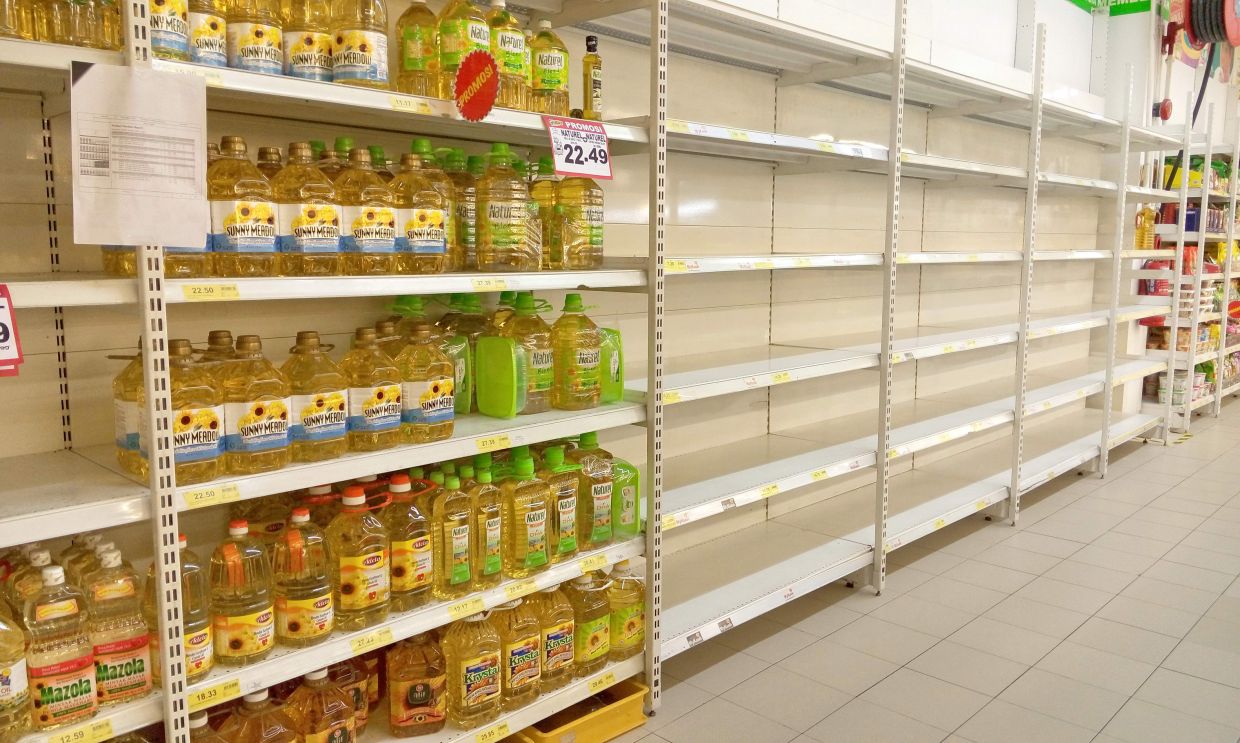
A damning Public Accounts Committee investigation has exposed the disappearance of RM10.879 billion allocated for cooking oil subsidies between 2019 and February 2025, painting a picture of governance failures that undermines the government's stated commitment to efficient, targeted assistance for economically vulnerable Malaysians. The scale of the leakage—nearly 11 billion ringgit vanishing from a programme designed to stabilise food prices for ordinary households—raises uncomfortable questions about accountability, institutional capacity, and whether the federal government possesses adequate mechanisms to track and protect public funds intended for essential commodities.
The cooking oil subsidy represents one of Kuala Lumpur's most politically sensitive expenditure items. Rising prices for this staple ingredient directly impact household budgets across the income spectrum, making its availability and affordability a barometer of public contentment. When shelves run empty despite massive government spending, citizens rightly perceive a disconnect between stated policy objectives and tangible outcomes. The PAC's findings suggest that somewhere between budget allocation and consumer purchase, systemic breakdowns permitted funds to leak away without delivering proportionate benefits to ordinary Malaysians struggling with cost-of-living pressures.
Government officials have repeatedly championed subsidy reform as a cornerstone of fiscal responsibility and poverty alleviation. The shift toward targeted rather than blanket subsidies was framed as ensuring assistance reaches genuinely needy populations while eliminating wasteful spending on those capable of paying market rates. Yet the PAC revelation fundamentally challenges this narrative. If the reformed subsidy architecture is genuinely more efficient and closely monitored, the disappearance of nearly RM11 billion indicates either the reform has failed spectacularly, or oversight mechanisms remain dangerously inadequate despite policy rhetoric. The contradiction between government claims of improved efficiency and the documented leakage suggests systemic dysfunction persists at fundamental levels.
The cooking oil subsidy leakage likely stems from multiple causes operating simultaneously. Smuggling to neighbouring countries where prices are significantly higher remains a perennial challenge, with porous borders facilitating illegal exports that drain domestic supplies. Unscrupulous middlemen and traders may have exploited price differentials or manipulated supply chains to capture windfall profits rather than passing subsidised rates to end consumers. Inadequate monitoring by enforcement agencies meant that hoarding, black-market diversion, and artificial scarcity could persist unchecked. Without robust real-time tracking systems connecting subsidy disbursement to actual point-of-sale transactions, discrepancies between allocated funds and retail availability inevitably emerge.
Market enforcement represents perhaps the most glaring weakness exposed by the PAC findings. Malaysia possesses regulatory agencies ostensibly tasked with monitoring commodity markets, preventing abuse, and ensuring subsidy efficacy. Yet RM10.879 billion evaporating without triggering comprehensive corrective action suggests these institutions either lack enforcement authority, sufficient staffing, technological capability, or political backing. When smuggling networks can operate with apparent impunity, when retail prices exceed officially sanctioned levels despite continued subsidy payments, and when product shortages persist despite government expenditure, enforcement failures become indefensible. Accountability mechanisms appear insufficient to deter violations or recover leaked funds.
The broader context of Malaysia's subsidy system reveals structural vulnerabilities extending beyond cooking oil alone. Food and fuel subsidies consume enormous portions of the federal budget, yet tracking mechanisms fail to prevent leakage at scale. The government introduced initiatives to transition toward cash transfers and targeted assistance, recognising that broad commodity subsidies create inefficiencies and perverse incentives. However, incomplete implementation and political resistance to rapid change means hybrid systems persist, creating confusion and vulnerability to exploitation. Until Malaysia constructs comprehensive, digitised tracking infrastructure linking subsidy allocation to verified point-of-sale consumption, similar leakages will continue across multiple programmes.
Regional precedent provides sobering lessons. Neighbouring countries have experienced comparable challenges managing food subsidies, observing that without rigorous border controls, supply-chain transparency, and severe penalties for diversion, millions disappear annually. Indonesia, Thailand, and the Philippines have implemented increasingly sophisticated systems—from biometric tracking to blockchain-based supply chain monitoring—attempting to combat subsidy leakage. Malaysia's approach appears comparatively archaic, relying on traditional enforcement without leveraging modern technology to create real-time visibility into subsidy flows.
The political implications of the PAC findings deserve careful examination. Which government entities bear responsibility? Did ministers oversee the subsidy programme but ignore warning signs of massive leakage? Did enforcement agencies lack resources, authority, or competence? Should the relevant sector minister resign, or does accountability diffuse across multiple institutions? In a system with weak individual responsibility, leakage becomes a shared failure that no single actor bears consequences for, incentivising negligence. Unless Malaysia establishes clear chains of accountability with genuine consequences for allowing billions to leak, future governments will face identical challenges with similar impunity.
For Malaysian consumers, the practical impact has been tangible. Cooking oil shortages have occurred despite government spending billions in subsidies, meaning citizens either go without or pay premium black-market prices. This represents a profound failure of the social contract—the government taxes citizens to provide essential goods, yet those goods become scarce and expensive anyway. Trust in government competence erodes when such fundamental policy objectives collapse, regardless of budgetary commitment. Restoring public confidence requires not merely acknowledging failures but demonstrating concrete structural improvements.
Moving forward, Malaysia must implement emergency measures addressing immediate accountability, complemented by systemic reforms preventing recurrence. Investigation of specific instances of leakage should identify criminal conduct and recover funds where possible. Simultaneously, the government should accelerate transition toward digitised subsidy systems with real-time monitoring, biometric verification at purchase points where feasible, and severe penalties for smuggling or supply-chain manipulation. Border controls require strengthening, particularly in states sharing boundaries with nations offering higher prices. These reforms demand technological investment and inter-agency coordination, but the alternative—continuing to squander billions while citizens experience shortages—remains politically unsustainable.
The PAC's findings ultimately represent a watershed moment exposing uncomfortable truths about Malaysian governance. Whether this becomes a catalyst for genuine institutional reform or merely another scandal that fades into the background depends on whether political leadership acknowledges systemic dysfunction and commits to transformation. The RM10.879 billion already lost cannot be recovered, but preventing equivalent future losses remains achievable if institutions strengthen considerably. For now, Malaysians await clarity on who bears responsibility and what concrete improvements will follow this embarrassing revelation of subsidy programme failure.

