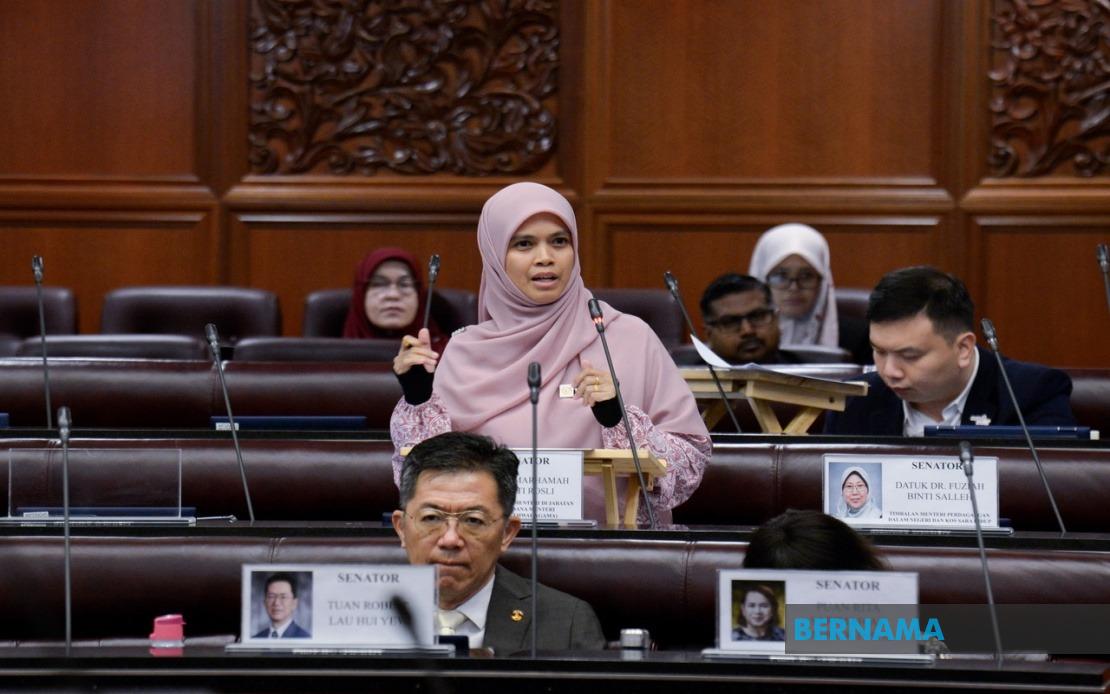
Malaysia's religious development agenda has gained fresh momentum with the approval of 92 mosque construction projects valued at RM160.82 million across the nation. Deputy Minister in the Prime Minister's Department (Religious Affairs) Senator Marhamah Rosli announced the milestone during parliamentary proceedings in the Dewan Negara, revealing that the initiative has already delivered tangible results with 54 facilities now operational and a further 16 actively under construction. The remaining 22 projects remain at preliminary planning or procurement phases, signalling a sustained pipeline of infrastructure investment heading into 2024 and beyond.
The mosque development programme represents a cornerstone of the MADANI government's approach to addressing the religious and social needs of Malaysia's growing Muslim population. Rather than pursuing rapid ad-hoc expansion, the selection process for new mosque locations incorporates multiple layers of assessment. Federal authorities work in tandem with state religious departments to evaluate demographic trends, including population increases and settlement density in specific localities. Existing mosque capacity and geographic coverage are analysed to identify genuine service gaps, ensuring resources flow to underserved communities rather than creating redundancies in well-served areas. Land availability, site suitability, and formal land status confirmation form essential preconditions, with state governments demonstrating financial commitment to projects before federal backing is secured.
A significant policy decision from the 139th Meeting of Menteri Besar and Chief Ministers in June 2022 established a cost-sharing framework that fundamentally reshaped mosque development financing. Under this arrangement, both federal and state governments now contribute to construction budgets, creating a partnership model that distributes financial responsibility and encourages regional ownership of religious infrastructure. This collaborative approach reflects recognition that mosque development extends beyond national religious policy into local community governance, requiring alignment between different tiers of administration to achieve sustainable outcomes.
For Malaysian readers, the project distribution carries particular relevance given rapid urbanisation trends and shifting population patterns across the country. High-growth urban corridors and emerging township areas often experience demographic change faster than religious infrastructure can adapt, creating temporary service deficits. The MADANI programme's emphasis on population density and mosque capacity ratios addresses precisely this challenge, attempting to ensure that newly established communities have adequate prayer facilities without waiting years for facilities to catch up. This responsiveness to demographic shifts distinguishes the initiative from earlier approaches that treated mosque construction as a lower priority in development planning cycles.
Beyond the physical infrastructure dimension, mosque development under the MADANI framework incorporates an explicit welfare and social cohesion component. The government has institutionalised collaborative welfare delivery through partnerships involving the Department of Islamic Development Malaysia (JAKIM), state Islamic religious departments, municipal councils, non-governmental organisations, and community bodies. This multi-stakeholder approach recognises that mosques function as community anchors extending well beyond their primary religious purpose, serving as platforms for delivering social support to vulnerable populations.
Practical welfare initiatives now coordinated through this mosque-centred network encompass assistance targeting recipients classified within asnaf (categories of deserving persons under Islamic jurisprudence), including the poor, orphans, and those in debt. Food basket distribution programmes provide immediate nutritional support, whilst community kitchen operations offer subsidised or free meals to low-income residents. The expansion of temporary shelter facilities addresses homelessness challenges in urban areas, a growing concern as cities experience housing affordability crises. Emergency financial assistance and education support schemes help families navigate sudden shocks or prevent young people from abandoning schooling due to economic hardship.
Counselling services delivered through mosque networks address psychological and social difficulties affecting urban poor communities, whilst funeral management assistance removes significant cost burdens during times of grief. These layered welfare services transform mosques into genuine community development institutions rather than purely liturgical spaces, embedding religious infrastructure within broader social protection systems. For low-income and homeless populations, mosques become trusted access points for government and civil society support that might otherwise prove difficult to reach.
The scale of investment—RM160.82 million—requires contextualisation within broader Malaysian development spending. Whilst not extraordinary in absolute terms, the sum demonstrates sustained governmental commitment to religious infrastructure as a policy priority. When spread across 92 projects in various stages of completion, the per-project average approximately reaches RM1.75 million, suggesting a disciplined approach to standardised mosque design and construction rather than prestige projects in select locations. This democratisation of infrastructure investment across regions enhances national equity in religious facility access.
Senator Mohd Hasbie Muda's parliamentary line of questioning reveals ongoing debate about mosque functionality beyond traditional prayer services. His specific inquiry regarding outreach to homeless populations, urban poor, and low-income groups reflects emerging consensus that Malaysia's religious infrastructure should address contemporary social challenges. The detailed government response outlining welfare programmes indicates receptiveness to this broader conceptualisation of mosque roles, suggesting future policy may increasingly evaluate mosque effectiveness against social impact metrics alongside attendance figures.
The programme's regional implications extend across Southeast Asia, where other Muslim-majority nations grapple with similar questions about religious infrastructure development in rapidly urbanising societies. Malaysia's structured approach—combining demographic analysis, state-federal cooperation, and embedded welfare delivery—provides a replicable model for nations seeking to modernise religious facility planning. The integration of social services into mosque-based programmes particularly interests policymakers elsewhere addressing inequality and urban poverty challenges.
Looking ahead, sustaining this implementation trajectory requires maintaining political consensus across federal and state governments, particularly given Malaysia's complex federalism where religious matters retain state jurisdiction. The cost-sharing framework established in 2022 depends on state governments honouring funding commitments amid competing budget priorities. Additionally, ensuring that completed mosques translate infrastructure provision into meaningful community welfare delivery requires effective management systems and staff training, extending beyond construction completion into long-term operational excellence.

