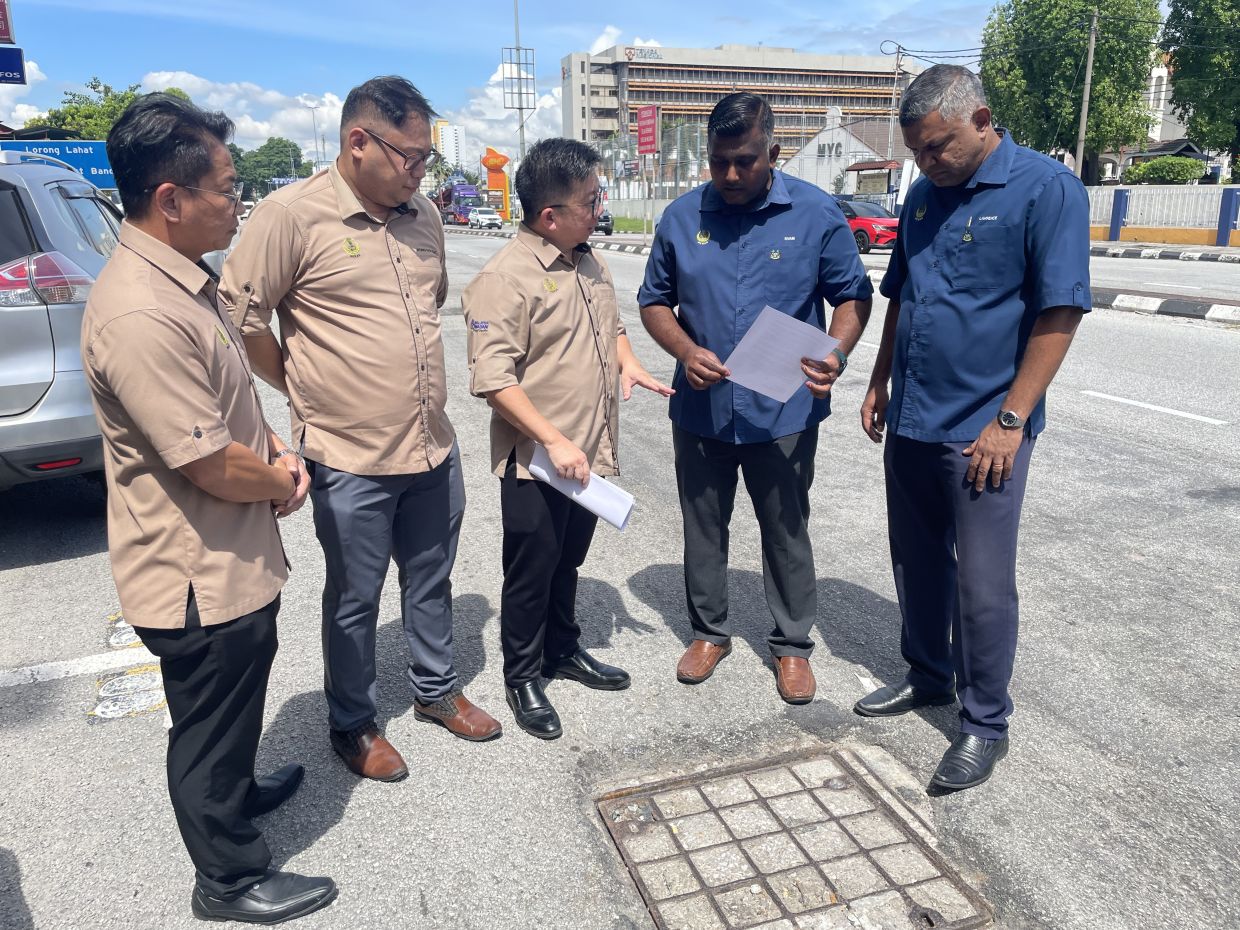
Ipoh residents and commuters can expect significant improvements to one of the city's most troublesome routes, with authorities greenlighting a RM2.6 million resurfacing initiative on Jalan Lahat that will tackle nearly 4km of deteriorating pavement. The project, scheduled to launch in July, represents a major intervention into a persistent infrastructure problem that has frustrated motorists and prompted widespread social media complaints about the road's shocking condition.
The work will span the section of Jalan Lahat running from the Falim traffic lights through to the Jalan Leong Boon Swee junction near Little India, covering critical portions within the constituencies of Buntong, Tebing Tinggi and Menglembu. According to Menglembu assemblyman Chaw Kam Foon, the Malaysian Road Records Information System (Marris) funding mechanism has enabled this targeted intervention on what he described as the most compromised stretch of the thoroughfare, even though the overall road extends 10 to 11 kilometres.
The severity of Jalan Lahat's deterioration has become increasingly apparent through documented incidents. Approximately 20 vehicles experienced tyre punctures during June alone after encountering potholes scattered across the affected area. A viral video circulating on social media highlighted a particularly dangerous pothole on an elevated section of the road, raising acute safety concerns among drivers and prompting temporary emergency patching. Such incidents underscore how poor road conditions impose direct financial and safety costs on ordinary commuters while degrading the user experience across the municipality.
The road's current state reflects years of accumulated damage and neglect despite repeated requests for comprehensive intervention. Councillor K. Sivam noted that authorities have fielded appeals for resurfacing work since 2024, with formal approval finally materialising this year. The delay underscores how infrastructure maintenance backlogs can persist even when problems are well-documented and community concerns are vocally expressed. The tender process is now underway, with construction expected to commence in July and finish within approximately three weeks, pending no major unforeseen complications.
Jalan Lahat's importance to Ipoh's urban fabric justifies the priority given to its restoration. The corridor serves residential neighbourhoods, educational institutions and commercial precincts while functioning as a primary route for substantial vehicular traffic, including heavy lorries and commercial transport. This multi-functional character means that poor road conditions disrupt residential quality of life, compromise school access, hinder business operations and accelerate wear on commercial vehicle fleets. The concentration of diverse land uses creates a high-utilisation environment where basic pavement integrity becomes essential infrastructure for economic and social functioning.
Previous maintenance attempts employing conventional patching methods have proven ineffectual, as transitory repairs deteriorate rapidly under persistent traffic volume and monsoon weather exposure. Such episodic interventions fail to address underlying structural deficiencies and merely postpone deterioration without resolving fundamental pavement integrity problems. The comprehensive resurfacing approach now being undertaken represents recognition that incremental repairs cannot substitute for systematic reconstruction where pavement substructures have become compromised.
Contributing significantly to road damage has been inadequately executed utility work, particularly sewerage infrastructure installations. Sivam identified past excavation projects where restoration standards fell short of specifications, leaving compensatory sections weaker than original pavement. This systemic failure reflects gaps in enforcement mechanisms where utility contractors completing underground work without properly reinstating road surfaces left municipalities bearing rectification costs while motorists absorbed accident risks. The problem exemplifies how fragmented accountability across multiple agencies can undermine infrastructure integrity when coordination and monitoring prove insufficient.
The forthcoming resurfacing project encompasses more than simple asphalt replacement, incorporating comprehensive remediation including manhole levelling, elimination of surface undulations, and complete lane marking repainting. These measures address the accumulated physical degeneration accumulated through traffic loading, weather exposure and substandard prior interventions. The holistic approach should yield a functional surface capable of sustaining normal usage demands across multiple years, representing a genuine upgrade rather than cosmetic repair.
Future accountability mechanisms aim to prevent recurrence of similar deterioration patterns. The Corridor Utiliti Darul Ridzuan (KUDR) will exercise enhanced oversight authority over subsequent utility excavation work, ensuring contractors comply with mandatory road restoration specifications. Enforcement capacity now includes financial penalties, compounding mechanisms and mandatory rectification orders for non-compliant work. This structured accountability framework should theoretically discourage substandard restoration practices by imposing material consequences for specification breaches, though effectiveness depends on consistent monitoring and prompt enforcement action.
The Jalan Lahat project carries implications extending beyond Ipoh's municipal boundaries. Deteriorating road conditions across Malaysian municipalities reflect broader infrastructure maintenance challenges affecting urban livability and economic productivity. As populations concentrate in urban centres and traffic intensifies, systematic resurfacing becomes increasingly necessary but frequently deferred due to competing budget priorities. Ipoh's decision to invest in comprehensive pavement restoration, however delayed, signals recognition that deferring such maintenance generates compounding costs through accelerated deterioration, vehicle damage claims and compromised traffic safety. For other Malaysian municipalities wrestling with similar infrastructure backlogs, this precedent demonstrates how coordinated funding mechanisms and structured accountability can enable substantial progress on long-standing problems when political will aligns with available resources.