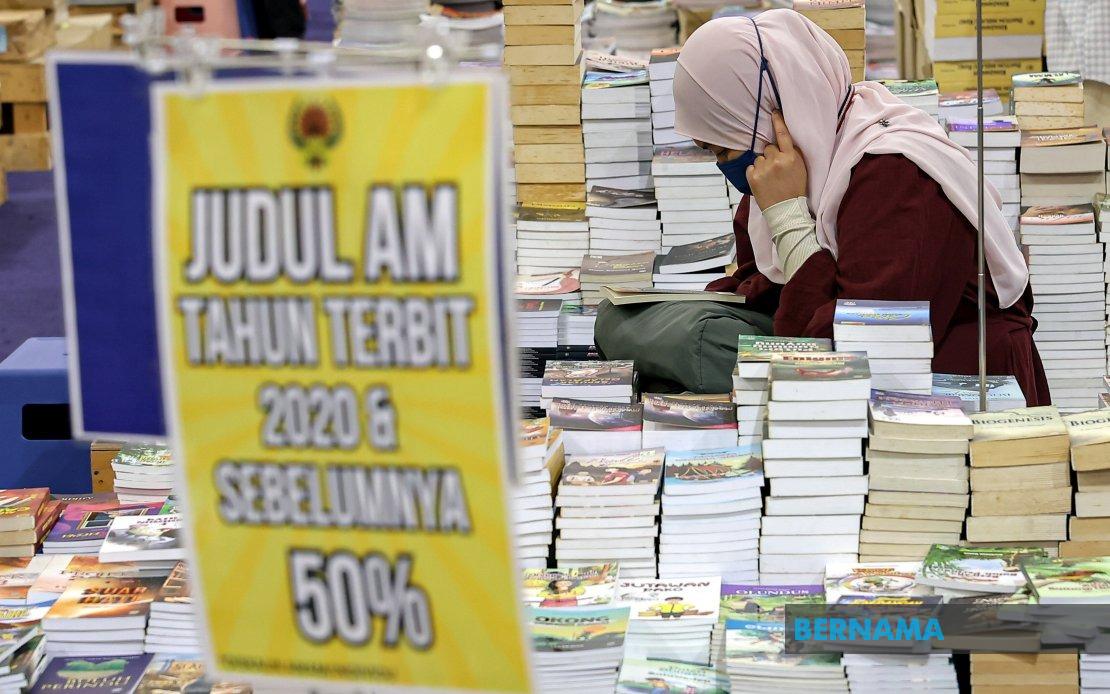
Malaysia's Ministry of Education is rolling out its third year of the MADANI Book Voucher Programme, extending financial support to over 2.2 million learners across the nation through a RM221.6 million investment. Beginning tomorrow, eligible students will start redeeming RM100 electronic vouchers until October 31, marking a significant continuation of the government's commitment to ensuring equitable access to reading materials for all children, regardless of socioeconomic background or geographic location.
The programme encompasses a broad cohort of learners, including those enrolled in Remove Class through Form Six in secondary institutions, alongside students in vocational colleges, matriculation programmes, and trainee teachers at the Malaysian Institute of Teacher Education (IPGM). Deputy Education Minister Wong Kah Woh confirmed that 2,217,579 recipients will gain access to the initiative, representing a substantial investment in youth literacy and intellectual development across the nation's educational pipeline.
The technological backbone supporting this year's distribution remains the BookCapital digital platform, which has expanded its merchant network to include 1,238 registered booksellers nationwide. The entirely online system streamlines the redemption process, initiating at 11 am on July 1, and eliminates geographical barriers that might otherwise prevent students in rural or remote regions from accessing the scheme. This digital-first approach addresses a persistent challenge in Malaysian education: ensuring that location does not determine opportunity.
A notable evolution in the 2026 iteration involves the introduction of the MADANI Special Title Focus category, which curates literary works and classic fiction alongside carefully selected non-fiction across disciplines including history, philosophy, economics, geopolitics, and human capital development. Critically, all recipients must purchase at least one book from this designated collection, a requirement that steers reading habits toward intellectually substantive content beyond entertainment-focused selections. The emphasis reflects policymakers' recognition that book vouchers function most effectively when aligned with broader educational outcomes rather than serving as mere purchasing subsidies.
Future-oriented subjects receive particular prioritization within the focus category. The Ministry has deliberately highlighted titles addressing artificial intelligence, information technology, Science, Technology, Engineering and Mathematics (STEM) disciplines, and digital transformation. This thematic weighting acknowledges Malaysia's positioning within increasingly technology-dependent global knowledge economies and signals educational authorities' determination to cultivate competencies essential for tomorrow's workforce. The strategy implicitly recognises that voluntary reading patterns often lag behind curricular requirements, necessitating gentle guidance toward domains that develop competitive advantage.
Evidence from previous years supports the programme's effectiveness in measurable terms. An independent impact assessment conducted by the Darul Ehsan Institute found that 97.5 per cent of surveyed recipients reported the MADANI Book Voucher had substantially assisted their studies, with particular benefits accruing to learners from economically disadvantaged households. Additionally, 92.2 per cent of respondents indicated the vouchers had enhanced their examination preparation, suggesting concrete academic benefits beyond cultural or recreational dimensions.
The redemption rate achieved in the inaugural 2024 implementation reached an extraordinary 100 per cent, a metric rarely observed in government subsidy programmes globally and indicating both effective communication of availability and genuine demand for reading materials among the target population. Such penetration levels distinguish the MADANI scheme from aspirational initiatives that sound appealing in policy documents but struggle with uptake. The universal participation rate also implies minimal bureaucratic friction in the redemption mechanism and suggests that the BookCapital platform successfully navigated technical obstacles that often plague large-scale digital distribution systems.
Wong emphasised three interconnected claims regarding programme accomplishments: complete redemption, complete transparency, and zero leakage. The transparency dimension proves particularly significant within Malaysian policy contexts where allegations of leakage and selective benefit distribution have historically undermined confidence in public programmes. By operating entirely through a centralised digital platform with clearly identifiable merchant partners, the scheme creates an auditable record substantially resistant to informal diversion or patronage-based capture. Unlike cash transfers or paper vouchers, which may be exchanged through unofficial channels, the BookCapital model locks transactions within its managed ecosystem.
The geographic equity dimension warrants emphasis for Southeast Asian contexts where educational disparities between urban and rural zones remain pronounced. Malaysia's vast territory includes remote peninsular areas, offshore island communities, and interior Borneo regions where physical access to bookshops has historically constrained purchasing options. The MADANI scheme's nationwide digital accessibility theoretically eliminates these supply-side constraints, enabling a student in a Terengganu fishing village to access identical inventory as counterparts in Kuala Lumpur's commercial districts. Realising this potential depends on reliable courier networks and internet connectivity, which in practice may remain uneven despite policy-level ambitions.
The programme emerges from broader MADANI Framework policy architecture, which positions books and intellectual engagement as public goods warranting direct state investment. This philosophical positioning contrasts with approaches treating education as primarily private benefit. By subsidising book purchases directly rather than providing cash transfers, the policy architects made deliberate choices about individuals' consumption patterns, reflecting assumptions that guided purchasing decisions generate greater social return than uncontrained spending flexibility.
For Malaysian educators and parents navigating their children's intellectual development, the scheme offers tangible financial relief and signals state prioritisation of reading culture. The RM100 allocation, while modest, represents meaningful purchasing power within Malaysia's book retail markets, typically enabling acquisition of three to five substantial titles depending on category and publisher. The curated focus list introduces students to intellectual traditions and contemporary challenges that extend beyond formal syllabi, potentially enriching analytical capacities and cultural literacy.
The programme also creates meaningful commercial opportunities for independent and regional booksellers who comprise a significant portion of the 1,238 registered merchants. Rather than channelling the RM221.6 million through major retailers alone, the distributed model sustains competitive publishing ecosystems and supports smaller vendors who might otherwise face margin pressures from consolidated retail chains. This microeconomic dimension, though less visible than individual student benefits, contributes to literary publishing vitality across Malaysia.
As redemption commences, the Ministry will presumably monitor uptake patterns, merchant participation consistency, and emerging feedback regarding title availability and delivery logistics. These operational details will determine whether this year's iteration successfully builds on 2024's achievement or encounters friction points that reduce accessibility despite digital platform advantages. The commitment to conducting annual impact assessments suggests policy receptiveness to evidence-based refinement, a posture increasingly essential as government education interventions navigate complex technological and social implementation environments.

