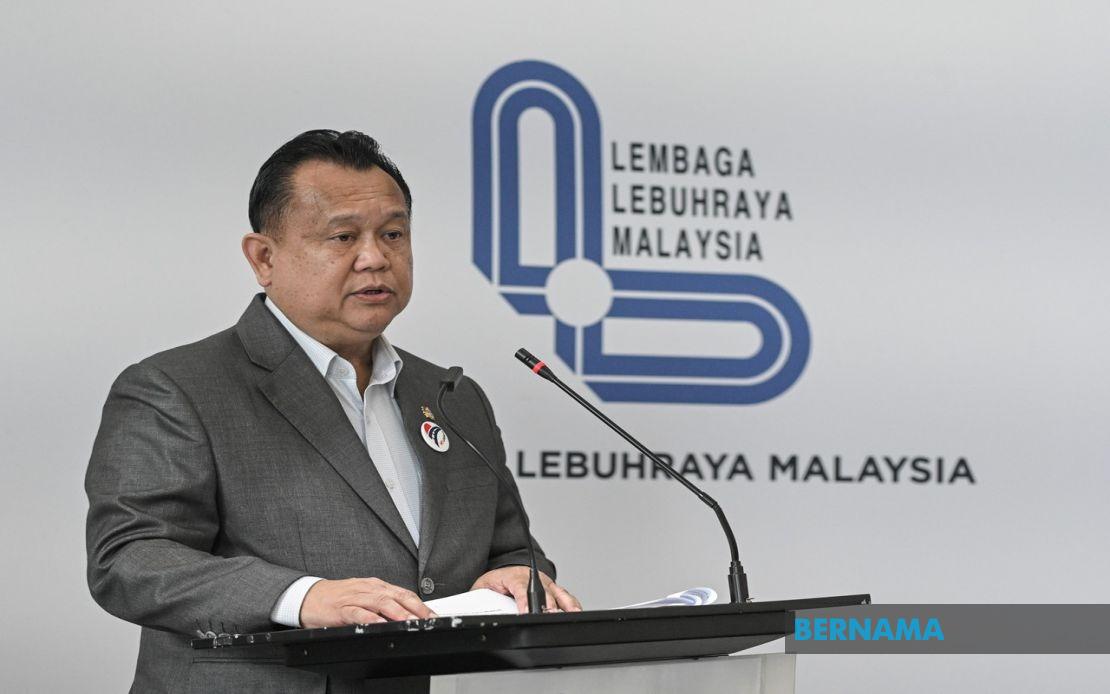
The Malaysian government has committed RM25.2 million towards upgrading safety infrastructure at 32 accident-prone locations along the nation's highway network through the installation of solar-powered LED lighting. Works Minister Datuk Seri Alexander Nanta Linggi announced that this initial phase represents a significant step in addressing the persistent challenge of road accidents that claim lives and cause injuries across the country's major transportation corridors.
The project encompasses the installation of 3,000 light poles strategically positioned at intersections, interchange zones, and vulnerable stretches identified through accident data analysis. These solar-powered units represent a departure from conventional grid-dependent lighting systems, offering both environmental benefits and operational resilience. The technology allows these sections to maintain visibility during peak accident hours without relying on continuous electricity supply, making them particularly suitable for remote or newly developed highway segments where grid infrastructure may be inadequate.
This initiative forms part of the broader MADANI Monitoring programme, reflecting a coordinated approach between the Works Ministry, the Finance Ministry, and the Malaysian Highway Authority (LLM). The collaborative framework demonstrates recognition that road safety requires multi-agency coordination and sustained investment. The timing of this announcement follows Prime Minister Datuk Seri Anwar Ibrahim's inclusion of the allocation in the 2026 Budget presented in October of the previous year, signalling the government's commitment to translating budgetary commitments into tangible ground-level improvements.
The financial structure reveals pragmatic fiscal management. Although the original allocation was pegged at RM30 million, the initial phase draws down RM25.2 million, with remaining funds reserved for subsequent phases pending assessment of requirements. This staged approach allows the government to evaluate the effectiveness of the current installations before committing additional resources, ensuring that future expansions are based on measured performance data rather than assumptions. Such flexibility is particularly valuable in infrastructure projects where real-world conditions may differ from initial projections.
The procurement process has progressed swiftly, with the Letter of Acceptance (SST) delivered to the selected contractor, clearing the path for immediate site mobilization. This rapid transition from approval to physical implementation suggests streamlined administrative processes and reflects urgency within government circles regarding accident prevention. The contractor now faces a demanding timeline, with the project scheduled for completion by the end of November 2025, a window that spans less than six months and demands efficient execution across multiple dispersed locations.
For Malaysian road users, particularly those traversing highways during evening and night hours, these installations promise tangible improvements in visibility at sections where accidents cluster. Poor lighting has long been identified as a contributing factor in highway collisions, especially in monsoon seasons when weather conditions reduce natural visibility. The strategic placement at high-risk locations rather than blanket coverage represents a data-driven prioritization approach, concentrating resources where they will yield the greatest impact on accident reduction.
The adoption of solar technology carries implications beyond immediate safety gains. By reducing dependence on grid electricity, these installations lower long-term operational costs and reduce the carbon footprint of highway maintenance operations. As Malaysia advances its commitments to renewable energy adoption and carbon neutrality targets, such visible infrastructure projects demonstrate practical integration of sustainable technologies within essential public services. This approach aligns with broader regional trends towards green infrastructure integration across Southeast Asia.
The significance of this project extends to Malaysia's road safety standing within the region. Southeast Asian nations have struggled with high traffic fatality rates, and infrastructure-based interventions like improved lighting address environmental factors contributing to crashes. By systematically upgrading vulnerable locations, Malaysia positions itself as proactive in tackling structural road safety challenges rather than relying solely on enforcement or driver education campaigns, which form important but incomplete safety strategies.
The 32 locations represent a carefully curated selection based on accident statistics and risk assessment. These sites likely include notorious accident hotspots that feature prominently in police reports and highway authority data. Concentrating investment at these locations maximizes the return on safety expenditure, as accident rates at high-risk sections justify premium infrastructure investment. However, the selection criteria remain undisclosed, leaving questions about how locations were prioritized and whether additional high-risk sections beyond these 32 were identified but deferred due to budget constraints.
Implementation challenges will test the project's execution. Coordinating work across 32 dispersed locations simultaneously requires robust project management, particularly regarding supplier coordination, workforce deployment, and quality assurance. Weather disruptions during installation phases could compress already tight timelines. The contractor's ability to deliver 3,000 light poles and complete installation by November will serve as a barometer of Malaysia's capacity to execute large-scale, multi-site infrastructure projects on schedule.
Looking beyond November 2025, the performance of these installations will determine the trajectory of further highway lighting upgrades. If accident reduction at these 32 locations proves measurable and significant, the government will likely justify additional budget allocations for expanding coverage. Conversely, disappointing results might necessitate reassessment of the technology's effectiveness or lead to complementary interventions such as road surface improvements or traffic management modifications. Real-world performance data will thus become crucial for informed policy-making in subsequent highway safety initiatives.
The psychological impact on drivers must not be underestimated. Enhanced visibility at previously dark or dimly lit sections provides not only objective safety improvements but also subjective confidence that encourages safer driving behavior. Drivers navigating well-lit sections tend to moderate speeds and exercise greater caution, creating compound safety benefits beyond the direct illumination effects. This behavioral dimension adds value to the infrastructure investment beyond engineering calculations.