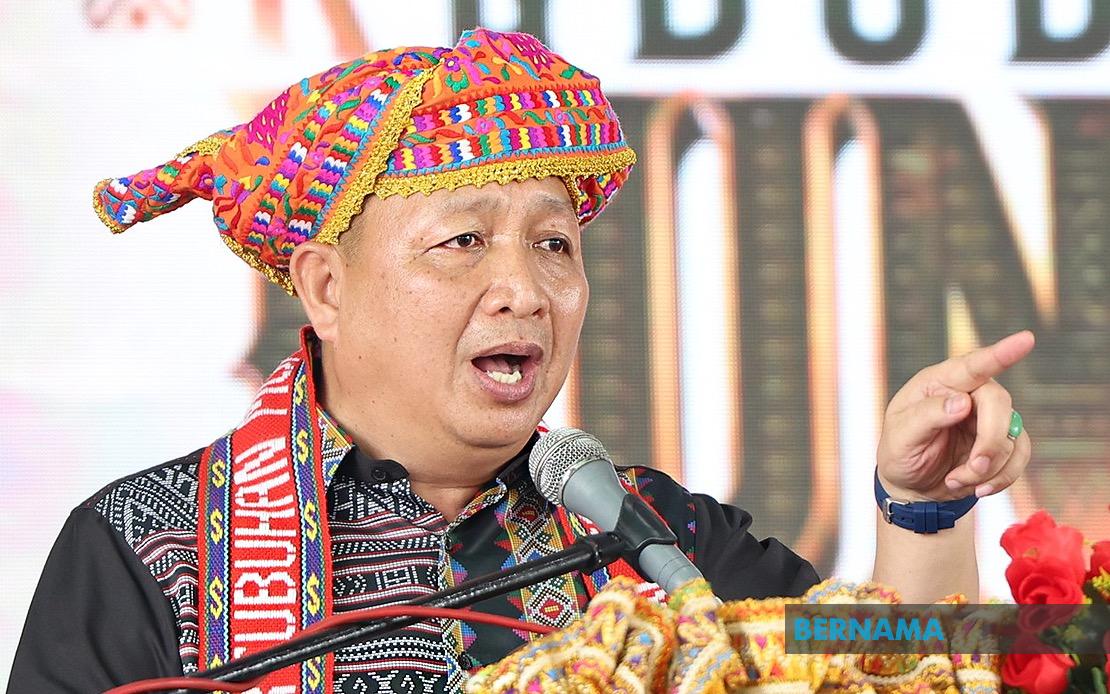
The Federal government has committed RM4.06 billion toward addressing chronic water shortages affecting rural communities across Sabah, with the funding channelled through the Rural Water Supply programme. Deputy Prime Minister Datuk Seri Dr Ahmad Zahid Hamidi unveiled the initiative during his attendance at the Rungus Cultural Festival in Kudat, signalling a significant push to enhance basic services in underserved regions of the state.
The scale of this investment underscores growing recognition that water access remains a fundamental challenge in Sabah's interior and remote settlements. Rural households across the state have historically struggled with inconsistent supply, contamination risks, and the absence of piped networks—issues that disproportionately affect agricultural productivity and health outcomes in communities far from urban centres. This allocation represents one of the largest targeted interventions in recent years to systematically tackle the problem across multiple districts simultaneously.
What distinguishes this approach is the decision to devolve implementation responsibility to the Sabah state government rather than maintaining central management through the Rural and Regional Development Ministry in Kuala Lumpur. Kota Marudu Member of Parliament Datuk Wetrom Bahanda, who also leads the Malaysian Momogun Rungus Association, emphasised that this structural shift reflects a pragmatic understanding of ground-level realities. By placing project execution in state hands, policymakers aim to enable more responsive assessment of actual community needs and faster adaptation to local conditions—an arrangement that conventional centralised models have struggled to achieve effectively.
The delegation of authority represents a meaningful departure from conventional practice in rural infrastructure provision. Historically, such projects originating from Putrajaya have been managed through standardised protocols that, while ensuring consistency, sometimes failed to account for Sabah's distinct geography, demographic composition, and infrastructure gaps. The Rural and Regional Development Ministry's willingness to channel resources directly to the state government suggests recognition that devolution can improve targeting and reduce implementation bottlenecks that plague projects managed from distant federal offices.
Beyond water supply, complementary road infrastructure projects are simultaneously advancing across Kota Marudu and surrounding districts. Construction work on the Sonsogon-Megandai and Mangin roads is actively progressing, while additional routes including Jalan Rendemon, Jalan Teringai, Jalan Sembayan, and the corridor linking Jalan Raritiden to Pampang Poring are scheduled for upgrading. These connectivity improvements carry implications extending well beyond simple transportation convenience. Better road access to interior settlements facilitates market linkages for agricultural producers, reduces isolation for dispersed populations, and enables service providers—including healthcare workers and educators—to reach communities more reliably.
The cumulative effect of these interventions addresses a persistent development disparity. Both Kota Marudu and Kudat districts rank among Sabah's poorest regions, characterised by limited economic diversification and historically underinvestment in foundational infrastructure. By simultaneously improving water access and road connectivity, the package targets fundamental constraints on economic participation and quality of life. Communities struggling with water scarcity and poor road networks face compound disadvantages: agricultural activities become unreliable, youth migration accelerates, and private investment remains minimal.
Wetrom's acknowledgement of Federal support for upgrading Matunggong subdistrict into a full administrative district carries additional significance. District-level status typically brings enhanced governance capacity, dedicated budgetary allocations, and improved access to state-level services. For dispersed communities in interior Sabah, such administrative reorganisation can meaningfully improve service delivery and create locational advantages for small business development.
The timing of these announcements at a cultural festival attended by the Deputy Prime Minister suggests deliberate political messaging around inclusive development priorities. The Rungus Cultural Festival celebration, particularly given the presence of the Malaysian Momogun Rungus Association leadership, indicates recognition of the Rungus indigenous community's specific circumstances and aspirations. Such visibility at high-profile events can accelerate implementation momentum and signal sustained commitment beyond the announcement phase.
For Malaysian policymakers observing from other regions, Sabah's model warrants attention as potential template. The explicit choice to devolve implementation rather than maintain centralised control offers lessons for rural development strategy more broadly. States with substantial interior populations and dispersed settlement patterns—including Sarawak and Peninsular Malaysia's eastern regions—might adopt similar approaches to improve project responsiveness and targeting efficiency. The fundamental principle that ground-level implementation partners typically possess superior information about local conditions and constraints has long-standing validity in development economics.
The RM4.06 billion allocation, while substantial, must be contextualised within ongoing infrastructure deficits across Sabah. Full realisation of benefits depends critically on subsequent execution quality, maintenance arrangements, and community engagement during implementation. Successful delivery requires sustained technical capacity in state agencies, transparent procurement processes, and mechanisms for ongoing community input regarding priorities and grievance resolution.
Looking forward, the true measure of success will emerge over coming years through documented improvements in water access duration, supply reliability, and water quality across target communities. Beyond quantitative metrics, the initiative's impact on rural economic activities, health outcomes, and patterns of rural-urban migration will indicate whether infrastructure investment has genuinely addressed underlying constraints on rural development. For a state facing persistent development disparities, this coordinated approach to water and connectivity represents meaningful ambition—though ambition alone cannot guarantee the institutional performance and sustained commitment required for transformative rural development.

