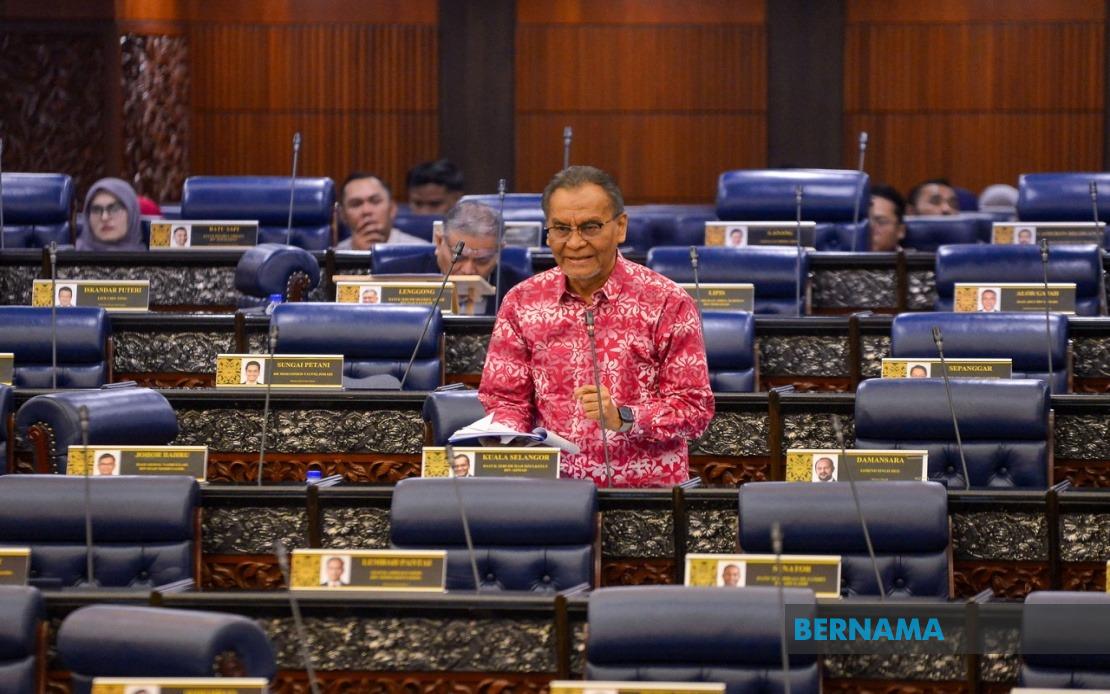
Health Minister Datuk Seri Dr Dzulkefly Ahmad has moved to reassure the public and lawmakers that a RM500 million expenditure restriction warrant imposed on the Ministry of Health represents a technical budgetary recalibration rather than a substantive operational constraint. Speaking during parliamentary question-and-answer proceedings, Dzulkefly clarified that the adjustment does not represent a cut to essential services or compromise the government's healthcare delivery mandate. The restriction warrant, issued by the Finance Ministry on June 5, amounts to approximately 1.07 per cent of the MOH's total annual allocation of nearly RM46.52 billion, a relatively modest proportion that underscores the minister's argument that core functions remain adequately resourced.
The core mechanism underlying the budget adjustment involves reallocation of surplus funds that had been provisioned for positions unable to be filled within the current recruitment cycle. Dzulkefly explained that the ministry had been granted approval for 18,641 positions by the Public Service Department for the financial year, yet the actual pool of available candidates could not saturate this approved establishment. This structural mismatch between authorised positions and available personnel created a budgetary surplus that the government has elected to redirect through prudent financial management. Rather than allowing these funds to remain unutilised within the ministry's envelope, the Finance Ministry opted to impose a restriction warrant that reallocates the money elsewhere while maintaining the ministry's operational integrity.
Crucially, Dzulkefly emphasised that the restriction warrant explicitly excludes allocations designated for routine operations, capital development projects, staff remuneration packages, professional training initiatives, and procurement of medical equipment and supplies. The adjustment was achieved through comprehensive re-planning of expenditure architecture, prioritising the most efficient deployment of available financial resources without diminishing the scope or quality of healthcare services extended to Malaysian patients. This distinction matters significantly for public perception and parliamentary accountability, as it positions the measure as prudent fiscal housekeeping rather than enforced austerity affecting frontline healthcare.
The minister's parliamentary response addressed specific concerns raised by legislators regarding whether fiscal adjustments would cascade into deteriorated service quality at hospital facilities, particularly in rural and remote regions where healthcare infrastructure remains comparatively constrained. Dzulkefly categorically rejected characterisations suggesting that the budget adjustment would compromise rural healthcare delivery or impede planned health development projects. All foundational healthcare services and scheduled infrastructure projects would proceed uninterrupted, he assured, framing the adjustment as compatible with sustained operational continuity across the public health system's vast geographic footprint.
Beyond clarifying the immediate budget matter, Dzulkefly used the parliamentary platform to unveil broader healthcare policy initiatives designed to address persistent affordability challenges within Malaysia's private healthcare sector. The Ministry of Health, operating through the Joint Committee on Private Healthcare Costs (GBMKKS), plans to introduce a Base Medical and Health Insurance/Takaful (MHIT) scheme beginning this month at selected hospital facilities. This foundational health protection plan represents a strategic intervention into escalating private healthcare costs and insurance premium burdens that have constrained access for middle and lower-income households. The pilot phase precedes a comprehensive national rollout scheduled for January 2027, allowing the ministry to refine implementation mechanisms and gather real-world evidence regarding programme efficacy.
The MHIT initiative embodies a hybrid public-private approach to healthcare financing, crafted to deliver basic coverage that remains affordable while furnishing meaningful financial protection against catastrophic treatment expenditures. By offering simplified plan architecture and reduced premium thresholds, the government targets demographic segments previously marginalised from formal health insurance coverage due to cost considerations. For Malaysian policymakers and analysts focused on health equity, the scheme signals recognition that purely market-driven private insurance models have generated access gaps requiring strategic state intervention, particularly given demographic ageing and rising prevalence of chronic disease management requirements.
Paralleling the insurance initiative, the ministry is implementing a Diagnosis Related Groups (DRG) payment system intended to standardise hospital pricing and charges across the entire Malaysian healthcare ecosystem, encompassing public, private, university-affiliated, and military healthcare institutions. This payment methodology departure represents a structural reform towards transparency and consistency in healthcare pricing, addressing longstanding complaints regarding disparate charges for identical clinical procedures across different provider categories. By establishing benchmark payment schedules anchored to clinical diagnosis and treatment complexity rather than subjective provider discretion, the DRG framework aims to curb pricing variability and associated patient financial burden volatility. For regional observers, Malaysia's adoption of DRG methodology aligns the country with international best practices whilst creating comparative benchmarking data relevant to other Southeast Asian health systems wrestling with similar healthcare affordability pressures.
The broader policy context reveals a government healthcare strategy attempting to simultaneously manage fiscal discipline while expanding access and affordability across public and private sector divides. The RM500 million adjustment, positioned as technical reallocation from unfilled positions, accommodates overall budgetary consolidation objectives whilst the ministry layers on affirmative financing and payment system reforms. This dual approach suggests recognition that healthcare affordability challenges require multifaceted intervention spanning insurance product innovation, provider payment restructuring, and workforce establishment pragmatism rather than zero-sum budgetary cuts.
For Malaysian patients and health advocates, Dzulkefly's parliamentary clarification attempts to decouple fiscal adjustment announcements from service deterioration narratives that frequently characterise public health budget modifications across the region. The specific quantification that the restriction represents 1.07 per cent of total allocation provides numerical grounding to assertions of minimal operational impact. However, the parliamentary questions themselves, originating from both government-aligned and opposition benches, suggest persistent public and legislative anxiety regarding healthcare budget sustainability in a fiscal environment characterised by competing demands and consolidation pressures.
The ministry's introduction of insurance protection schemes and payment system reforms simultaneously addresses private sector healthcare affordability, an increasingly salient issue as medical costs consume growing household budget shares. The January 2027 full rollout timeline for MHIT implies deliberate staged implementation permitting administrative capacity development and stakeholder adjustment, particularly among private healthcare providers accustomed to less regulated pricing environments. For Malaysian employers and workers navigating healthcare financing decisions, the availability of subsidised basic coverage options represents meaningful expansion of financial protection alternatives beyond traditional employer group schemes and individual market policies.

