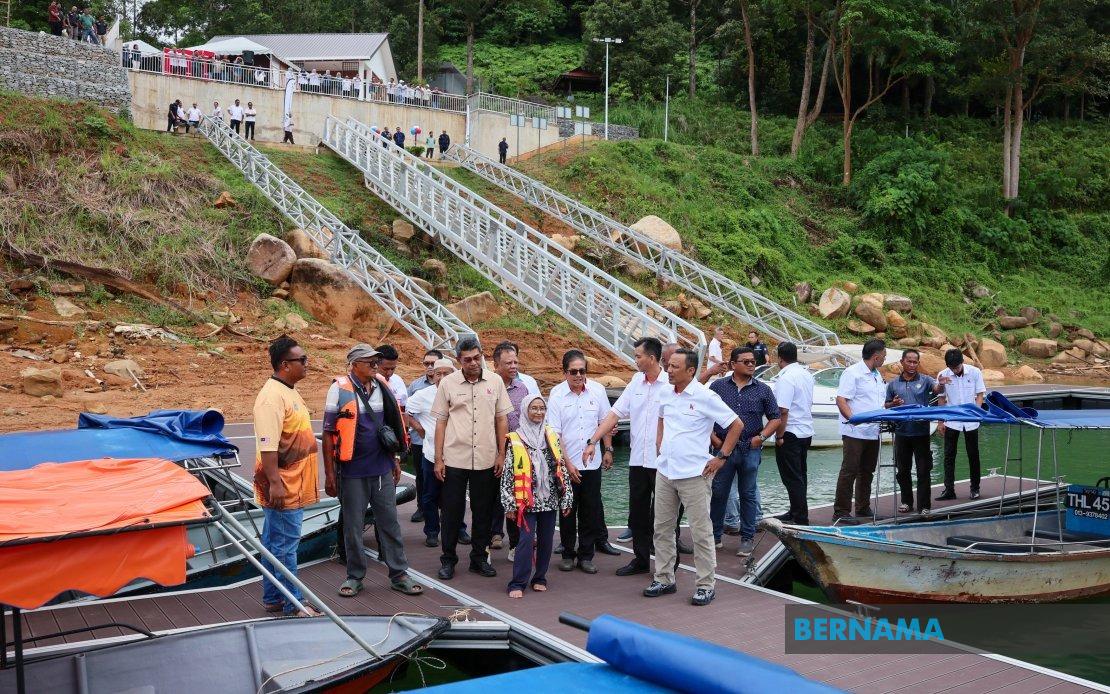
A purpose-built jetty facility worth RM8.7 million has been officially handed over at Tasik Kenyir, marking a significant infrastructure upgrade for one of Malaysia's most distinctive ecotourism destinations. The development represents a strategic investment in modernising the man-made lake's operational capabilities and visitor infrastructure, with Terengganu Tengah Development Authority (KETENGAH) positioning the project as a catalyst for sustainable tourism growth across the region.
The facility, which commenced construction in 2023 and reached completion on 6 July this year, was conceptualised under the Third Rolling Plan of the 11th Malaysia Plan (RMK-11). According to KETENGAH chairman Datuk Rozi Mamat, the jetty resolves a longstanding challenge in the lake's tourism management: the haphazard berthing of speedboats and houseboats around the Pengkalan Gawi area. By consolidating boat operations into a single, organised docking zone, authorities expect to gradually eliminate the visual and operational disorder that had previously characterised this section of the lake.
The new berthing facility accommodates more than 80 houseboats and speedboats within a structured environment designed to enhance safety standards and operational efficiency. Rozi emphasised that modern, well-maintained infrastructure is essential for Tasik Kenyir to maintain its competitive position as an international tourism destination. The lake's status as a unique ecotourism asset—boasting pristine water, diverse wildlife, and opportunities for recreational activities—makes the upgrade particularly timely as Southeast Asian tourism markets increasingly seek authentic natural experiences combined with reliable facilities.
Beyond the primary berthing infrastructure, the development encompasses a comprehensive suite of supporting facilities that collectively upgrade the visitor experience. A 600-metre pedestrian walkway provides safe pedestrian circulation, whilst 86 parking bays address vehicle storage needs for day-trippers and overnight visitors. The project includes public toilets meeting modern hygiene standards, a manned guard post to ensure security, an electrical substation powering the entire facility, a pump house managing water distribution, and a dedicated waste disposal system critical to environmental protection.
Houseboat operators utilising the facility now benefit from essential utilities including electricity and water supply connections, amenities previously unavailable at informal berthing locations. This upgrade directly addresses operator concerns about reliable services whilst demonstrating government commitment to professionalising the houseboat and speedboat tourism sectors. For visitors, the consolidated facility enhances safety through controlled access, reduces environmental impact through centralised waste management, and presents a cleaner, more organised image of Tasik Kenyir's commercial tourism operations.
The jetty project represents one component of KETENGAH's broader tourism development strategy across Terengganu Tengah's jurisdiction, which spans Dungun, Hulu Terengganu, and Kemaman districts. In the current financial year, the authority is implementing 28 programmes and projects supported by RM48.36 million in development allocations. This funding distribution reflects the authority's mandate to balance infrastructure investment across its extensive geographical portfolio whilst prioritising high-impact tourism initiatives.
At Tasik Kenyir specifically, six projects are currently underway beyond the jetty development. These include restoration works at the Sungai Petang Kelah Sanctuary Complex, addressing slope stabilisation at established tourist attractions, comprehensive redevelopment of tourism facilities at Pulau Petang, construction of a public mini park at Gawi Point, and facility upgrades at the Herbal Park. This multi-project approach signals a holistic modernisation effort aimed at elevating the entire lake ecosystem's tourism infrastructure standards rather than addressing isolated facilities.
The broader implications for Terengganu's tourism economy are significant. Tasik Kenyir attracts domestic and international visitors seeking nature-based recreation, adventure tourism, and cultural immersion opportunities. Organised infrastructure reduces operational friction for tourism operators, potentially stimulating business expansion and employment creation within the houseboat and speedboat sectors. Enhanced facilities also reduce barriers to visitation for families and older tourists who may have previously avoided the lake due to perceived safety or cleanliness concerns.
From a regional perspective, the project reflects Malaysia's strategic positioning within Southeast Asia's growing ecotourism market. As competing destinations in Thailand, Indonesia, and Vietnam invest in tourism infrastructure, Malaysia must maintain standards and service quality to retain market share. Tasik Kenyir's upgrade demonstrates commitment to this competitive imperative whilst showcasing how heritage natural assets can be developed sustainably without compromising environmental integrity.
The formalisation of boat operations also creates regulatory clarity beneficial to authorities attempting to monitor environmental compliance and taxation of tourism revenues. By consolidating operations, KETENGAH gains better oversight of visitor numbers, boat safety standards, and environmental practices. This administrative advantage supports evidence-based tourism planning and environmental management across the lake.
Looking forward, the jetty's success will likely inform future infrastructure decisions across Terengganu's other natural tourism attractions. If the facility achieves its intended objectives—increased visitor satisfaction, improved operator profitability, and environmental protection—KETENGAH may replicate elements of the model at other lakes or water-based attractions within its jurisdiction. Similarly, the project may serve as a template for other Malaysian states managing man-made lakes as tourism assets.
The investment underscores recognition among state authorities that tourism infrastructure constitutes essential public investment rather than purely private-sector responsibility. By providing the foundational facilities that enable private operators to function effectively, KETENGAH acknowledges that quality tourism experiences depend on collaborative relationships between government and private stakeholders. This philosophy increasingly shapes development strategies across Malaysia's regional tourism economies.

