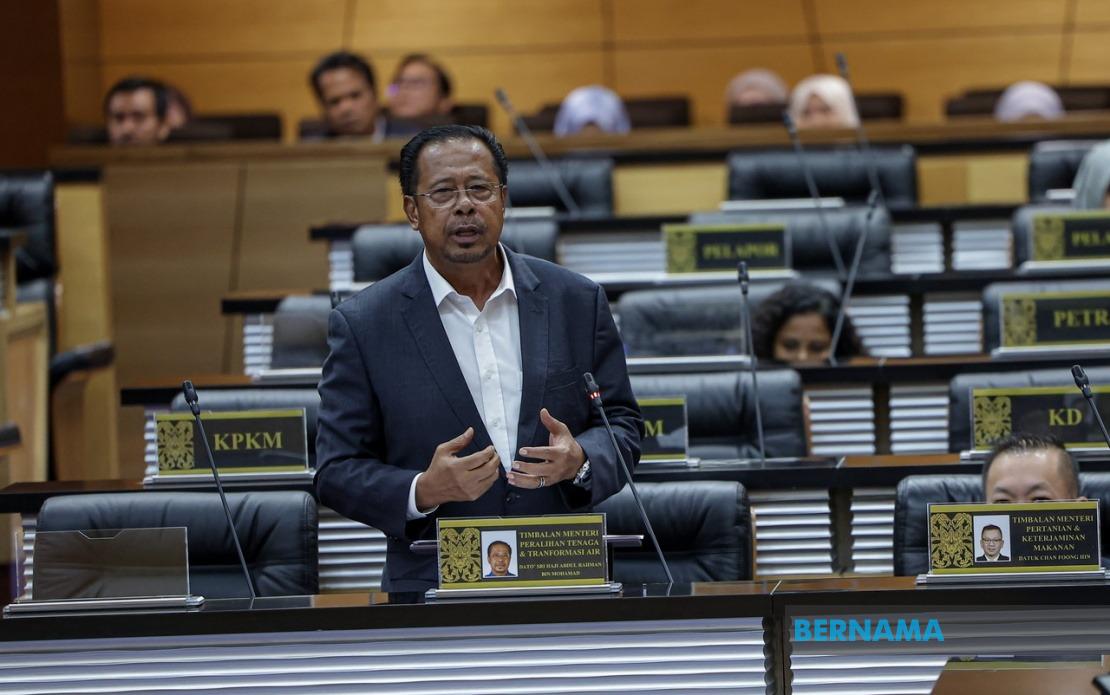
The government has unveiled an ambitious RM99.8 million Integrated River Basin Development initiative for Sungai Skudai in Johor that promises to shield roughly 15,000 residents from recurring floods while restoring critical ecological functions along the 46-kilometre waterway. Deputy Minister of Energy Transition and Water Transformation Datuk Seri Abdul Rahman Mohamad disclosed the project's trajectory during parliamentary proceedings, emphasizing its role as a cornerstone infrastructure initiative under the 12th Malaysia Plan designed to address longstanding water management challenges in the state.
The undertaking represents a comprehensive approach to flood mitigation that extends beyond conventional riverbank reinforcement. Rather than viewing the project narrowly as a single engineering intervention, policymakers have positioned it as a multifaceted solution addressing interconnected challenges: elevated flood exposure affecting communities, ecological degradation of the river system, and operational constraints faced by fishing communities and maritime security agencies. This integrated philosophy reflects evolved thinking in water resources management, particularly relevant as Malaysian states confront intensifying hydrological pressures from climate variability and rapid urbanization patterns.
Current project timelines indicate the consultancy team, appointed in May 2025, is finalizing the detailed concept report that will guide subsequent phases. Survey operations commenced in November 2025 with anticipated completion by May 2027, establishing the foundational technical knowledge necessary for implementation. Simultaneously, land acquisition procedures initiated in June 2026 are scheduled for finalization by August this year, clearing administrative pathways for construction mobilization. These parallel work streams reflect sophisticated project management aimed at maintaining momentum despite the complexity inherent in large-scale river infrastructure development.
Physical construction itself will not commence until mid-2027, following completion of procurement procedures and contractor appointment contingent upon fulfillment of technical prerequisites. This staggered approach, whilst extending the overall timeline, provides opportunity for thorough community consultation and environmental impact mitigation—crucial considerations when undertaking major alterations to river systems integral to local livelihoods. The deliberate pacing also allows authorities to refine designs based on evolving hydrological data and incorporate lessons from comparable projects elsewhere in Southeast Asia.
The structural interventions planned for Sungai Skudai are substantial in scope. Bank strengthening measures will span the entire river length, whilst selective widening to approximately 15 metres in specific sections will dramatically augment water-carrying capacity during high-flow events. These modifications directly target the 50 identified flood hotspots distributed along the corridor, with five concentrated in the Kulai locality. By systematically addressing vulnerability nodes rather than implementing generic solutions, the project demonstrates precision-targeted infrastructure thinking increasingly characteristic of modern developmental initiatives.
Beyond flood prevention, the project carries significant ecological restoration implications. River ecosystem rehabilitation through the development program addresses a critical gap in Malaysian water resource stewardship. Degraded riparian zones, compromised water quality, and lost habitat connectivity represent legacy issues requiring intervention. By embedding ecological considerations within flood management infrastructure, the project acknowledges that functional river systems provide cascading benefits—improved biodiversity, enhanced natural water purification, and strengthened resilience against hydrological extremes.
The fisheries dimension deserves particular emphasis for Malaysian stakeholders. Many communities along Sungai Skudai depend substantially on riverine livelihoods that deteriorated as environmental conditions declined. Improved navigability and ecosystem restoration promise revitalization of these traditional economic activities, offering sustainable income alternatives amid broader pressures on fishery sectors. Enhanced operational capacity for maritime security and emergency response agencies adds another layer of benefit, strengthening governance capabilities in a strategic region straddling major transportation corridors.
Recognizing that the main project remains in preparatory phases, the ministry has deployed interim mitigation measures comprising six smaller initiatives totaling approximately RM700,000. This stopgap strategy demonstrates pragmatic commitment to alleviating present hardship whilst foundational work proceeds. Such transitional programming, though modest in financial terms, can meaningfully reduce flood impacts during vulnerable monsoon periods and signals governmental responsiveness to immediate community needs.
Paralleling the Sungai Skudai initiative, the Ministry of Works announced that Phase Three upgrading of Pasir Gudang Highway (FT17)—a RM174.53 million undertaking—will proceed without acquiring land controlled by Keretapi Tanah Melayu Berhad. Instead, works proximate to railway infrastructure will operate under work permits and right-of-way authorizations negotiated directly with KTMB. This arrangement eliminates protracted land acquisition disputes that historically delayed comparable projects, allowing scheduled railway-zone works to proceed between February 2027 and December 2028.
The coordinated advancement of these two substantial infrastructure programs reflects broader governmental momentum in upgrading Johor's critical systems. For Malaysian regions historically susceptible to flooding, such investments represent acknowledgment that climate adaptation through structural improvement constitutes essential developmental expenditure. The Sungai Skudai project particularly signals willingness to undertake comprehensive river basin management rather than perpetuating fragmented, sector-specific approaches that characterized earlier development eras.
Successful execution hinges upon maintaining timeline discipline whilst ensuring community stakeholder engagement throughout implementation. The technical complexity of large-scale river works, combined with coordination requirements across multiple governmental agencies and land acquisition dimensions, creates execution risks. However, staggered project phasing and appointed consultant engagement suggest authorities have internalized lessons from previous infrastructure delays that plagued Malaysian development initiatives.
For Johor residents and businesses vulnerable to recurring inundation, the RM99.8 million commitment represents tangible recognition that flooding represents not inevitable seasonal inconvenience but remediable infrastructure deficit. As Sungai Skudai undergoes transformation through strengthened banks, widened channels, and restored ecological function, surrounding communities may anticipate substantive improvement in their resilience against water-related hazards—an increasingly critical consideration across Southeast Asia's densely populated river corridors.

