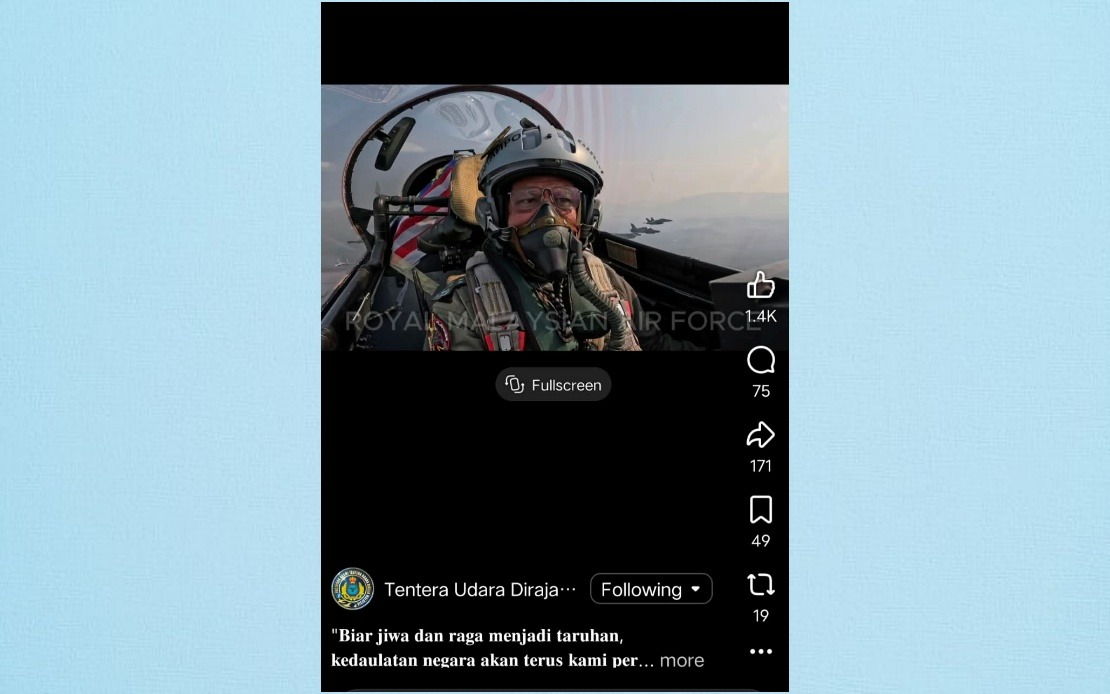
The skies above Putrajaya erupted with the roar of military aircraft on August 31 as the Royal Malaysian Air Force delivered one of the centrepiece moments of Malaysia's 69th National Day commemoration. In a display combining precision flying with technological prowess, an array of combat and transport aircraft performed an intricately choreographed ten-minute sequence that captivated thousands of onlookers gathered at Dataran Putrajaya. The spectacle underscored both the ceremonial importance of National Day festivities and the broader strategic objective of showcasing the nation's defence capabilities to the public.
General Tan Sri Muhamad Norazlan Aris, who leads the RMAF, personally commanded the demonstration from the cockpit of a Sukhoi Su-30MKM fighter jet. His decision to pilot one of the nation's most advanced combat aircraft for a second consecutive year reflects the air force's commitment to maintaining high-profile visibility during Malaysia's most significant patriotic occasion. The choice of aircraft itself carries symbolic weight: the Russian-origin Su-30MKM represents a cornerstone of Malaysia's modern air defence architecture and has become synonymous with RMAF operational capability in regional and international contexts.
The composition of the flying unit revealed carefully calibrated messaging about air force strength. Four Su-30MKMs formed the backbone of the combat demonstration, supported by four F/A-18D Hornets—American-manufactured multirole fighters that underscore Malaysia's defence relationships beyond Russia—and three BAE Hawk 208 advanced training jets. This mix illustrates the diverse technological portfolio that the RMAF maintains, reflecting decades of procurement decisions and international defence partnerships. The variety also serves operational purposes, demonstrating the air force's capacity to coordinate different platforms in complex tactical formations.
The aerial choreography itself became a language of national capability. Beginning at 9.30 am, the display unfolded through progressively sophisticated formations designated as the Kite, Diamond, Delta and Victory Combine configurations. Each geometric pattern required pilots to maintain precise spacing and altitude relationships whilst executing coordinated manoeuvres—a visual metaphor for the discipline and training excellence that defines modern military aviation. For spectators without technical aviation knowledge, the formations conveyed a sense of order, coordination and controlled power that resonates emotionally during patriotic occasions.
Major Patrick Dinnesh, Major Neny Suhaida Ab Suki and Captain Muhammad Iqbal Nasrudin provided real-time commentary explaining the aircraft manoeuvres and formation changes to the assembled crowd. This pedagogical element transformed the display from mere spectacle into an educational enterprise, helping Malaysian public audiences understand the capabilities and limitations of their air force assets. The presence of female pilot Major Neny Suhaida Ab Suki also reflected the increasing participation of women in RMAF operations, though commentary on this demographic shift remained implicit rather than explicit in the official narrative.
Following the dramatic combat aircraft sequences, the air display pivoted to demonstrate the RMAF's logistical and strategic airlift dimensions. The C-130H Hercules, a workhorse that has served the Malaysian military for decades, appeared alongside the comparatively modern A400M Atlas transport aircraft and the smaller CN235 utility transport. This transition from combat to logistics highlighted an often-overlooked aspect of air force operations: the capacity to sustain military operations through sustained air transport and supply. For Southeast Asian observers, the display of these transport assets carries particular relevance given regional contingency planning and disaster relief operations where airlift capacity proves decisive.
Rotary-wing assets completed the military portion of the demonstration. The EC725 and AW139 helicopters operated by the RMAF performed formation flying that showcased vertical lift capabilities essential for search and rescue, troop transport and medical evacuation missions. These platforms represent the intersection of civilian and military applications, vehicles that serve equally in peacetime humanitarian missions as in wartime support roles. The integration of helicopter operations into the broader air display narrative reinforced that modern air forces function across the full spectrum of security challenges, from combat operations to humanitarian assistance and disaster relief.
The finale of the military demonstration involved coordinated formation flying that extended beyond the RMAF itself. The EC725 and AW139 helicopters flew in formation with assets from the Malaysian Army, Royal Malaysian Navy, Fire and Rescue Department of Malaysia and Royal Malaysia Police. This inter-agency coordination visualised the whole-of-government approach to national security and emergency management that Malaysian defence planners increasingly emphasise. The integration of civilian emergency response agencies with military platforms symbolised national unity and the seamless coordination expected during genuine crises.
The human dimension of the display proved equally significant to the technological elements. Thousands of spectators gathered at Dataran Putrajaya, the nation's federal administrative heart, maintained rapt attention throughout the ten-minute sequence. The thunderous engine noise of military jets—particularly the distinctive deep roar of the Su-30MKMs—created an almost visceral impact that photographs and video recordings cannot fully capture. For many attendees, the air display represented a rare opportunity to witness their nation's military capabilities in action, an experience that reinforces public connection to national defence institutions during a moment of heightened patriotic consciousness.
The festive atmosphere generated by the display extended beyond military enthusiasts and technical specialists to encompass the broader National Day celebration occurring simultaneously at Dataran Putrajaya. The aerial sequences provided dramatic interludes that punctuated ceremonies, speeches and cultural performances, creating memorable moments that participants would associate with the nation's patriotic observance. The careful orchestration of timing ensured that the air display achieved maximum emotional and psychological impact whilst integrating seamlessly with the broader commemoration schedule.
From a strategic communications perspective, the RMAF's staging of such a public display reflects considered decisions about defence transparency and civil-military relations in Malaysia. By inviting public observation of advanced military capabilities and training standards, the air force reinforces domestic confidence in national defence institutions whilst demonstrating to regional neighbours the operational readiness of Malaysian air assets. The display occupies a carefully calibrated position between maintaining security through operational secrecy and building public and regional confidence through selective transparency.
The participation of General Tan Sri Muhamad Norazlan Aris as a pilot rather than merely as a spectating dignitary carried particular significance. His willingness to execute complex aerial manoeuvres at his rank level signals confidence in RMAF training standards and personal commitment to operational excellence. The precedent of two consecutive years of personal piloting suggests this may become an established tradition, further cementing the air display as a centrepiece event in Malaysia's National Day celebrations and enhancing the RMAF's institutional profile during the nation's most significant patriotic occasion.

