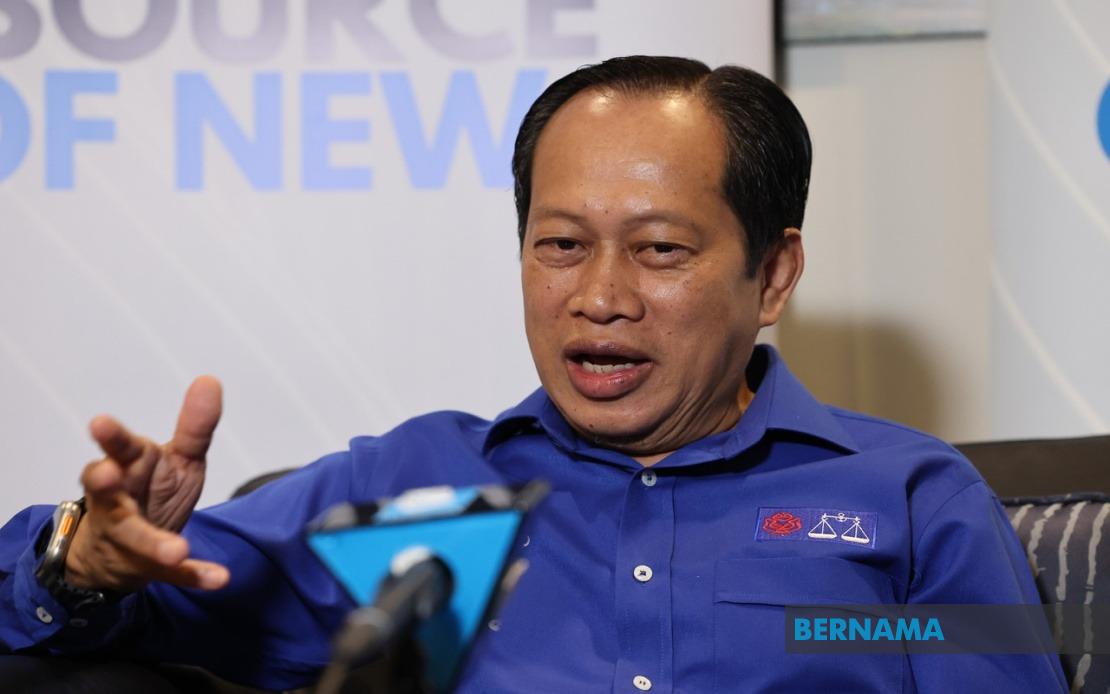
Effective management of Malaysia's road network requires a unified approach drawing on contributions from elected representatives, government agencies, and local authorities, according to Deputy Works Minister Datuk Seri Dr Ahmad Maslan. Speaking in Johor Bahru on July 2, he underscored that no single entity can shoulder the responsibility of maintaining the nation's sprawling road infrastructure alone, and that success depends on all parties performing their designated functions with diligence and accountability.
The minister has directed the Public Works Department (JKR) to accelerate repair work on deteriorating road surfaces across the country. He simultaneously called on assemblymembers, Members of Parliament, and relevant local government bodies to heighten their vigilance in identifying problem areas and facilitating rapid intervention. This multi-layered approach reflects recognition that road deterioration often stems from varied causes—from design flaws and construction quality issues to inadequate drainage and heavy usage—requiring tailored responses from different agencies with distinct mandates and expertise.
Ahmad's remarks carried particular relevance given recent public attention to road conditions in Johor. In late June, Pakatan Harapan candidate for the Puteri Wangsa state constituency Dr Maszlee Malik conducted a high-profile inspection of Jalan Tebrau, driving from Kampung Melayu Majidi to Ulu Tiram in a Perodua Myvi. His journey, undertaken following constituent complaints on social media, exposed several stretches exhibiting significant surface irregularities. Beyond road quality concerns, Maszlee also documented severe traffic bottlenecks during peak periods, highlighting how infrastructure deficiencies compound mobility challenges across the route. The publicity surrounding his inspection highlights growing public frustration with road maintenance standards in certain localities.
During administrative visits to all ten district-level JKR offices operating throughout Johor, Ahmad received comprehensive briefings on development priorities and maintenance backlogs. These field interactions provided him direct exposure to the magnitude of repair requirements and resource constraints facing regional operations. Armed with this ground-level intelligence, he pressed staff to heighten responsiveness when roads requiring intervention are flagged, emphasising that delays in addressing surface deterioration can accelerate damage progression and create safety hazards for motorists.
The financial architecture underpinning road maintenance reveals important systemic considerations. Allocations for upkeep of federal roads, highways, and bridge infrastructure flow through the State Economic Planning Unit (UPEN) and state executive councils rather than through centralised direct disbursement. This decentralised funding mechanism theoretically enables customised responses to regional conditions and priorities. However, it also introduces procedural complexity, as applications must navigate evaluation and prioritisation stages before receiving approval. Understanding these bureaucratic pathways proves essential for local representatives seeking to expedite repairs in their constituencies, as they must engage systematically with these approval channels rather than expecting ad-hoc interventions.
The involvement of elected representatives at state assembly and federal parliament levels constitutes a critical element of Ahmad's framework. These officials possess direct accountability to constituents experiencing road-related inconvenience and possess sufficient political leverage to pressure agencies into action. When assemblymembers and MPs systematically document road deficiencies and escalate concerns through formal channels, they supplement the reporting mechanisms maintained by JKR itself. This complementary oversight creates redundancy in the detection system—a valuable safeguard given that agency field staff, despite best intentions, sometimes overlook emerging problems or lack capacity to simultaneously address all identified issues.
The emphasis on multi-stakeholder cooperation also reflects practical realities of urban and suburban governance in Malaysia. Local authorities responsible for municipal roads, state governments overseeing certain strategic corridors, and federal agencies managing highways represent distinct jurisdictional domains. When road damage spans boundaries or involves issues like inadequate traffic management infrastructure, coordinated responses prove more effective than siloed institutional action. Ahmad's appeal for collective commitment implicitly acknowledges these structural complexities and seeks to foster horizontal coordination across what might otherwise function as competing fiefdoms.
Public expectations regarding road conditions have intensified markedly in recent years, driven partly by growing urbanisation, increased vehicle ownership, and heightened social media visibility of infrastructure defects. When prominent political figures like Maszlee Malik embark on inspection drives specifically to document road problems, they signal responsiveness to constituent concerns while simultaneously raising public awareness of maintenance gaps. This political dynamic creates implicit pressure on government officials at all levels to demonstrate tangible improvements, as inaction risks electoral consequences. Ahmad's directives to accelerate repairs partly reflect this political reality, even as they rest on legitimate technical grounds regarding maintenance best practices.
The challenge of maintaining Malaysia's road network occurs within broader constraints of competing budget priorities and demographic pressures. As vehicle registrations continue climbing and traffic intensifies, maintaining existing infrastructure while simultaneously expanding capacity strains available resources. The maintenance prioritisation process undertaken through UPEN and state executive councils attempts to allocate limited funds strategically, but this rationing function inevitably generates delay and frustration. Constituents in areas where repairs remain pending naturally question why their roads receive lower priority, generating political tension that periodic visibility drives by elected representatives help alleviate, even if they cannot immediately resolve underlying resource constraints.
Moving forward, Ahmad's framework envisions incremental progress through tighter coordination and heightened accountability. By explicitly tasking assemblymembers and MPs with playing active oversight roles, the deputy minister distributes responsibility beyond JKR alone. This distributed accountability model potentially improves identification of problem areas while creating peer pressure among elected representatives to ensure their constituencies receive reasonable treatment. However, success ultimately hinges on sustained political will, adequate budget allocations, and professional capacity within JKR itself—conditions that require ongoing nurturing beyond any single policy statement or administrative directive.

