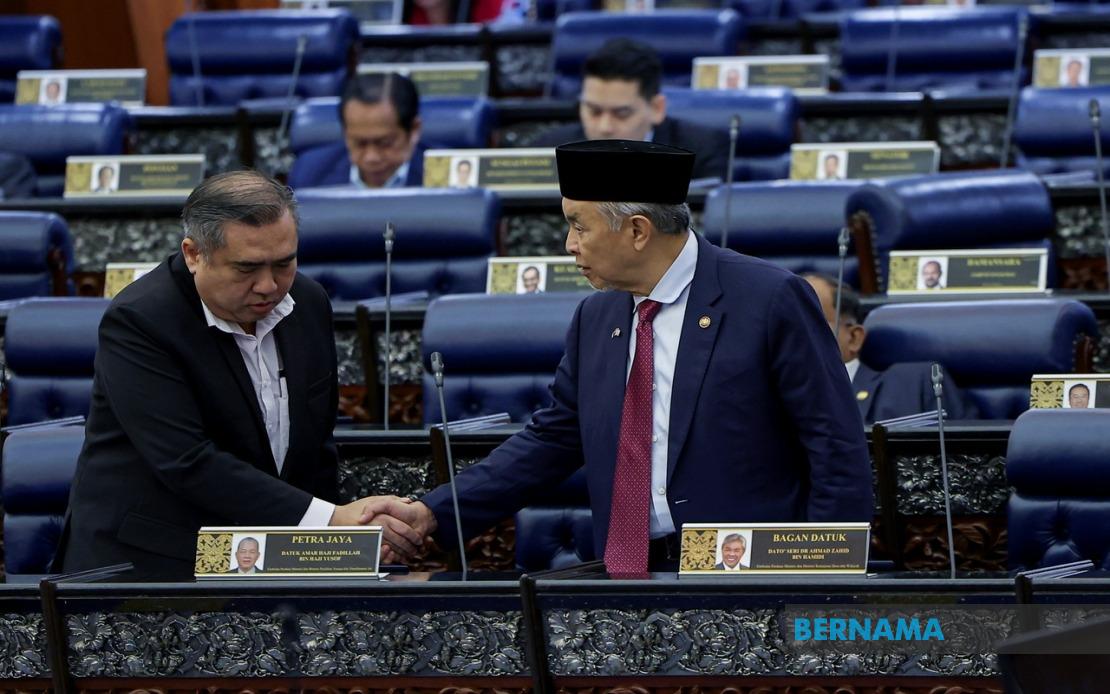
Malaysia's legislative agenda moved forward on June 22 when Transport Minister Anthony Loke presented the Road Transport (Amendment) Bill 2026 for its first reading in the Dewan Rakyat, signalling the government's determination to overhaul traffic enforcement mechanisms across the country. The proposed amendments seek to strengthen the regulatory framework that underpins vehicle safety and road discipline, reflecting growing concerns about rising accident rates and reckless driving behaviour nationwide. Parliamentary deliberation on the bill's substantive provisions will continue during the current session, with a second reading scheduled to follow.
The centrepiece of the legislative package involves a systematic increase in financial penalties across numerous traffic offences. Basic fines will rise from a floor of RM300 to RM500 for violations ranging from failure to display vehicle registration plates to operating vehicles without proper equipment or valid licensing documentation. Speeding infractions, which have plagued Malaysian highways and urban roads, fall within this expanded penalty bracket, as do incidents involving deliberate disregard for traffic control signals and instructions. The amendments also capture the growing phenomenon of illegal street racing, which enforcement agencies have identified as a particular menace in populated areas where such activities endanger public safety.
Driving with a suspended licence emerges as an area where lawmakers have substantially toughened consequences. The bill proposes raising the maximum custodial sentence from one year to three years imprisonment, with financial penalties now ranging between RM3,000 and RM10,000—a dramatic escalation from the previous ceiling of RM5,000. This change reflects recognition that individuals who operate vehicles despite licence suspension represent a serious threat to road safety, as they have already demonstrated disregard for regulatory requirements. The severity of the new provisions underscores official acknowledgement that financial penalties alone have proven insufficient to deter this category of offence.
The amendments introduce particularly stringent measures targeting street racing and speed-testing activities on public roads, which have claimed lives and triggered community outcry in recent years. First-time offenders face fines spanning RM2,000 to RM10,000, potential imprisonment for up to two years, or both penalties applied concurrently. Repeat offenders encounter substantially grimmer prospects, with mandatory minimum jail sentences of not less than five years alongside fines reaching RM20,000. These provisions represent a calibrated escalation designed to make recidivism genuinely costly, thereby increasing deterrent effects among repeat violators who have already experienced initial prosecution.
Beyond traffic infractions, the bill addresses systemic abuses within the administrative apparatus governing road transport. Clauses 28, 28(a), and 28(b) establish severe punishments for fabricating statements or furnishing false information to authorities, with potential fines reaching RM200,000 or imprisonment for a decade. These provisions aim to preserve the integrity of licensing systems, vehicle registration databases, and enforcement records, recognising that administrative fraud undermines the entire regulatory structure. By establishing consequences proportionate to the seriousness of such deception, lawmakers intend to fortify public confidence in the legitimacy of enforcement actions.
Compounding authority—the power to settle offences outside formal prosecution channels—receives modification through Clause 37, which elevates maximum settlement amounts from RM300 to RM500. This adjustment acknowledges inflation and realigns financial incentives facing violators to encourage voluntary compliance before matters escalate to criminal proceedings. The broader availability of meaningful compound settlements provides enforcement agencies with flexible tools appropriate to varying circumstances, potentially reducing court backlogs while maintaining deterrent effects.
Ministerial authority expands under Clause 22, which transfers Section 66 of Act 333 to empower the Transport Minister to establish fees governing entry permits for foreign motor vehicles. This administrative restructuring streamlines the process for foreign vehicle registration and temporary use authorisation, addressing friction points that previously required legislative action for fee adjustments. The change reflects pragmatic recognition that permit fee structures must evolve responsively with operational costs and policy objectives, rather than remaining fixed through cumbersome statutory procedures.
Enforcement capabilities receive substantial enlargement through provisions granting police officers and road transport officials expanded authority to manage traffic flow and redirect vehicles. These enhanced powers enable field personnel to respond dynamically to congestion, accidents, and hazardous conditions without awaiting hierarchical approval, thereby improving response effectiveness during critical incidents. The bill simultaneously establishes frameworks for detaining and disposing of micromobility vehicles—essentially regulating the growing population of electric scooters and similar devices that increasingly share roadways with traditional motor vehicles and pedestrians.
A final category of amendments addresses enforcement personnel protection by creating an offence of obstructing or assaulting road transport and police officers engaged in legitimate duties. Critically, this conduct becomes classified as an arrestable offence, enabling immediate apprehension without requiring victim complaint or separate warrant procedures. This provision acknowledges the genuine physical risks facing enforcement personnel and responds to documented incidents where officials encountered violence or intimidation while executing their responsibilities. By elevating such conduct to arrestable status, the legislation removes administrative barriers that previously complicated responses to aggressive resistance.
The cumulative effect of these amendments positions Malaysia within an international trend toward increasingly stringent road safety frameworks, comparable to approaches adopted in developed nations with sophisticated traffic management systems. For Malaysian motorists accustomed to relatively modest penalty structures, the changes represent a significant recalibration of the cost-benefit calculations underlying driving decisions. The measures reflect official policy judgment that escalating penalties constitute necessary instruments for modifying behaviour and reducing the human and economic tolls extracted by road accidents, particularly those involving dangerous driving or repeat violations.
Regional context proves relevant, as several neighbouring countries have similarly expanded enforcement powers and increased penalties targeting reckless drivers and street racing participants. The amendments position Malaysia's legislative framework more competitively in attracting international attention to road safety commitment, potentially influencing insurance premium calculations and vehicle safety ratings that increasingly incorporate jurisdictional regulatory stringency. For Malaysian transportation stakeholders and motorists, the bill's progression through parliament signals the incoming reality of a substantially more costly and consequential enforcement environment.