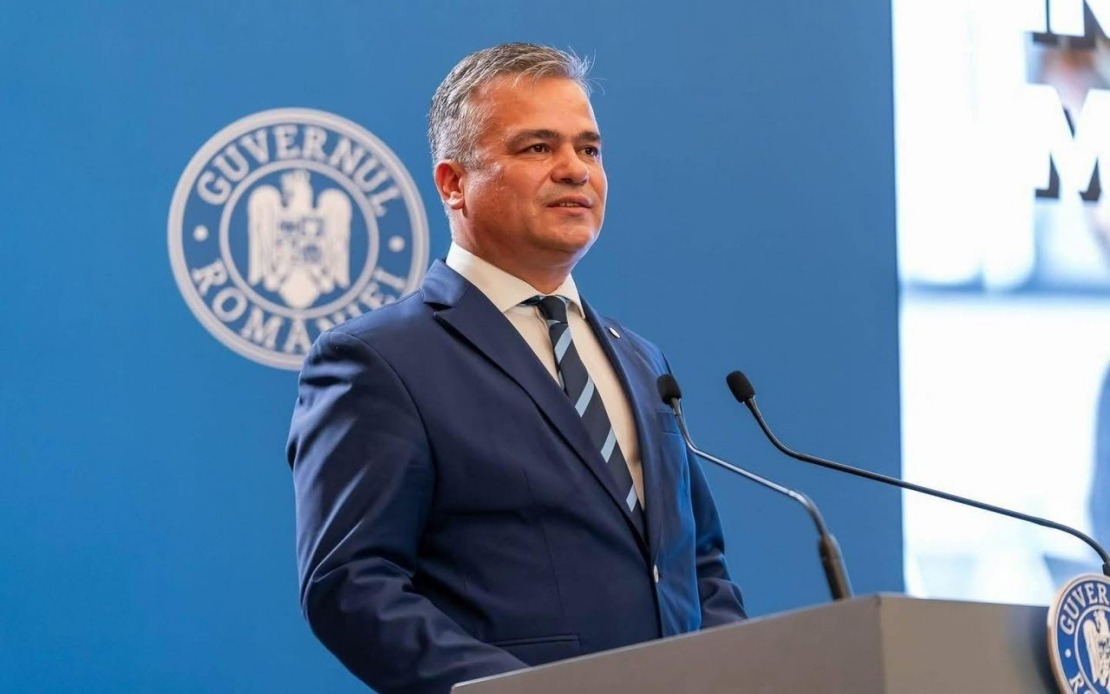
Romania entered a critical phase of governmental restructuring on Monday when Adrian Vestea, the first vice-chair of the National Liberal Party, formally submitted his cabinet lineup and policy agenda to parliament. The presentation marked a significant step in resolving the political uncertainty that has gripped the country, with Vestea framing the submission as essential to restoring institutional confidence and establishing predictable governance. The move came after the Social Democratic Party endorsed Vestea at a closed-door meeting on the preceding day, providing the parliamentary backing necessary for his candidacy to advance.
Vestea's announcement underscored the urgency of stabilizing Romania's political environment through swift institutional action. In a statement shared across social media platforms, the prime minister-designate emphasized that presenting both the government programme and the ministerial roster represented a foundational necessity rather than a mere procedural formality. By linking this submission directly to ending a period of governance instability, Vestea communicated to both domestic and international observers that his administration intended to prioritize institutional functionality and restore public confidence in state institutions.
The proposed government has identified five core pillars that will shape its policy direction over the coming term. Securing political stability remains the bedrock priority, reflecting recognition that Romania's governance structures require institutional coherence before pursuing other objectives. Simultaneously, the cabinet intends to accelerate the absorption of European Union funding streams, a critical concern for a nation seeking to maximize structural development resources during the EU's ongoing budget cycles. Economic stability represents the third priority, addressing inflation pressures and fiscal sustainability concerns relevant across Central and Eastern European economies navigating post-pandemic recovery challenges.
Infrastructure investment constitutes the fourth strategic objective, reflecting the cabinet's commitment to modernizing Romania's transportation networks, energy systems, and digital infrastructure. This focus aligns with broader European Union priorities for regional development and interconnectivity. The fifth pillar encompasses strategic national security initiatives, positioning Romania to address both traditional geopolitical challenges and emerging hybrid security threats in its neighbourhood, particularly given the proximity to ongoing conflict in Ukraine and shifting NATO dynamics in Eastern Europe.
The coalition dynamics underlying Vestea's candidacy reveal complex political negotiations within Romania's fractious parliamentary landscape. Although the National Liberal Party's official leadership had publicly rejected forming alliances with left-leaning political forces, Vestea's administration incorporates both Social Democratic representatives and NLP members who maintain personal loyalty to the vice-chair. This pragmatic arrangement suggests that official party positions and actual parliamentary behaviour may diverge significantly, a common feature of coalition-building in fragmented legislatures where individual ambition and party discipline often conflict.
The Social Democratic Party's endorsement proved decisive in advancing Vestea's candidacy, despite the apparent ideological differences between Romania's centre-right and centre-left parties. Romanian political observers have historically noted that pragmatic coalitions often transcend public positioning, with both governing parties and opposition MPs willing to negotiate behind closed doors when institutional necessity or personal advancement incentivizes collaboration. This dynamic reflects the reality that parliamentary arithmetic frequently overrides ideological purity in coalition-dependent governments across Europe.
Romanian media outlets maintained a cautious tone regarding the cabinet's ultimate approval prospects, with several reports suggesting that parliament's formal endorsement remained far from certain. This uncertainty reflects deeper fragmentation within Romania's legislature, where even apparently assembled coalitions face hurdles when internal party divisions or individual dissidents threaten arithmetic majorities. The publication of the ministerial list would likely trigger intensive lobbying from interest groups seeking specific portfolio allocations or policy commitments, potentially destabilizing the coalition framework before parliamentary votes occur.
For Malaysia and Southeast Asian observers, Romania's governance challenges demonstrate the institutional vulnerabilities that emerging democracies face when experiencing rapid political fragmentation. The region's own experiences with coalition politics in countries such as Malaysia illuminate both the benefits and dangers of multi-party governance structures where single-party dominance dissolves. Vestea's appointment reflects a broader European pattern where traditional party alignments have weakened in recent years, creating instability but also forcing greater pragmatism in executive formation.
The focus on EU fund absorption particularly resonates with Southeast Asian development priorities, as nations in the region similarly seek to maximize international financing for infrastructure modernization. Romania's emphasis on structural development while maintaining macro-economic stability parallels the balancing act that Malaysian policymakers must perform when juggling growth objectives against inflationary pressures and fiscal sustainability concerns. The cabinet's commitment to these competing priorities will test whether Vestea's coalition can maintain cohesion under the strain of implementing difficult economic policies.
Ukraine's ongoing conflict adds urgency to Romania's security positioning, as the nation borders the war zone and hosts significant NATO infrastructure. The cabinet's emphasis on national security initiatives thus addresses genuine strategic vulnerabilities rather than rhetorical positioning. For Malaysia and other ASEAN members observing European geopolitical dynamics, Romania's security focus highlights how regional conflicts reshape entire governmental agendas, forcing nations to prioritize defence considerations alongside economic objectives.
The broader question of whether Vestea's coalition can survive parliamentary approval and function coherently across a full term remains unresolved. If the cabinet secures parliament's endorsement, the administration faces the formidable challenge of executing policies that command support from ideologically disparate partners with competing interests. The success or failure of this coalition will likely influence Romanian political dynamics for years, potentially either strengthening centrist cooperation or accelerating further fragmentation.