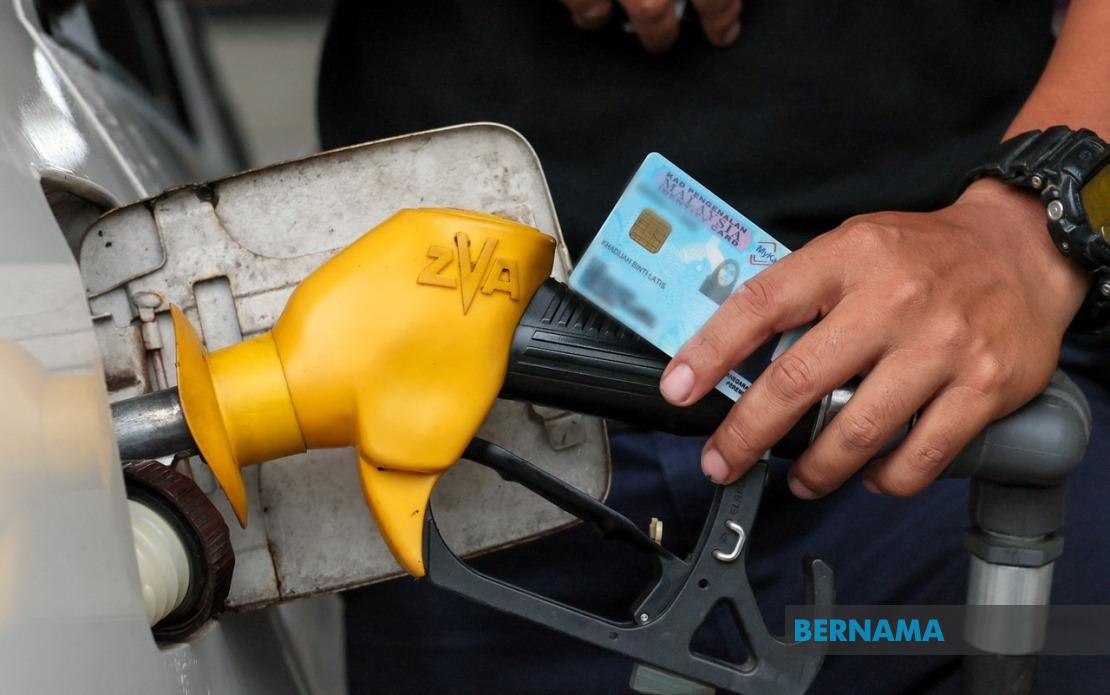
The government has moved to ease mounting financial pressures on ordinary Malaysians by restoring and expanding fuel assistance quotas under the BUDI MADANI programme. Prime Minister Datuk Seri Anwar Ibrahim announced the changes during his 2026 National Day address at the Putrajaya International Convention Centre, effective immediately, signalling a shift in subsidy policy aimed at providing targeted relief to those who depend most heavily on fuel for their livelihoods and daily routines.
Under the revised structure, eligible beneficiaries of RON95 petrol subsidies will now receive 300 litres monthly, an increase from the previous 200-litre cap, while diesel quota holders will have access to 400 litres per month, up from 300 litres. These adjustments represent a tangible response to persistent complaints about cost-of-living pressures that have weighed on household budgets across the country. The restoration addresses concerns that earlier quota restrictions had become burdensome for commuters and small-business operators who rely on subsidised fuel as a critical component of their monthly expenses.
The BUDI MADANI initiative, which Malaysia implemented to ensure fuel subsidies reach those most in need rather than being distributed universally, has long been a centerpiece of the government's approach to targeted assistance. By calibrating quotas based on actual consumption patterns and economic need, the programme attempts to balance fiscal responsibility with social support. The latest expansion signals a recalibration toward greater generosity, acknowledging that previous quotas may not have adequately reflected the genuine fuel requirements of workers and traders operating across the country.
Among those celebrating the announcement are private sector workers whose daily commutes demand substantial fuel expenditure. Furzani Ahmad, a 24-year-old employee, explained that the restored 300-litre quota for RON95 now covers his approximately 30-kilometre daily journey to and from the workplace, with occasional surplus. For workers like Furzani, the psychological relief of knowing fuel allocation will not run short partway through the month translates directly into reduced financial anxiety and greater ability to direct savings toward other pressing household needs such as groceries, utilities, and children's education.
Similarly, Darwisy Khairudin, 23, acknowledged that while his basic commute spans only 20 to 25 kilometres, unexpected work assignments and ad-hoc travel obligations frequently push his fuel consumption beyond routine expectations. The restored quota provides crucial buffer capacity, eliminating the uncomfortable calculus of rationing fuel when work demands exceed anticipated consumption. For younger workers building careers and managing entry-level salaries, such relief proves especially meaningful in determining whether monthly finances allow for any discretionary spending or savings.
The expansion holds particular significance for Malaysia's informal and semi-formal economy, where small-business operators depend entirely on controlled fuel costs to maintain competitive pricing. Abdul Manan, a 63-year-old fruit trader, operates a diesel vehicle for transporting fresh produce from distant suppliers to his market stall. The increase from 300 to 400 litres monthly directly impacts his logistics expenses and working capital. By reducing the per-unit cost burden of sourcing inventory, the higher diesel quota enables traders like Manan to resist price increases that would otherwise be passed to consumers, thereby supporting overall price stability in essential goods markets.
For the broader Malaysian economy, this policy carries implications beyond individual relief. When traders face lower logistics costs due to expanded fuel quotas, they can maintain more competitive pricing on fresh produce and other essential goods transported via road. This benefit percolates through food supply chains and retail markets, potentially moderating inflation pressures that have concerned both policymakers and households. In an era when transportation costs represent a significant component of final retail prices, fuel subsidy policy effectively functions as an indirect price control mechanism affecting millions of consumers daily.
The timing of the announcement during National Day festivities underscores its political and social importance. By framing fuel quota restoration as part of broader national celebrations and development narratives, the government positions the measure as an affirmation of commitment to ordinary Malaysians' welfare. For workers and traders who have experienced quota constraints in recent months, the announcement confirms that their concerns are heard and that policy adjusts in response to genuine hardship rather than remaining rigidly fixed.
However, the restoration also reflects fiscal trade-offs inherent in subsidy policy. Expanding fuel quotas increases government expenditure on petroleum subsidies, diverting resources from other potential investments in infrastructure, education, or health. The sustainability of enhanced quotas depends on crude oil prices and fiscal space available within the national budget. As Malaysia navigates global economic uncertainties and fluctuating energy markets, policymakers must balance the legitimate need for cost-of-living relief against longer-term fiscal sustainability and the opportunity costs of subsidy spending.
The BUDI MADANI programme's evolution toward greater quotas reflects broader regional trends in Southeast Asia, where governments grapple with balancing subsidy burdens against social stability. Countries across the region have similarly adjusted fuel assistance programmes in response to domestic pressure, recognising that inadequate support for transport and commerce undermines economic participation by lower-income groups. Malaysia's latest move aligns with comparable policies in Indonesia, Thailand, and the Philippines, where targeted fuel assistance remains a contentious but politically necessary component of social safety nets.
Looking forward, the effectiveness of restored quotas will depend on implementation consistency and genuine reach to intended beneficiaries. Ensuring that eligibility verification systems function properly and that quotas genuinely benefit workers and small traders rather than being diverted or hoarded becomes critical. Transparent communication about quota usage and subsidy mechanics helps build public confidence in programme fairness.
Ultimately, the BUDI MADANI expansion represents a pragmatic acknowledgement that previous restrictions had become counterproductive, burdening precisely those groups—commuters and small-business operators—whose economic participation drives growth and employment. For Malaysian workers and traders, the restored quotas promise genuine monthly savings that, though modest individually, compound across household budgets and small business margins to create meaningful relief during a period of sustained cost-of-living pressures.

