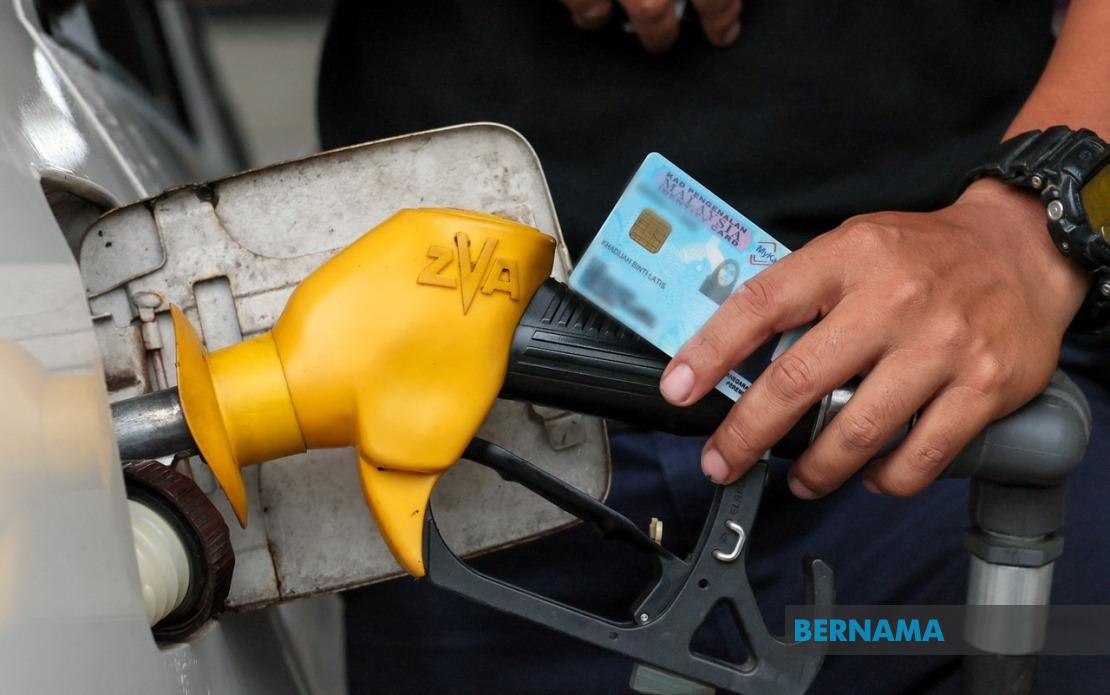
Prime Minister Datuk Seri Anwar Ibrahim announced today that the government has agreed to restore the monthly BUDI95 petrol quota from its reduced level of 200 litres back to 300 litres per month, a decision that immediately affects more than 16 million Malaysians who depend on subsidised RON95 fuel. Alongside this petrol adjustment, the government is extending additional support to vehicle owners dependent on diesel, with more than half a million eligible operators of diesel-powered pickup trucks and jeeps now eligible to receive up to 400 litres of BUDI Diesel each month. These measures take effect from September 1st, signalling a notable shift in the government's subsidy management strategy as market conditions and fiscal assessments evolve.
The restoration of the higher fuel quota represents a strategic recalibration aimed at protecting household purchasing power during a period when transport expenses continue to impose significant pressure on family budgets. Herniza Roxanne Marcus, an economics lecturer at Universiti Teknologi MARA's Sabah campus, underscores that the benefits will prove particularly meaningful for B40 and M40 income groups—lower and middle-income households that allocate disproportionately large portions of their disposable income to fuel costs. In regions like Sabah, where geographical distances are considerable and public transportation infrastructure remains underdeveloped in many areas, this additional fuel flexibility carries heightened relevance for daily commuting and economic participation.
The practical implications extend beyond simple cost savings at the petrol pump. By expanding the monthly quota, households previously forced to supplement subsidised fuel with market-rate purchases can now operate within the subsidy framework for longer periods. This reduction in out-of-pocket fuel spending creates what economists term "fiscal space"—additional income that families can redirect toward other essential expenses. Food security, educational investments for children, medical care, and utilities all benefit when transport costs become more manageable, creating a ripple effect through household spending patterns that supports broader economic stability.
Herniza emphasises that while the quota restoration will not produce dramatic immediate effects on inflation rates, the measure serves a crucial stabilisation function by constraining upward pressures on transportation costs. When fuel prices rise sharply, transportation costs for goods increase, subsequently feeding into retail prices across multiple sectors. By moderating fuel expenditure through expanded subsidies, the government indirectly helps contain inflationary spillovers that might otherwise compound difficulties for cost-sensitive consumers. This preventative approach acknowledges the interconnected nature of price pressures in an economy where transport represents a foundational cost element.
The decision also reflects a pragmatic reassessment of fiscal priorities within the context of changing global market dynamics. The previous reduction to 200 litres occurred during a period marked by geopolitical tensions and volatile international energy markets that created genuine fiscal pressures on subsidy programmes. However, as market conditions normalise and the government's fiscal position permits reassessment, policymakers have determined that current consumption patterns and household needs warrant expanded subsidy coverage. This flexibility suggests that subsidy policy will continue evolving in response to real-time assessments of global energy trajectories, domestic consumption data, and measurable impacts on household welfare.
Herniza further contextualises the decision as representing a deliberate balancing act between fiscal sustainability and social protection obligations. The government's fiscal capacity remains finite, and subsidy expansion carries implications for budget allocations across other priorities. Yet policymakers have concluded that the current quantum of support represents an appropriate calibration—sufficient to provide meaningful relief to vulnerable populations without requiring the government to sacrifice other developmental commitments. This measured approach reflects recognition that subsidy policy serves broader stabilisation purposes beyond simple cost transfer.
On the ground, the impact resonates through concrete lived experiences. Rozainah Abdul Rahim, a 36-year-old journalist based in the Klang Valley region, represents a substantial segment of the workforce that depends entirely on private vehicle transport for both professional and personal obligations. Her weekly commuting pattern between Port Dickson, Negeri Sembilan and Kuala Lumpur—combining professional assignments with family responsibilities—previously stretched her 200-litre monthly allocation thin, frequently requiring resort to unsubsidised market-rate fuel purchases at considerable cost. The restoration to 300 litres provides immediate practical relief, eliminating the monthly calculus of whether sufficient quota remains for essential trips.
For professionals like Rozainah whose income depends on reliable transport access, the expanded quota removes a source of chronic stress that previously interrupted workflow planning and compromised household budgeting discipline. Such tangible relief may appear modest in aggregate statistical terms, yet accumulates into significant annual savings when multiplied across millions of individuals. These savings, reinvested into household priorities, eventually strengthen consumer spending capacity in the broader economy.
The policy shift also carries implications for Malaysia's positioning within Southeast Asia's energy landscape. As a regional petroleum producer with established subsidy traditions, Malaysia's approach to fuel subsidies influences regional perspectives on energy policy and social protection. The restoration signals to neighbouring economies that subsidy programmes, while fiscally demanding, remain politically and socially necessary given income inequality and transport infrastructure asymmetries. For Southeast Asian nations wrestling with comparable transport and affordability challenges, Malaysia's policy evolution provides instructive precedent.
Looking forward, the effectiveness of this restoration will depend substantially on how households actually utilise expanded fuel allocations. Economic theory suggests that increased quota availability should correlate with increased fuel consumption, yet real-world responses depend on employment patterns, vehicle ownership demographics, and alternative transport availability. In urban areas with transit alternatives, quota expansion may prove less transformative than in rural regions where private vehicle dependence remains absolute. Monitoring actual consumption patterns will provide critical data for future subsidy calibrations.
The diesel component targeting commercial vehicle operators addresses a distinct but equally important constituency. Small business operators, delivery services, and rural enterprises dependent on pickup trucks and jeeps have faced comparable subsidy pressure. By extending enhanced diesel quotas to over half a million eligible operators, the government simultaneously supports small and medium enterprise viability while protecting an occupational group that forms important infrastructure for Malaysia's distribution and agricultural sectors. This dual-track approach—supporting both household transport and small commercial operations—reflects comprehensive understanding of fuel subsidy interconnections throughout the economy.
Ultimately, the return to 300-litre quotas represents incremental but meaningful progress in protecting household purchasing power during an era of persistent cost-of-living pressures. While not constituting comprehensive economic transformation, the measure demonstrates government responsiveness to genuine household transport burdens. For the millions of Malaysians who depend on subsidised fuel for employment access, family obligations, and basic economic participation, this restoration provides welcome relief that extends beyond fuel purchases to broader household financial stability.

