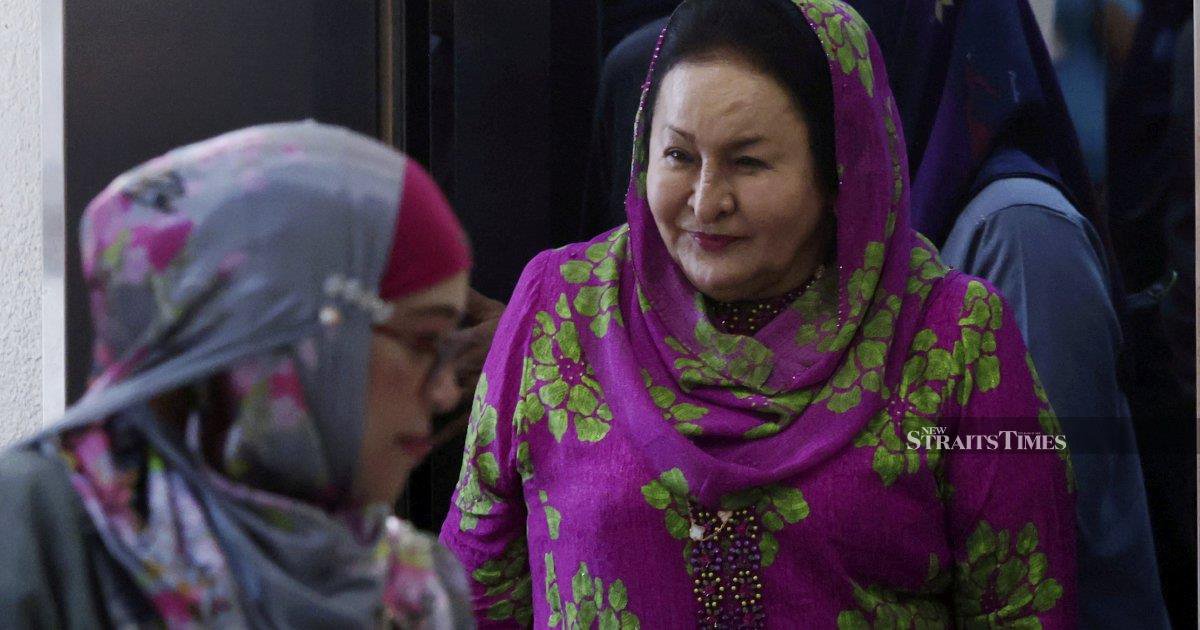
Datin Seri Rosmah Mansor has obtained a conditional stay on a substantial RM67.46 million judgment, temporarily suspending her obligation to pay the Lebanese jewellery company Global Royalty Trading SAL while she pursues her appeal at the Court of Appeal. The stay, granted on specified conditions, provides the former prime minister's wife with breathing room as she challenges the lower court's decision that found her liable for the significant sum owed to the jewellery firm.
The judgment against Rosmah represents one of the larger financial obligations she faces amid multiple legal proceedings stemming from her earlier years in the public eye. Global Royalty Trading SAL, based in Lebanon and operating internationally in the luxury jewellery sector, had pursued the claim through Malaysia's court system, successfully securing a judgment that compelled Rosmah to settle the debt. However, the decision to grant the stay indicates that the legal system has found sufficient grounds to allow her to contest the lower court's ruling without immediately facing enforcement action.
Stay of execution orders are commonly granted when appellants demonstrate that they have arguable grounds for appeal and that enforcing the judgment immediately could cause irreparable harm. In this instance, the conditions attached to Rosmah's stay suggest that the court has balanced her right to appeal against the creditor's interest in eventually securing payment. Such conditions typically include undertakings regarding asset protection, regular court updates, or other safeguards to protect the jewellery company's position pending the appeal outcome.
The case highlights the complex intersection of private commercial disputes and public attention in Malaysia, particularly when high-profile figures are involved. Rosmah's legal challenges have drawn considerable public interest, reflecting broader concerns about wealth, privilege, and accountability within Malaysian society. The RM67.46 million sum involved places this dispute firmly in the category of high-value commercial litigation, underscoring the significant financial implications at stake.
For the Lebanese jewellery company, the granted stay represents both a setback and a strategic decision point. While Global Royalty Trading SAL must now wait for the appeal process to conclude before potentially enforcing payment, the stay conditions provide mechanisms to monitor Rosmah's financial circumstances and prevent asset dissipation. The company's willingness to navigate Malaysia's appellate system demonstrates its commitment to pursuing the claim through all available legal avenues, rather than writing off the substantial debt.
The appeal process at the Court of Appeal will likely examine the original judgment's legal reasoning, the evidence presented at trial, and any procedural questions that may have arisen during lower court proceedings. Given the financial magnitude involved, both parties are likely to invest significant resources in presenting their respective arguments, potentially resulting in detailed written submissions and oral arguments before appellate judges. The Court of Appeal's decision could establish important precedents regarding commercial disputes involving international parties and high-value transactions.
Rosmah's legal position remains complicated by other concurrent proceedings and liabilities. Multiple cases addressing different aspects of her wealth and financial dealings have drawn substantial media attention and public scrutiny. This particular dispute with Global Royalty Trading SAL forms just one component of her broader legal exposure, though its sheer financial scale makes it particularly significant. The interplay between these various cases can sometimes create strategic considerations that affect how each dispute is litigated and resolved.
The conditional nature of the stay is significant, as it suggests that Rosmah has not simply obtained an automatic suspension of payment obligations. Instead, she must comply with specific court-imposed conditions to maintain the stay's effectiveness. Should she breach any of these conditions, the court retains the authority to lift the stay and permit the jewellery company to pursue enforcement action immediately. This framework encourages compliance while the appeal proceeds through the system.
From a regional perspective, this case illustrates how Malaysian courts handle disputes involving international commercial parties and significant financial claims. The decision to grant a stay demonstrates the judiciary's willingness to permit appellants to challenge first-instance decisions through established appellate mechanisms, a practice consistent with common law jurisdictions throughout Southeast Asia and the Commonwealth. Such cases often require careful navigation of evidence presented through potentially multiple languages and legal traditions.
The timeline for the appeal remains uncertain, as Court of Appeal schedules can extend over months or even years depending on case complexity and court backlogs. During this period, Global Royalty Trading SAL must essentially operate under a payment suspension while retaining legal recourse should circumstances change. For Rosmah, the stay provides temporary relief from the immediate pressure of satisfying the judgment, though it does not eliminate the underlying debt or the legal obligation to address it eventually.
Looking forward, the Court of Appeal's eventual determination could significantly impact Rosmah's financial obligations and her approach to settling other outstanding liabilities. Should the appellate court uphold the original judgment, she would face immediate enforcement action to satisfy the RM67.46 million debt, potentially alongside mechanisms to recover additional costs and interest accrued during the appeal period. Conversely, a successful appeal could substantially alter her legal position and the company's recovery prospects.

