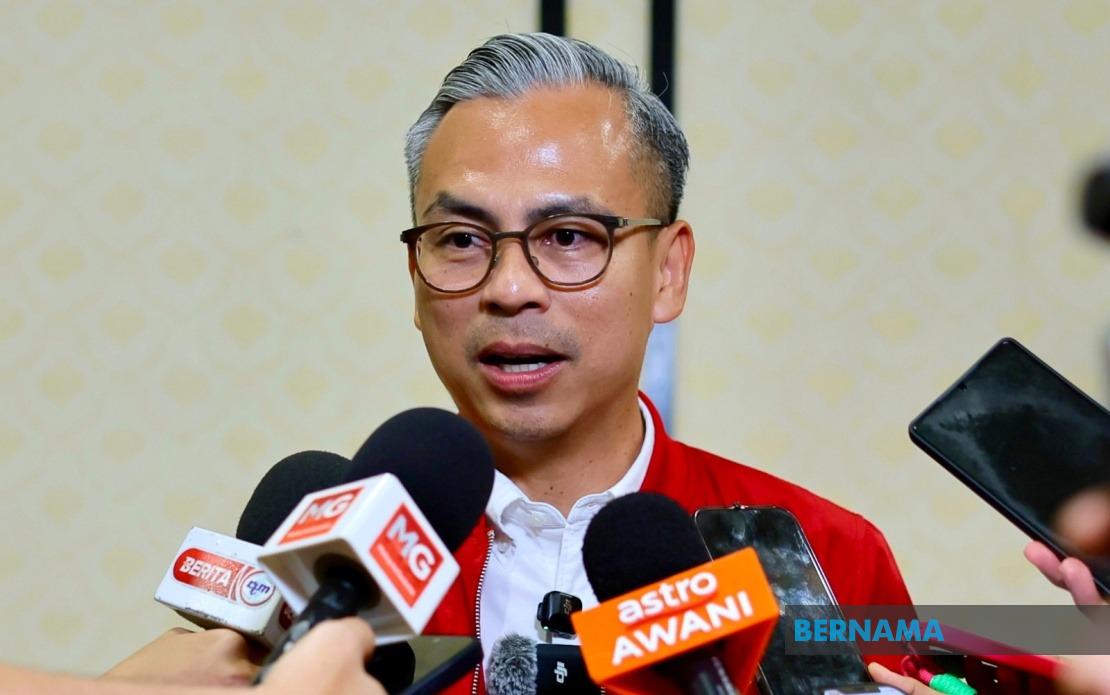
With the sixteenth Johor state election scheduled for mid-July, Malaysia's Communications Minister has thrown open the doors of the national broadcaster to facilitate what could become a defining moment in the campaign. Datuk Fahmi Fadzil announced that Radio Televisyen Malaysia (RTM) stands ready to provide comprehensive live coverage of an interactive dialogue between incumbent Johor Menteri Besar Datuk Onn Hafiz Ghazi and Pakatan Harapan's Dr Maszlee Malik, who is contesting the Puteri Wangsa state seat. The offer underscores a deliberate attempt to elevate the electoral discourse beyond traditional party politics and ground the conversation in substantive policy matters affecting the state's trajectory.
Fahmi's proposition carries particular significance given ongoing tensions within the Johor electoral landscape. Several quarters have previously pressured Pakatan Harapan to unveil its menteri besar candidate before committing to any public engagements, raising questions about the coalition's readiness and strategic clarity. By making this unilateral offer of airtime, the Communications Minister appears to be attempting to shift the burden of accountability onto the incumbent while simultaneously demonstrating PH's confidence in its candidates and vision for the state. The initiative reflects a calculated political gambit: offering the appearance of openness while potentially embarrassing opponents who decline engagement.
Crucially, Fahmi stipulated that the proposed dialogue would not serve as a platform for partisan sniping or tit-for-tat political attacks. Instead, he framed the exercise as a vehicle for genuine exchange of ideas centred on Johor's development agenda and long-term prosperity. This framing is strategically important, as it attempts to establish higher ground on the moral and intellectual landscape of the campaign. By insisting the discussion focus on substantive governance issues rather than personal attacks or political point-scoring, Fahmi seeks to position PH as the serious custodian of policy-driven politics, a message that could resonate particularly with educated urban voters and younger electors who increasingly demand substance over spectacle.
The flexibility embedded in Fahmi's proposal demonstrates confidence in the format's appeal. He indicated that the dialogue could occur at any mutually convenient time and location, with Johor Bahru serving as one potential venue. This accommodation suggests genuine interest in facilitating the exchange rather than imposing prohibitive conditions. The willingness to adapt logistics around the preferences of both parties removes what might otherwise become a convenient excuse for non-participation, placing responsibility squarely on the shoulders of those who might refuse. For viewers and voters, such flexibility increases the likelihood of actual engagement, maximising the opportunity for direct comparison of the two figures contending for influence over Johor's direction.
Fahmi simultaneously reinforced a broader argument about leadership qualities in contemporary politics. He contended that the capacity to engage respectfully with opposing viewpoints and absorb criticism represents an essential characteristic for effective governance. This assertion carries weight in Malaysian political discourse, where strong-man politics and coalition politics often discourage genuine public debate. By elevating tolerance for disagreement as a leadership metric, Fahmi stakes out intellectual territory that appeals to democratic reformists while subtly questioning whether opponents possess such qualities. The statement functions simultaneously as invitation and challenge, framing acceptance as a demonstration of democratic maturity.
Parallel to these broader strategic considerations, the announcement acknowledged specific campaign activities already underway. Dr Maszlee has engaged with forty-one young voters in facilitated dialogue focusing on Johor's future aspirations, a grassroots approach that complements the proposed televised debate. Fahmi's commendation of this initiative suggests a coordinated effort to present PH candidates as genuinely engaged with constituent concerns rather than merely campaigning from party headquarters. This bottom-up engagement, combined with the top-down offer of national broadcast coverage, constructs a comprehensive narrative about PH's commitment to different forms of democratic participation and policy consultation.
The electoral arithmetic in the Puteri Wangsa contest itself warrants examination. Dr Maszlee confronts a four-way contest against Barisan Nasional's Teow Chia Ling, Nicholas Paul Vincent representing Parti Bersama Malaysia, MUDA's Rashifa Aljunied, and independent candidate Wang Wee Seong. This fragmentation presents both opportunity and risk. A divided opposition field could theoretically benefit the establishment BN candidate, yet competition from multiple quarters also suggests voter dissatisfaction with the status quo. Understanding these dynamics matters for Malaysian observers monitoring how three-cornered and multi-cornered contests reshape traditional two-coalition politics.
Simultaneously, the race for the Machap seat presents a more straightforward binary contest. Incumbent Menteri Besar Onn Hafiz will face PH's Nor Hafiz Roslan in direct competition. This particular matchup carries heightened significance given Onn Hafiz's role as the state's chief executive. His personal performance and popularity directly influence the government's re-election prospects, making this seat a barometer for voter satisfaction with the incumbent administration's record. A defeat here would carry symbolic weight extending far beyond the individual contest.
Fahmi's appeal to young voters carries targeted messaging designed to overcome potential apathy or logistical complications. With polling day set for July 11 and early voting scheduled for July 7, he urged the youth demographic to prioritise their civic responsibilities despite any organisational challenges. This explicit outreach to younger voters reflects demographic awareness: younger citizens increasingly determine electoral outcomes in Malaysian contests, particularly in urban constituencies. By framing voting as a responsibility to determine Johor's development direction over the subsequent five years, Fahmi attempts to elevate participation from mere electoral duty to meaningful agency in shaping the state's future.
The broader context reveals a campaign attempting to distinguish itself through institutional legitimacy and policy-focused engagement. By leveraging RTM's national reach and credibility, Fahmi positions this potential dialogue as something more substantial than typical campaign rhetoric. For Malaysian voters weary of conventional political theatre, the prospect of substantive televised debate moderated through a state broadcaster with explicit parameters against partisan excess offers genuine appeal. However, the offer's ultimate impact depends entirely on whether both principals accept the invitation and engage authentically rather than perform for cameras.
Looking forward, this initiative establishes a template that could influence how future Malaysian electoral campaigns evolve. If successful, it demonstrates that voters and media can demand and obtain higher standards of political discourse. If rejected or performed poorly, it provides evidence that substantive engagement remains elusive even when platforms are readily available. For Southeast Asian democracies observing Malaysia's electoral processes, the outcome carries implications for understanding how regional democracies balance partisan competition with institutional stability and genuine policy deliberation. The Johor election thus becomes not merely a local contest but a laboratory for testing how modern Malaysian politics reconciles popular will with governance capacity.

