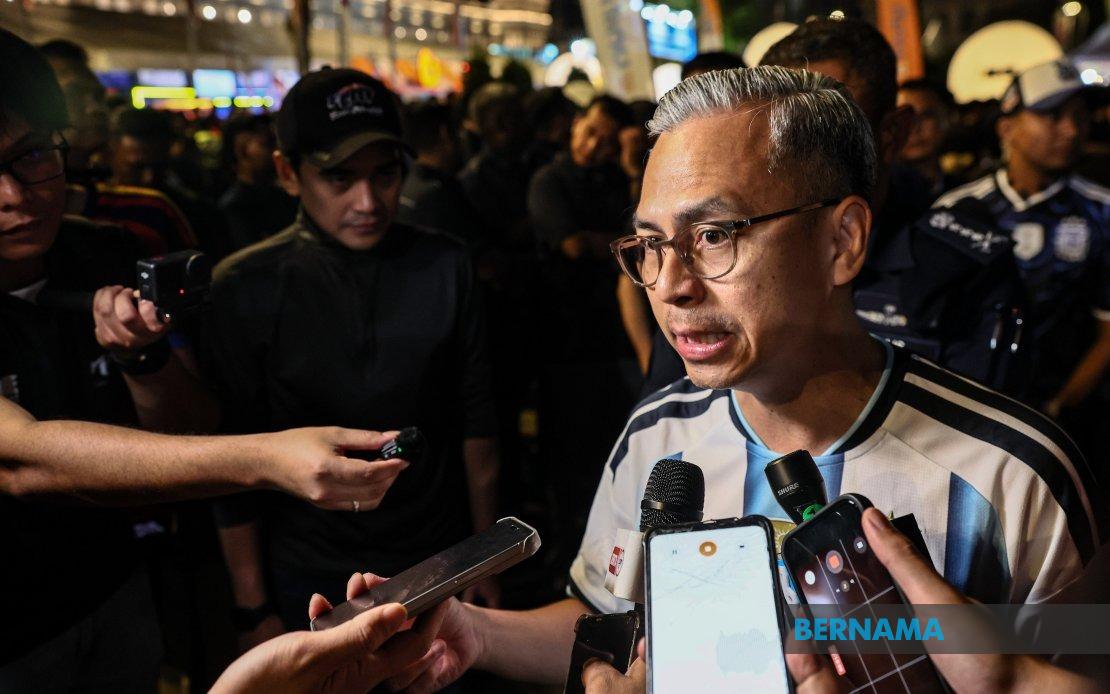
Radio Televisyen Malaysia (RTM) intends to significantly expand its sports broadcasting catalogue in the coming months, building momentum from its well-received free-to-air transmission of the entire 2026 FIFA World Cup tournament. Communications Minister Datuk Seri Fahmi Fadzil disclosed this development at an event held at Dataran Merdeka on July 20, signalling the government's commitment to ensuring Malaysians have equitable access to premium international sporting content without subscription barriers. The expansion represents a strategic shift in how Malaysia's national broadcaster is positioning itself within the increasingly competitive media landscape across Southeast Asia.
The minister's announcement came after Broadcasting Director-General Ashwad Ismail briefed him on RTM's intentions to secure broadcasting rights for multiple additional tournaments beyond the World Cup. While specific details about which sporting events have been targeted remain undisclosed, the initiative underscores confidence in RTM's technical capabilities and audience reach following the World Cup broadcast operation. The deliberate withholding of concrete information suggests that ongoing negotiations with international sports governing bodies are still in progress, and the Communications Ministry is exercising caution to avoid jeopardising any pending agreements or creating uncertainty among rival broadcasters.
RTM's World Cup coverage, delivered at no cost to Malaysian viewers across the nation, represented a significant undertaking that tested the broadcaster's infrastructure and operational capacity. The minister acknowledged that technical difficulties emerged during the initial stages of the transmission, a reality not uncommon when orchestrating global-scale sporting events with multiple feeds, commentary tracks, and simultaneous multi-platform distribution. However, RTM's technical teams successfully identified and resolved these issues before they could substantially impact viewer experience, demonstrating adaptive problem-solving and operational maturity. This troubleshooting capability will be crucial as the broadcaster takes on additional international broadcasting commitments.
The government plans to conduct a comprehensive analysis of the World Cup broadcast's performance metrics before finalising its strategy for future sporting events. The Communications Ministry intends to obtain detailed viewership figures for the tournament final, which will serve as the foundation for evaluating the entire broadcast operation's success. These statistics will provide insight into audience behaviour, viewing patterns across different demographics, and the effectiveness of the distribution strategy. Understanding how many Malaysians engaged with the free-to-air coverage, at what points viewers tuned in and out, and which platforms or devices they used will inform RTM's technical and editorial decisions for subsequent major events.
A noteworthy component of RTM's World Cup coverage involved exploring innovative distribution mechanisms beyond traditional television sets. The minister highlighted that the experience offered valuable lessons in deploying emerging technologies, particularly the ability to stream television content on smartphones and mobile devices. This digital-first approach resonates powerfully with Malaysian audiences, especially younger viewers who increasingly consume media through portable screens rather than fixed television equipment. The capability to watch major sporting events on smartphones removes geographical and accessibility barriers, particularly benefiting Malaysians in rural areas with limited cable infrastructure and those who consume content during commutes or work breaks.
The Broadcasting Director-General articulated a collaborative philosophy that challenges the zero-sum competitive model traditionally dominating sports broadcasting rights acquisition. Rather than viewing broadcasting rights as commodities to be hoarded exclusively, Ashwad Ismail proposed that RTM should function as a unifying focal point within Malaysia's media ecosystem. This approach would involve forming strategic partnerships with other local media organisations, pooling resources and expertise to deliver comprehensive coverage that serves the broader public interest. The vision reframes broadcasting rights not as competitive trophies but as tools for serving citizens' informational and entertainment needs.
This collaborative framework carries particular significance in Southeast Asia's broadcasting context, where fragmented rights ownership frequently results in Malaysian audiences losing access to major international events. When multiple broadcasters each own rights to different matches or competitions, casual fans often cannot follow events comprehensively. By positioning RTM as a coordinating body rather than an exclusive rights holder, the government suggests a more integrated approach that could theoretically improve overall content availability. The model also potentially reduces the financial burden on any single broadcaster, making it economically feasible for RTM to pursue additional rights acquisitions that might otherwise prove prohibitively expensive.
RTM's strategic pivot reflects broader government priorities around digital transformation, equitable access to information and entertainment, and the role of public broadcasting in a modernising media landscape. The MADANI government has positioned expanded sports broadcasting as consistent with its stated values of inclusivity and nation-building. Major sporting events, particularly the World Cup, function as cultural touchstones that unite Malaysians across ethnic, geographical, and socioeconomic boundaries. By guaranteeing free-to-air access to these events, the government reinforces the public broadcaster's relevance and demonstrates tangible commitment to ensuring all citizens can participate in shared cultural moments regardless of subscription capacity.
The expansion of RTM's sports portfolio will inevitably attract increased scrutiny from commercial broadcasters who have traditionally competed fiercely for international sporting rights. Private operators that have invested substantial sums acquiring exclusive rights may view RTM's collaborative approach and extensive reach as competitive threats to their business models. However, the government's emphasis on partnership rather than exclusivity suggests a pragmatic recognition that public and private broadcasters can coexist within Malaysia's media ecosystem, each serving different market segments and consumer preferences. Premium cable subscribers may still opt for dedicated sports channels offering enhanced commentary and supplementary content, while free-to-air viewers gain access to events they might otherwise miss entirely.
Looking forward, the success of RTM's World Cup broadcast operation and planned expansion represents a test case for public broadcasting's viability in Southeast Asia's increasingly commercialised media environment. Malaysia's experience could influence how other regional governments approach sports broadcasting rights and the role public institutions should play in content distribution. The outcomes of RTM's negotiations for additional rights, viewer response to expanded coverage, and the technical execution of future broadcasts will provide valuable evidence regarding whether collaborative, public-focused broadcasting models can compete effectively against commercial alternatives in attracting major international properties.
The announcement also carries implications for Malaysian sports fans' media consumption patterns and expectations. The guarantee of free-to-air access to premium international sporting content may reshape viewer behaviour, potentially reducing demand for subscription services dedicated to sports coverage and encouraging audiences to rely more heavily on public broadcasting. Conversely, commercial broadcasters may respond by investing in differentiated offerings, such as live studio analysis, exclusive interviews, or supplementary documentary content that justifies premium subscription fees. The competitive dynamics that emerge from RTM's expanded sports portfolio will likely redefine Malaysia's sports media landscape throughout the remainder of this decade.
The ministerial confirmation of RTM's expansion plans also indicates strong political backing for the national broadcaster's strategic direction and budgetary allocations. Government support will be essential for RTM to compete in what remains an expensive marketplace for international broadcasting rights, particularly for marquee events like the World Cup, Olympic Games, and continental football championships. The visible government investment in RTM's capabilities and reach suggests that policymakers view universal access to major international sports as a public good worthy of subsidisation through the national budget. This philosophical positioning distinguishes Malaysia's approach from some comparable nations where sports broadcasting has been increasingly privatised and monetised.

