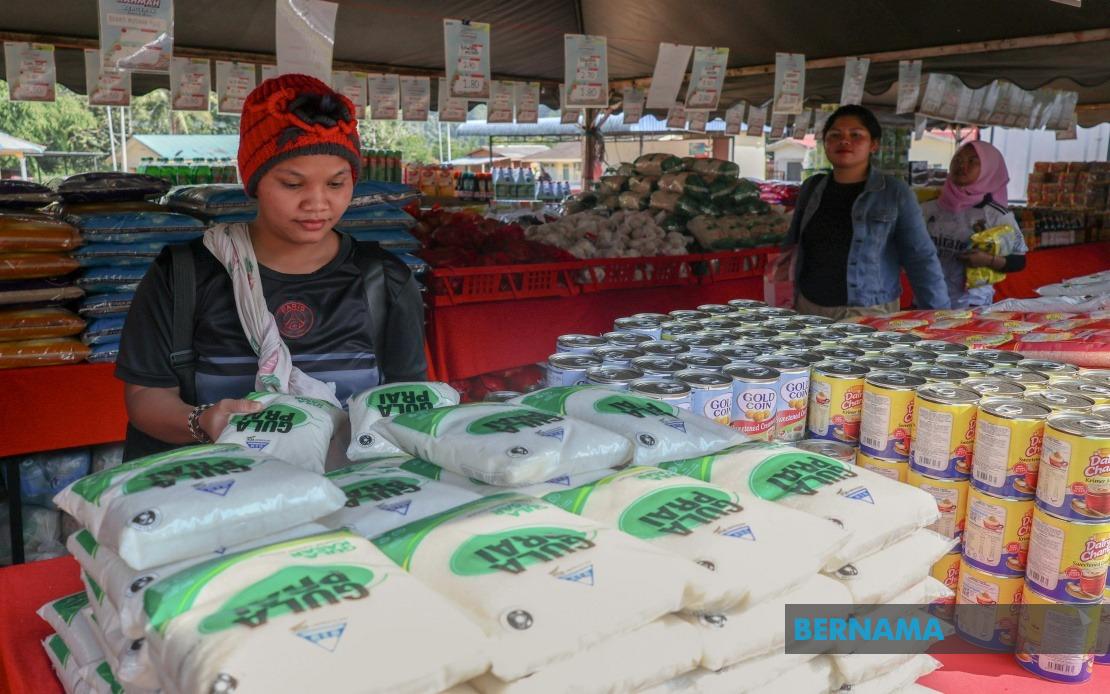
Malaysia's Domestic Trade and Cost of Living Ministry (KPDN) has declared the Essential Goods Distribution Programme a success in achieving uniform pricing for critical household items across rural and remote communities. The initiative, backed by RM250 million in annual funding, targets six states where geographical isolation has historically created substantial price disparities that place additional financial strain on lower-income families.
The challenge of affordability in dispersed communities has long been a persistent development issue in Malaysia. Rural residents, particularly in Sabah and Sarawak, have traditionally faced markups on essentials ranging from 30 to 50 percent above urban prices due to transportation costs, limited merchant competition, and logistical constraints. The programme directly addresses this equity concern by subsidising the supply chain and imposing price caps on seven key items: sugar, wheat flour, packet cooking oil, white rice, liquefied petroleum gas (LPG), RON95 petrol, and diesel. These products form the backbone of household budgeting in lower-income families throughout Malaysia.
Sabah has emerged as a primary beneficiary, receiving RM107.3 million of the RM250 million allocation this year. The state benefits from 78 distribution zones, 228 designated delivery areas, and 587 retail points, collectively serving approximately 492,566 residents. Within Sabah, the Libaran parliamentary constituency has received focused attention, with RM1.76 million allocated to serve 17,061 people through nine points of sale across eight distribution zones. These geographically precise allocations indicate a sophisticated targeting approach designed to maximise reach in the most isolated communities.
The programme's pricing impact illustrates the magnitude of adjustment necessary in remote markets. In Pulau Libaran, liquefied petroleum gas cylinders previously sold for RM39 per unit—nearly 47 percent above the controlled price—before the initiative brought them into line with the standardised rate of RM26.60. Similarly, packet cooking oil, a fundamental cooking staple, fell from RM3.50 to RM2.50 per packet, representing a 29 percent reduction. These price corrections translate into tangible monthly savings for households purchasing these goods regularly, effectively increasing purchasing power for other necessities.
The breadth of implementation is substantial. Across the six eligible states—Sabah, Sarawak, Terengganu, Kelantan, Pahang, and Kedah—the programme operates through 212 distinct zones and 828 distribution areas serviced by 1,532 points of sale. This network reaches 1.03 million residents, making it one of the most extensive price-regulation initiatives in Southeast Asia. The inclusion of both peninsular and East Malaysian states reflects federal commitment to territorial equity in cost of living management, an increasingly important political concern as income disparities between regions attract electoral attention.
To prevent diversion of subsidised goods and ensure supplies reach intended beneficiaries, KPDN has implemented oversight mechanisms including standardised delivery protocols and state-level monitoring committees. These control measures acknowledge historical leakage problems in subsidy programmes across the region, where black-market sales or diversion to higher-margin retail channels have sometimes undermined equity objectives. By establishing formal governance structures and monitoring procedures, the ministry attempts to create accountability whilst maintaining programme efficiency.
Evidence of public reception comes from a Programme Outcome Evaluation Committee assessment, which found substantial agreement among surveyed residents that the initiative directly improved their financial position. This positive feedback suggests the programme has achieved psychological and material confidence gains beyond mere price reduction, validating the government's framing of the initiative as a cost-of-living measure rather than mere subsidy distribution.
The programme's expansion to six states and 1.03 million beneficiaries represents significant budgetary commitment during a period when Malaysia faces mounting fiscal pressures. The annual RM250 million expenditure reflects policy prioritisation of rural living standards at a time when urbanisation and wealth concentration have intensified regional disparities. For Southeast Asian observers, Malaysia's approach offers a model for targeted price regulation that attempts to balance market mechanisms with social equity objectives.
Looking forward, the programme's sustainability depends on several factors: continued government funding amid competing budget demands, stable logistics networks capable of serving dispersed communities, and maintenance of merchant participation despite compressed margins. Should the initiative continue and potentially expand, it could influence regional thinking about managing cost-of-living crises in rural areas across ASEAN economies facing similar development challenges. The Malaysian experience suggests that geographically targeted subsidies, properly monitored and implemented through established distribution networks, can effectively narrow urban-rural price gaps without requiring economywide price controls that typically generate inefficiencies.

