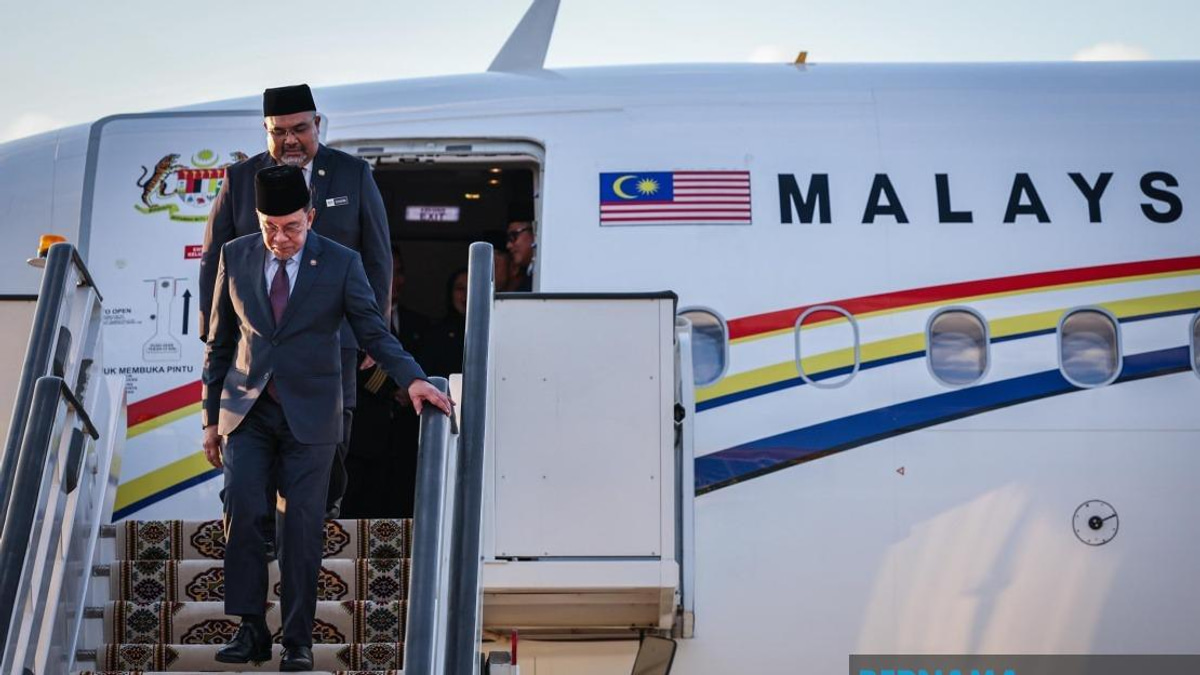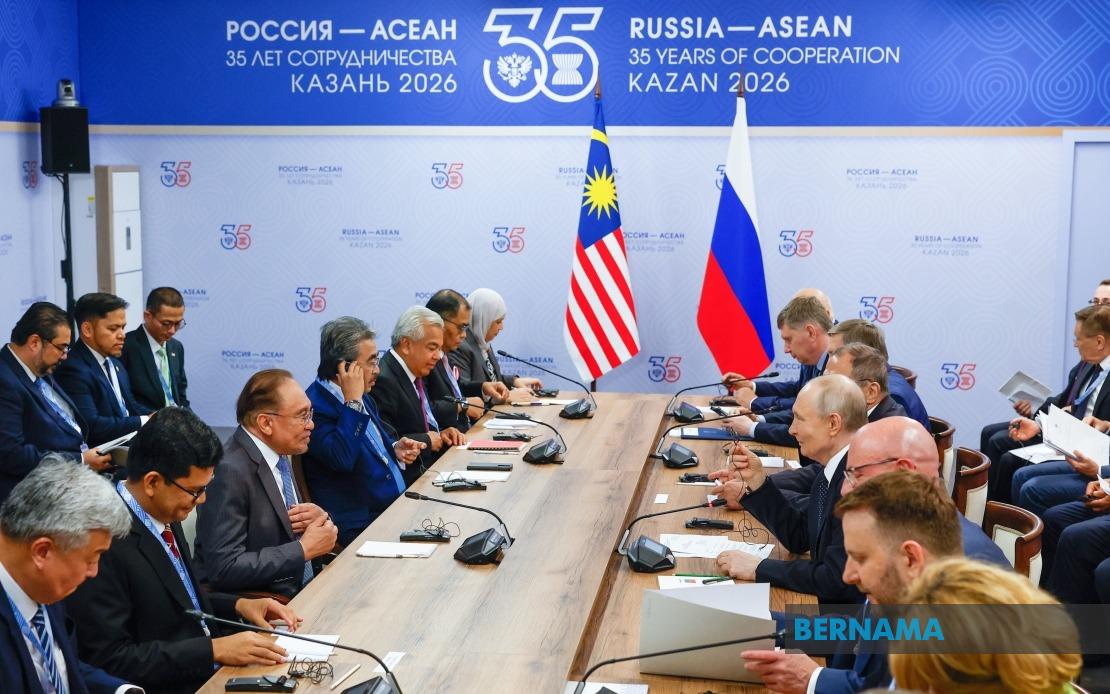
Russian President Vladimir Putin and Malaysian Prime Minister Datuk Seri Anwar Ibrahim have reaffirmed their commitment to expanding cooperation between Moscow and Kuala Lumpur, signalling renewed momentum in a relationship that will mark six decades of diplomatic engagement next year. The two leaders met on the sidelines of the ASEAN-Russia Commemorative Summit in Kazan, where Putin emphasised that the two nations possess a solid foundation upon which to build deeper ties across multiple sectors.
The approaching 60th anniversary of bilateral relations provides both countries with a significant opportunity to reflect on their partnership's trajectory and chart a course for enhanced engagement. Putin characterised the relationship as grounded in "substantive positive experience" and underscored the existence of meaningful institutional frameworks designed to facilitate ongoing cooperation. The milestone arrives at a time when geopolitical realignments across the Indo-Pacific are reshaping regional partnerships, making such affirmations of commitment between Russia and Malaysia particularly noteworthy for observers tracking evolving diplomatic configurations in Southeast Asia.
Trade performance between the two countries offers a concrete measure of deepening economic linkages. The bilateral trade volume increased by 12.9 per cent during 2025, a growth rate that Putin characterised as satisfactory and indicative of sustained commercial momentum. This expansion occurs amid broader efforts by both nations to diversify their economic partnerships and reduce dependencies on any single trading partner. For Malaysia, deepening commercial ties with Russia extends market access for domestic exporters whilst potentially diversifying sources of critical imports, particularly in energy and raw materials sectors where Russian supply capabilities remain significant.
Institutional mechanisms support the practical execution of joint initiatives between Moscow and Kuala Lumpur. An intergovernmental commission focused on economic, scientific, technical and cultural cooperation serves as the operational backbone for bilateral projects, whilst regular exchanges between ministerial departments, governmental agencies and parliamentary representatives maintain momentum across multiple policy domains. This structured approach to bilateral engagement contrasts with ad-hoc diplomatic interactions and reflects the maturity of a relationship spanning nearly six decades.
Beyond commercial considerations, Putin highlighted Russia's commitment to collaborative work in education, scientific research, technological advancement, and cultural exchange. These dimensions of engagement foster people-to-people connections and facilitate knowledge transfer across academic and professional communities. For Malaysian institutions and researchers, such partnerships can provide access to Russian expertise in sectors ranging from engineering and natural sciences to historical and cultural studies, enriching the intellectual ecosystem within the country.
Malaysia's role within ASEAN structures gained particular prominence in Putin's remarks, as he acknowledged Malaysia's leadership in advancing the Russia-ASEAN strategic partnership. The first summit-level meeting between Russia and the regional bloc occurred in Malaysia in 2005, establishing the nation as a natural gateway for Russian engagement across Southeast Asia. By affirming Malaysia's continued support for this strategic relationship, Putin recognised how Kuala Lumpur's diplomatic positioning within ASEAN corridors can amplify Russia's regional influence whilst providing Malaysian policymakers with leverage in regional negotiations and architecture-building exercises.
The personal dimension of diplomatic relations also featured in Putin's comments. His recollection of previous meetings with Malaysian leaders and his transmission of goodwill messages to His Majesty Sultan Ibrahim, King of Malaysia, underscored the importance both Moscow and Kuala Lumpur attach to continuity in political-level engagement. Such courtesies, whilst ceremonial in appearance, carry substantive significance in confirming the stability and respect underpinning bilateral interactions, particularly as political transitions and leadership changes occur within either nation.
For Malaysian policymakers, the reaffirmation of partnership with Russia addresses several strategic interests. As Malaysia seeks to maintain equidistant relationships with major powers whilst advancing regional integration, demonstrating robust ties with Russia provides diplomatic flexibility and prevents any appearance of exclusive alignment with Western-aligned partnerships. Simultaneously, the cooperation frameworks allow Malaysia to pursue pragmatic engagement on issues ranging from energy security to defence modernisation without triggering concerns among traditional Western partners given ASEAN's fundamental commitment to non-alignment.
The timing of this bilateral meeting during the broader ASEAN-Russia summit illustrates how Malaysia leverages its ASEAN membership to amplify bilateral diplomacy. By conducting high-level discussions within a multilateral framework, both countries signal to the international community their commitment to regional stability whilst pursuing bilateral interests. This diplomatic choreography reflects the sophisticated approach Southeast Asian nations employ when balancing relationships with competing global powers and regional interests.
Looking ahead to the 60th anniversary in 2026, both nations are likely to undertake commemorative activities that reinforce historical linkages whilst projecting contemporary cooperation onto the international stage. Such milestone celebrations provide opportunities to announce new joint initiatives, establish fresh institutional arrangements, or elevate existing relationships to higher levels of strategic significance. For Malaysia, utilising the anniversary as a platform to articulate its foreign policy vision and demonstrate its capacity to manage complex international relationships carries substantial symbolic value.
The broader context of Russia-Southeast Asia relations continues evolving as regional nations navigate geopolitical uncertainties and endeavour to maintain autonomy in their foreign policy choices. Malaysia's relationship with Russia exemplifies how smaller powers sustain multiple partnerships without sacrificing strategic flexibility, a balancing act increasingly essential as great power competition intensifies across the Indo-Pacific region.