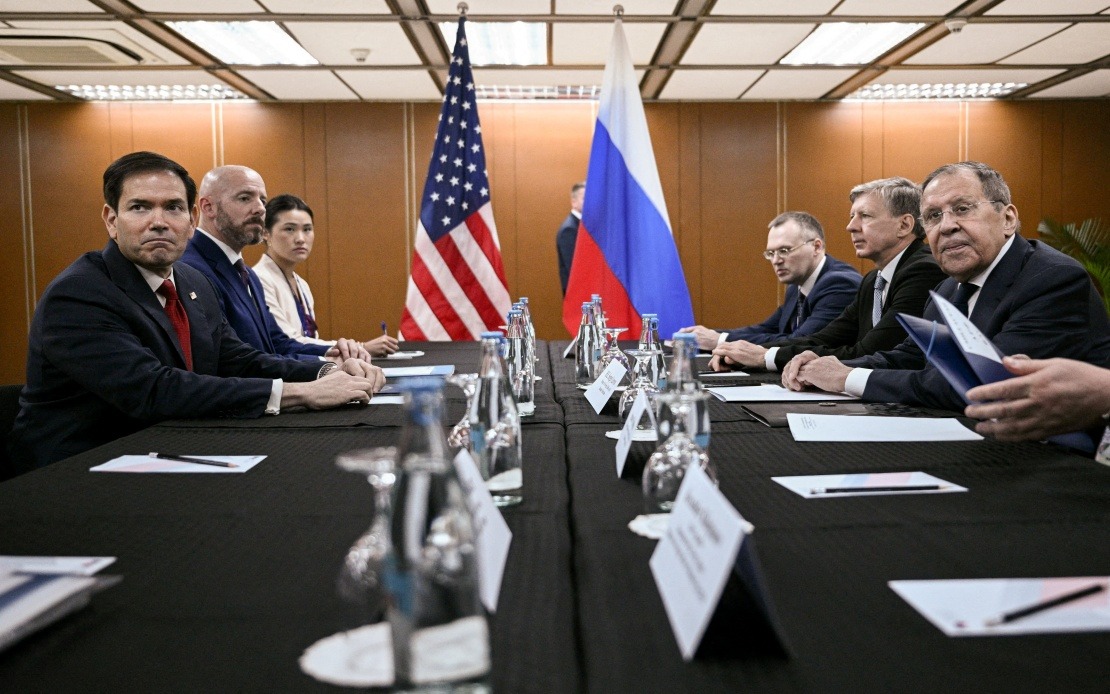
Russia and the United States have signalled their intent to preserve working relationships between their foreign policy establishments, with Foreign Minister Sergey Lavrov and Secretary of State Marco Rubio committing to ongoing contact through multilateral forums. The agreement emerged from their meeting in Manila, where the two officials discussed pathways for maintaining institutional dialogue even as their governments navigate deeper strategic divides across multiple regions.
The Russian Foreign Ministry's statement underscores a deliberate effort to compartmentalise diplomatic engagement, distinguishing between bilateral state-to-state relations and participation in international governance structures. This approach reflects a pragmatic recognition that complete severance of diplomatic channels would complicate cooperation on shared global challenges, from arms control verification to counterterrorism coordination and climate change protocols that require technical cooperation across multiple United Nations agencies and specialized bodies.
The agreement to continue contacts within international organisations has particular significance for Southeast Asia, where Russia and the United States maintain competing but overlapping interests. Both powers hold positions on the UN Security Council and participate in regional forums including the East Asia Summit, creating inevitable intersection points where diplomatic personnel must interact professionally. Malaysia and other ASEAN nations have consistently advocated for maintaining great power engagement within multilateral frameworks rather than seeing relationships fracture entirely, making this commitment to organisational channels a welcome development for regional stability.
A notable component of the Manila discussions involved restoring practical working conditions for diplomatic missions, indicating that previous disputes over embassy operations and consular staff access had created friction. These operational issues extend beyond symbolic concerns; they directly affect a foreign ministry's capacity to function, from visa processing to intelligence gathering and cultural exchange programmes. Normalising such arrangements suggests both capitals recognise that allowing administrative disputes to spiral into broader diplomatic ruptures serves neither party's interests.
The resumption of full cooperation between Russia's Roscosmos and the United States' NASA represents perhaps the most concrete outcome. Space exploration has traditionally served as a domain where Cold War adversaries maintained technical collaboration, and this sector's resurrection indicates recognition that scientific advancement requires transcending political divisions. The International Space Station partnership, which has endured through multiple crises, demonstrates how compartmentalised cooperation can function even during periods of acute geopolitical tension. For developing nations including Malaysia, which aspires to expand its space capabilities through international partnerships, the continued viability of US-Russia cooperation in this sector validates multilateral approaches to technological advancement.
Interparliamentary exchanges represent another avenue for maintaining bilateral connection at a level below executive branch diplomacy. Legislative visits and working groups allow elected representatives to understand opposing perspectives and build personal relationships that can moderate rhetoric during crisis periods. The agreement to develop these channels acknowledges that parliamentary diplomacy serves as a useful pressure valve when official relations deteriorate, offering space for dialogue without requiring immediate policy concessions from either government.
Cultural ties mentioned in the agreement carry strategic weight beyond their surface appearance. Exchange of scholars, artists, musicians, and students creates constituencies within both societies with vested interests in maintaining positive relations. These people-to-people connections establish networks that transcend government cycles and policy shifts, providing continuity when political relations strain. For Southeast Asian observers, the commitment to cultural development reflects lessons learned from previous periods when severed exchanges deepened misunderstandings.
The timing of this agreement warrants scrutiny within the broader context of US-Russia relations. While diplomatic channels require maintenance, the specific commitment to organisational frameworks rather than autonomous bilateral engagement suggests both parties recognise limits on what they will concede in direct negotiations. International organisations provide neutral territory and established protocols that constrain unilateral action, making them preferable venues for contact during periods of high tension. This distinction hints at continued disagreement on substantive matters even as procedural engagement continues.
For Malaysia and the broader Southeast Asian region, the preservation of US-Russia dialogue through international organisations carries implications for regional security architecture. ASEAN's centrality to emerging regional frameworks depends partly on great power willingness to engage through multilateral mechanisms rather than through bilateral domination. The commitment to organisational contacts suggests that neither Washington nor Moscow intends to use ASEAN as an arena for zero-sum competition, at least not in terms of completely dismissing dialogue partners.
The agreement also reflects practical realities of modern statecraft. Complete diplomatic rupture between nuclear-armed powers creates unacceptable risks of miscalculation. Maintaining communication channels through international organisations serves as a safety valve, allowing officials to clarify intentions and correct misunderstandings before situations escalate. This de-escalatory function remains valuable regardless of underlying geopolitical differences.
Looking forward, the success of these compartmentalised contacts depends on both governments' willingness to honour the agreement despite political pressures at home. In the United States, critics may argue that engaging Russian officials legitimises the Moscow government's policies. In Russia, some may view such contacts as concessions to Western pressure. Sustaining dialogue through international forums requires political leaders in both capitals to resist these domestic pressures and maintain strategic perspective about the long-term costs of complete diplomatic severance.

