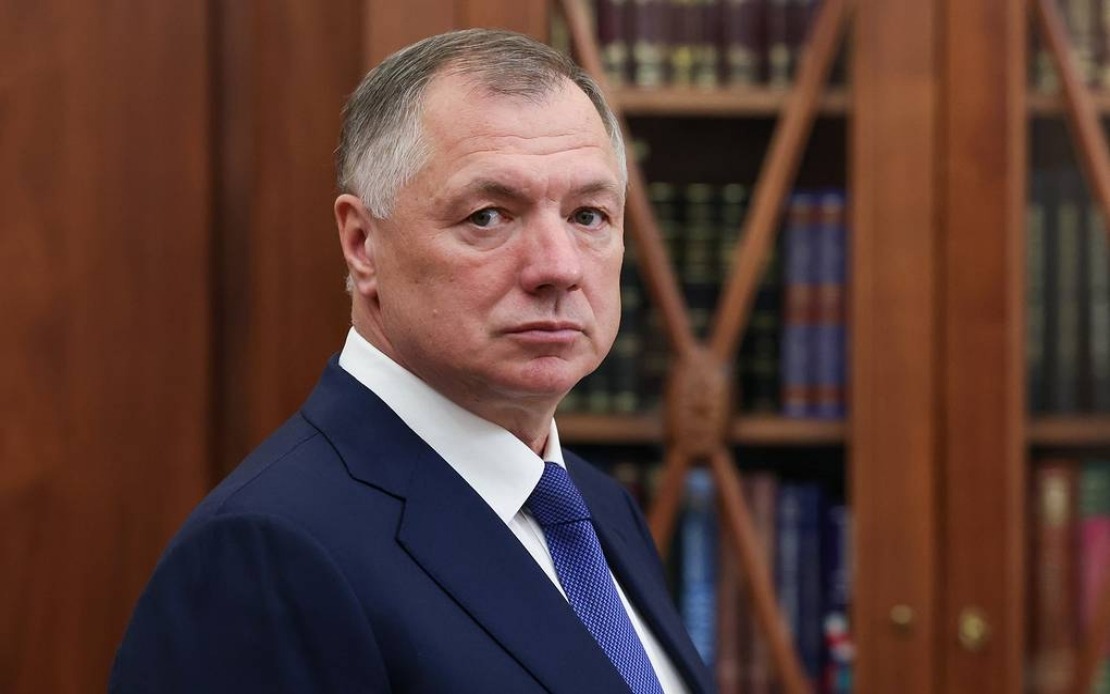
Russia is exploring the construction of a railway corridor stretching to the Indian Ocean, according to Deputy Prime Minister Marat Khusnullin, who outlined the ambitious infrastructure project as a strategic response to shipping vulnerabilities in critical global waterways. Speaking to TASS, Khusnullin emphasised that such a link would provide Russia with alternative routes circumventing the Bosphorus and the Strait of Hormuz, two of the world's most economically vital but geopolitically sensitive passages.
The proposed railway would traverse a complex corridor through Turkmenistan, Iran, Afghanistan, and Pakistan before reaching Indian Ocean ports, creating what Moscow views as a more stable and controllable transit pathway. Khusnullin's remarks reveal Russian thinking on long-term economic resilience, particularly as sanctions and regional instability continue to reshape global trade flows. The deputy prime minister indicated that any route ultimately providing access to Indian markets and ports would be strategically acceptable to Moscow.
For Southeast Asian observers, this Russian initiative signals deepening concerns among major powers about supply chain security through traditional maritime routes. The region, which relies heavily on Strait of Malacca shipping, understands acutely how geopolitical friction can disrupt global commerce. Russia's pivot toward overland alternatives demonstrates that alternative infrastructure corridors are becoming increasingly attractive to nations facing sanctions or security concerns.
The financial dimension of Russia's proposal is equally significant. Khusnullin stated that Russia's construction sector currently has capacity to absorb approximately one trillion rubles in annual investment. However, he argued that securing such financing for a five-year period would enable substantial expansion of construction capabilities and unlock additional projects beyond current capacity constraints. This suggests Moscow is contemplating a major domestic construction boom as a economic strategy during the current period of Western sanctions isolation.
The Strait of Hormuz has become an increasingly contested waterway. Roughly 25 per cent of global oil trade transits through this narrow passage, alongside approximately 20 per cent of liquefied natural gas shipments. Any disruption affects global energy markets immediately, with ripple effects across Asia-Pacific economies heavily dependent on Middle Eastern petroleum and LNG imports. Malaysian businesses and consumers, like those throughout Southeast Asia, remain vulnerable to price shocks stemming from Hormuz tensions.
Recent geopolitical developments have intensified these concerns. Following escalations between the United States and Iran in February, with major Iranian cities including Tehran experiencing attacks, the Islamic Revolutionary Guard Corps announced substantial retaliatory operations targeting facilities in Bahrain, Jordan, Iraq, Qatar, Kuwait, the United Arab Emirates, and Saudi Arabia. These developments underscore how Middle Eastern tensions directly threaten global maritime security.
Iranian authorities subsequently announced intentions to restrict Strait of Hormuz passage for vessels connected to the United States, Israel, and nations supporting military action against Iran. Such blockade threats, though potentially inconsistent with international maritime law, illustrate how regional powers increasingly weaponise control over critical chokepoints. For trading nations like Malaysia, which depend on predictable shipping routes and stable energy supplies, such developments represent genuine economic threats requiring contingency planning.
Russia's proposed Indian Ocean railway represents one response to these vulnerabilities, though its implementation faces substantial obstacles. Afghanistan's ongoing instability, sanctions-related financing constraints, and the technical complexity of constructing railway infrastructure through challenging terrain would require extraordinary political and financial commitment. Nevertheless, the proposal reflects broader emerging patterns whereby major economies seek to reduce dependence on vulnerable maritime chokepoints by developing alternative infrastructure.
The geopolitical context surrounding Russia's proposal merits particular attention for Malaysia and the region. As traditional Western-dominated shipping routes face increasing tension from US-Iran conflict, sanctions regimes, and regional instability, alternative trade corridors become strategically valuable. China's Belt and Road Initiative represents the most visible manifestation of this trend, but Russia's railway ambitions, though less developed, indicate that diversification of global trade routes appeals to multiple major powers.
For Southeast Asian economies, Russia's initiatives underscore why regional maritime chokepoints like the Strait of Malacca require sustained multilateral attention. If major powers successfully develop substantial overland alternatives to Hormuz, global oil markets might become less dependent on Middle Eastern shipping disruptions. Conversely, if Middle Eastern tensions worsen and maritime routes become unreliable, demand for alternative corridors would surge, potentially elevating the strategic and economic value of Southeast Asian territory and positioning.
The construction financing dimension of Khusnullin's remarks also deserves analysis. By proposing that secured five-year financing could unlock additional construction capacity, Russian officials signal their view that domestic infrastructure investment represents both economic stimulus and long-term strategic positioning. This approach contrasts with Western investment patterns and reflects Russian determination to pursue development priorities despite sanctions constraints.
Ultimately, while Russia's Indian Ocean railway proposal may remain aspirational rather than imminent, it reflects genuine strategic thinking about how geopolitical fragmentation reshapes infrastructure priorities. For Malaysia and Southeast Asia, these developments reinforce the importance of maintaining stable regional corridors, investing in port capacity, and monitoring how great power competition for alternative supply routes might create both opportunities and risks for the region's position as a critical global trade hub.

