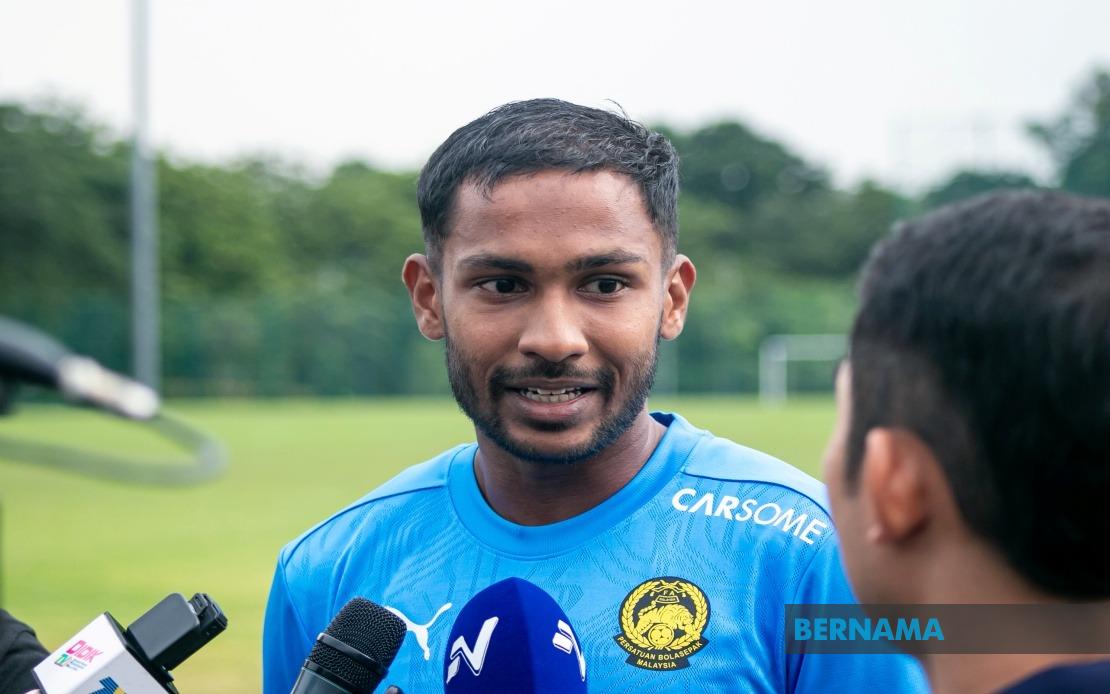
National team defender V. Ruventhiran has delivered an emotional call to action, urging Malaysian football fans to reclaim their place in the stands as Harimau Malaya embarks on its 2026 Hyundai ASEAN Cup journey. Speaking during a centralised training camp in Shah Alam, Ruventhiran articulated a vision of collective purpose that transcends the typical considerations surrounding domestic football, positioning fan support as integral to the team's campaign rather than peripheral.
The plea carries particular weight given Malaysia's opening assignment, a challenging away encounter against Myanmar at Thuwunna Stadium on July 25. Despite the disadvantage of beginning the group stage on foreign soil, Ruventhiran expressed optimism about the prospect of experiencing the familiar energy of Malaysian crowds during home fixtures. He specifically referenced the metaphorical "12th man"—the powerful influence of home support—as a determining factor in tournament performance, suggesting that atmospheric advantage could prove decisive during a gruelling continental competition.
Ruventhiran's framing of the issue as one of national identity rather than sporting entertainment reflects a broader discourse within Malaysian football circles about the relationship between domestic audiences and international representation. By explicitly divorcing the appeal from "this that or whatever," he was directing attention away from recent controversies or performance criticisms that might have dampened public enthusiasm. His statement underscores a common challenge facing national football programmes across Southeast Asia: sustaining fan engagement through periods of uncertainty or transition.
The defender's emphasis on the honour of representing Malaysia serves as a reminder of the intangible elements that professional athletes invoke when seeking to elevate performance beyond technical and tactical considerations. This psychological dimension becomes especially relevant in tournament football, where confidence and momentum can fluctuate dramatically based on crowd reaction and public perception. Ruventhiran positioned pressure not as a burden but as fuel, a reframing that suggests the squad views expectations as motivational rather than inhibiting.
Meanwhile, midfielder Aliff Haiqal Lokman Hakim Lau has approached his selection differently, viewing the tournament as a personal inflection point rather than a collective rallying cry. The Penang FC player emerged from a problematic season hampered by injuries that significantly curtailed his competitive minutes and development trajectory. For players returning from prolonged absence due to physical setbacks, international tournaments present paradoxical opportunities: the intensity and exposure can accelerate rehabilitation and confidence rebuilding, yet the heightened pressure and condensed fixture schedule also risk re-injury or psychological setback.
Haiqal's characterisation of the call-up as a "fresh start" reflects the psychological reset that many athletes require following injury disruption. The notion that he simultaneously commences a new chapter with his club Penang FC suggests a coordinated approach to rehabilitation, where both domestic and international football feature in his reintegration plan. His explicit desire to "prove something" indicates that reputation recovery forms part of his motivation alongside the conventional incentives of national team selection.
The midfielder's gratitude for the opportunity, coupled with acknowledgement of the struggle preceding it, illustrates a maturity in how modern professional athletes navigate setbacks. Rather than attempting to minimise or ignore the difficult period, Haiqal openly confronts it, positioning his current selection within a narrative arc of adversity and comeback. This approach resonates with Malaysian sporting culture, where stories of perseverance often attract stronger public identification than tales of uninterrupted success.
Harimau Malaya's Group B itinerary presents a demanding schedule that will test both squad depth and the consistency of individual players returning from injury. Beyond the opening Myanmar fixture, Malaysia faces Laos at the Kuala Lumpur Football Stadium in Cheras on July 28, followed by a Bangkok encounter against Thailand at Rajamangala Stadium on August 1, and a final group match against the Philippines on August 8, again at the Cheras venue. The domestic base for two matches offers the home advantage that Ruventhiran referenced, yet the spacing and geographic distribution across the region create logistical and physical demands.
The tournament structure itself—with top two finishers from each group advancing to two-legged semi-finals in mid-August before finals on August 22 and 26—compresses significant football into approximately five weeks. This compressed format favours nations that maintain cohesion and fitness throughout, potentially disadvantaging teams managing multiple injury returns or fatigue accumulation. For Haiqal and other recovering players, the intensity may serve as a proving ground or a trial too severe.
Southeast Asian football's regional importance, even in tournaments that encompass multiple nations, reflects both the competitive parity within the region and the significance such competitions hold for national sporting agendas. Malaysia's consistent participation and investment in such campaigns demonstrates commitment to continental competitiveness, though outcomes have proven variable historically. The 2026 edition will test whether Ruventhiran's appeal for unity can translate into tangible support, and whether players like Haiqal can capitalise on their comeback opportunities to elevate national performance and their individual profiles simultaneously.

