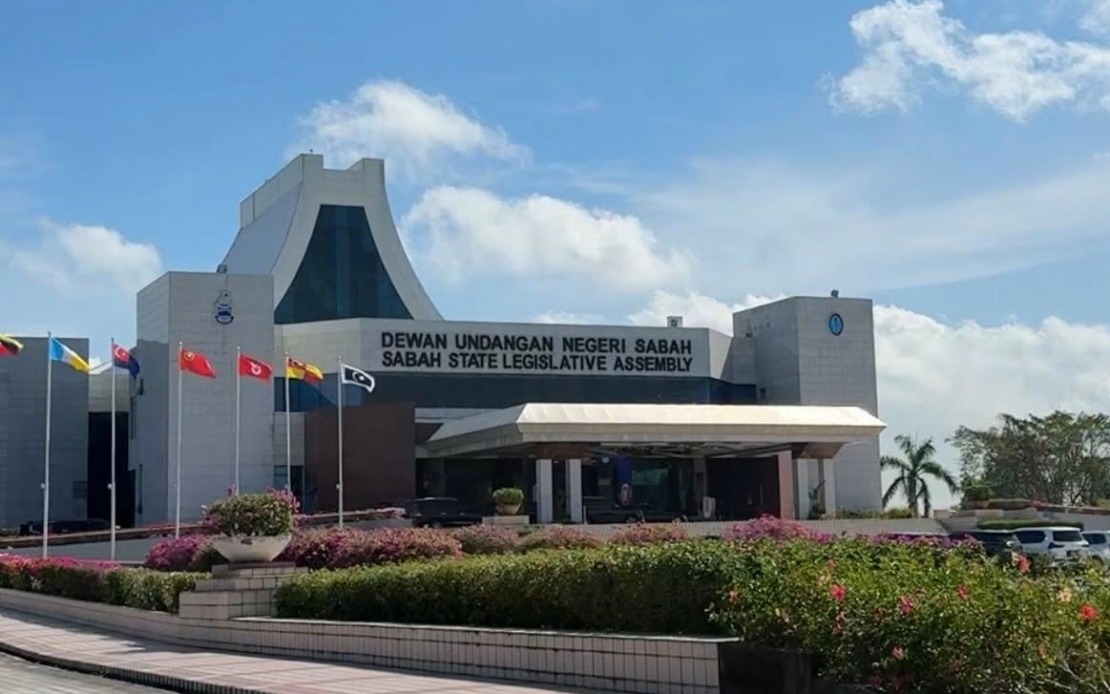
The Sabah Legislative Assembly has taken a significant step in modernising two critical areas of state law by approving both the Muslim Succession Bill 2026 and the Native Courts Bill 2026 in a session held in Kota Kinabalu on July 22. The simultaneous passage of these measures represents an ambitious attempt to address longstanding gaps in the administration of Muslim estates and customary justice, reflecting broader efforts across Malaysia to update legal frameworks to contemporary standards. Both bills were introduced by Sabah Local Government and Housing Minister Datuk Dr Mohd Arifin Arif, who holds concurrent responsibility for the state's Islamic Affairs portfolio, signalling the government's integrated approach to these governance issues.
The Muslim Succession Bill 2026 marks a watershed moment in Malaysian legislative history as the first piece of legislation specifically designed to govern the administration of Muslim estates under the jurisdiction and enforcement powers of the Syariah Courts. Prior to this enactment, Muslim inheritance matters in Sabah operated under general succession law frameworks that were not tailored to Islamic principles and requirements. The bill underwent deliberation from five assemblymen before receiving approval from state assembly speaker Datuk Seri M Kadzim Yahya, a process that allowed for substantive parliamentary examination of the proposed provisions.
During the tabling of the bill, Datuk Dr Mohd Arifin outlined four foundational pillars underpinning the legislation's design. The framework seeks to establish a systematised and transparent legal architecture specifically governing how Muslims inherit property and assets, moving beyond ad-hoc or customary practices that may lack clarity. A second consideration centres on protecting the legitimate entitlements of all potential heirs and beneficiaries, ensuring that the succession process respects the rights of widows, children, parents and other family members according to syariah principles. The third objective involves aligning the administration of deceased estates with established Islamic jurisprudence and interpretations, ensuring compliance with religious obligations and avoiding disputes rooted in doctrinal uncertainty.
The fourth and perhaps most pragmatic dimension addresses the critical issue of asset protection and proper management. The bill introduces mechanisms to prevent estate assets from being concealed, misappropriated, or transferred without authorisation from competent authorities. This safeguard is particularly important in a multi-generational context where assets may be vulnerable to misuse by administrators lacking sufficient oversight or accountability. The combination of these four elements suggests a sophisticated legislative response to challenges that have historically plagued estate administration across the Muslim world.
The Native Courts Bill 2026, approved after debate involving 12 assemblymen and ratified by deputy speaker Datuk Richard Wong We Kong, represents an equally transformative update to customary justice mechanisms. The existing Native Courts enactment has remained substantially unchanged since its enactment in 1992, meaning the legal architecture has now operated for over three decades without comprehensive reform. During this period, Sabah's judicial system has evolved considerably, and the customs and practices of native communities have continued to develop, creating a disconnect between the formal legal framework and contemporary realities.
Datuk Dr Mohd Arifin characterised the new bill as a comprehensive replacement that respects the historical continuity and cultural identity of Sabah's indigenous peoples while introducing modern operational structures. The legislation fundamentally restructures the hierarchy of native courts by establishing three tiers: a Native District Court at the foundation, a Native High Court in the intermediate position, and a Native Court of Appeal at the apex. This pyramidal structure mirrors the organisation of civil courts and creates a coherent system for appellate review and judicial consistency.
A particularly significant innovation within the bill concerns judicial appointments and the professionalisation of the native judiciary. Rather than staffing native courts based primarily on administrative position or seniority within government service, the new legislation mandates the creation of a Native Judicial Appointments Advisory Committee. This body will evaluate candidates based on explicitly stated criteria including transparency, demonstrated merit, formal qualifications, practical experience in customary law, and personal integrity. This represents a fundamental shift in judicial governance philosophy, prioritising specialist expertise in indigenous customary systems over bureaucratic hierarchy.
For Malaysian readers and broader Southeast Asian observers, these legislative developments carry significant implications. Both bills demonstrate Sabah's commitment to strengthening legal protections and governance frameworks in areas central to communities' daily lives and cultural identity. The Muslim Succession Bill responds to genuine operational challenges within Islamic inheritance administration, where the absence of specific statutory guidance has sometimes led to disputes, delayed settlements, and inefficient asset distribution. By providing clear rules and syariah court enforcement mechanisms, the legislation should enhance predictability and reduce litigation.
The Native Courts Bill similarly addresses the institutional credibility and effectiveness of customary justice systems. Many indigenous communities across Southeast Asia view formal state justice systems as culturally alien or unresponsive to their needs, creating incentives to resolve disputes through informal channels that may lack transparency. By professionalising the native judiciary and explicitly centring expertise in customary law, Sabah's reform attempts to position native courts as legitimate, effective dispute resolution forums that command respect from indigenous communities.
For Malaysian states considering similar reforms, Sabah's legislative approach offers a practical template. The bills demonstrate how statutory modernisation can respect cultural particularity and historical continuity while introducing contemporary governance standards. The emphasis on transparent appointments, merit-based judicial selection, and multi-tiered appellate structures reflects international best practices in justice system design without imposing alien institutional models.
These bills also resonate within the broader Malaysian constitutional context, where Syariah court jurisdiction and native customary law occupy important but sometimes contested spaces within the legal system. By explicitly empowering Syariah courts to administer Muslim estates and by strengthening customary justice institutions through the Native Courts reform, Sabah is reinforcing the legitimacy and capacity of these courts to serve their respective communities effectively.
The passage of both bills through substantive parliamentary debate—involving five and twelve assemblymen respectively—suggests they have achieved genuine legislative support rather than mere rubber-stamp approval. This deliberative engagement should strengthen the bills' implementation prospects and public acceptance. Looking forward, the success of these legislative frameworks will depend significantly on adequate resource allocation for judicial training, the effective functioning of the advisory committees, and the willingness of potential litigants to utilise the reformed systems rather than defaulting to informal dispute resolution mechanisms.

