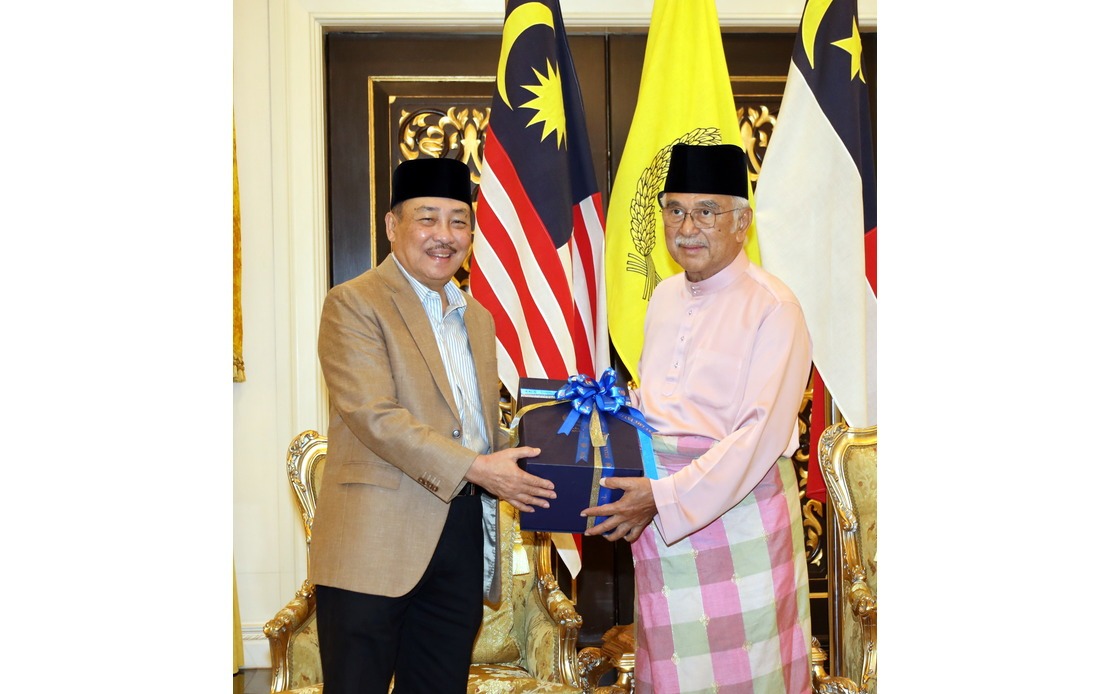
Sabah Chief Minister Datuk Seri Hajiji Noor has made a formal courtesy call on Melaka's Yang Dipertua Negeri Tun Dr Mohd Ali Mohd Rustam, reinforcing diplomatic and administrative ties between the two Malaysian states. The meeting, held at Istana Melaka in Bukit Beruang on August 14, underscores a broader pattern of high-level engagement between state leadership across the country, reflecting the collaborative framework that underpins Malaysia's federal system.
The visit represents more than ceremonial protocol. Such engagements between state leaders serve as crucial forums for addressing regional challenges, sharing policy insights, and identifying opportunities for cooperation that transcend state boundaries. In Malaysia's evolving political landscape, where state governments increasingly drive economic development and service delivery, these face-to-face interactions between chief ministers and governors carry substantial weight in shaping inter-state relations and coordinated approaches to national priorities.
Hajiji's delegation arrived at the Melaka palace at approximately 3.35 pm and was received by Tun Mohd Ali, with discussions centring on matters of mutual concern to both Sabah and Melaka. While the statement from the Sabah Chief Minister's Office remained measured in its characterisation, such meetings typically encompass trade opportunities, infrastructure development, shared best practices in governance, and coordination on matters requiring federal intervention.
The composition of Hajiji's accompanying delegation provides insight into the substantive nature of the visit. Accompanying the chief minister were Sabah Rural Development Minister Datuk Rubin Balang, Agriculture, Fisheries and Food Industry Minister Datuk Jamawi Jaafar, and Nominated Member of the Sabah State Legislative Assembly Datuk Mohd Razali Mohd Razi. This diverse ministerial representation indicates the visit touched on multiple policy domains, from agricultural cooperation to rural development initiatives that could benefit from cross-state experience sharing and coordination.
For Sabah, a state positioned on Malaysia's eastern flank and often focused on managing its unique geographic, economic, and demographic considerations, engagement with peninsular state leaders like Melaka carries strategic importance. Melaka, meanwhile, sits strategically within Malaysia's more developed peninsular corridor and serves as a critical hub for national economic activity. The dialogue between these regions reflects Malaysia's commitment to inclusive development that reaches beyond the established commercial heartland.
Rural development and agricultural sectors particularly benefit from such inter-state exchanges. Sabah's agricultural potential, combined with Melaka's more established markets and logistics infrastructure, creates natural synergies that state-level cooperation can unlock. With Datuk Rubin Balang and Datuk Jamawi Jaafar present, discussions likely explored how Sabah's agricultural output could be better integrated into national supply chains and how Melaka's experience in market development could inform Sabah's sector growth strategies.
The meeting concluded with afternoon tea, a traditional courteous gesture that formalises the relationship and provides informal space for candid dialogue beyond the structured agenda. These lighter moments often prove valuable in building personal rapport between leaders, facilitating more candid discussions on sensitive matters that might not be addressed in formal sessions.
From a broader governance perspective, such courtesy calls reflect Malaysia's institutional maturity in managing federalism. Unlike systems where state-federal tensions dominate discourse, Malaysia's approach emphasises bilateral state-to-state engagement as a mechanism for addressing common challenges collaboratively. This is particularly significant in economic policy coordination, where states increasingly must align strategies for investments, supply chain development, and workforce training.
For Malaysian readers, particularly those in Sabah and Melaka, this visit signals continued attention to inter-regional economic integration and cooperation. As Malaysia navigates post-pandemic economic recovery and competitive pressures in Southeast Asia, the coordination between state administrations becomes increasingly vital for maintaining momentum in development initiatives and ensuring equitable growth across all regions.
The timing of such visits also carries political significance within Malaysia's federal framework. High-level inter-state engagements demonstrate that regional governments operate within a cooperative rather than adversarial model, essential for Malaysia's stability and progress. As states compete for investment and talent, collaborative frameworks enable them to present a united front internationally while addressing domestic developmental priorities.
Looking ahead, such engagements are likely to intensify as states recognise the importance of regional economic blocs and integrated planning. The Sabah-Melaka relationship, strengthened through this visit, may catalyse further collaboration in areas ranging from tourism cooperation to technical knowledge transfer in governance and service delivery. These foundational relationships built through courtesy calls often mature into substantive policy collaborations that benefit ordinary citizens through improved services and expanded economic opportunities.

