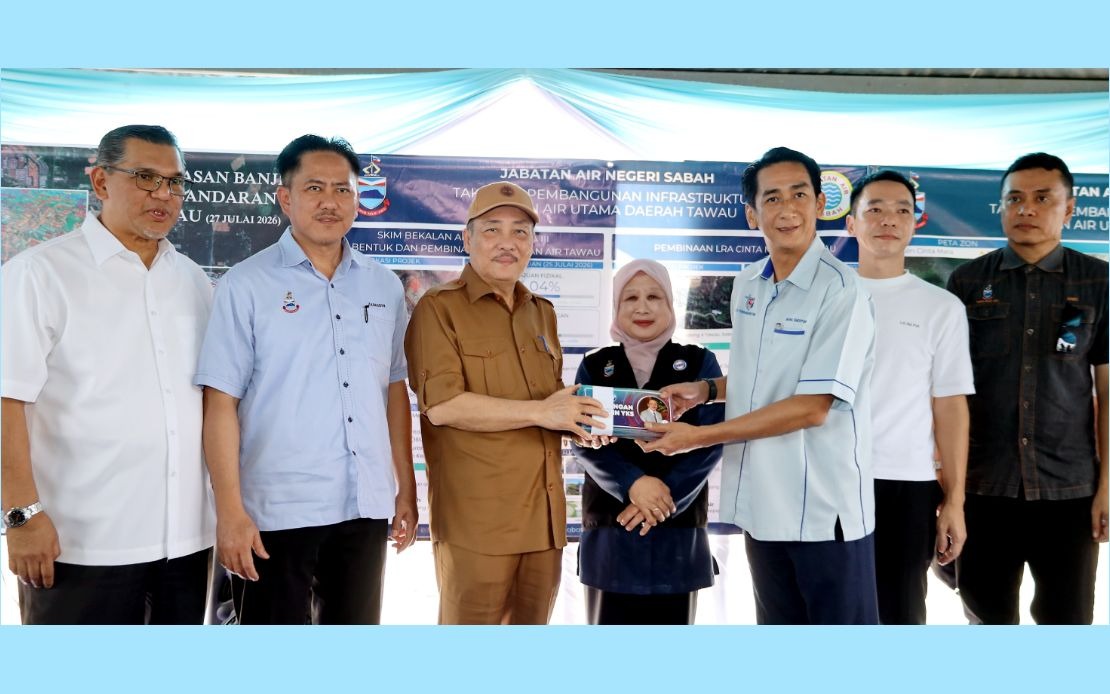
Sabah Chief Minister Datuk Seri Hajiji oversaw the distribution of emergency financial assistance totalling RM30,600 to families devastated by recent flooding in Tawau, underscoring the state government's commitment to rapid disaster relief. The contribution, channelled through Yayasan Kebajikan Sabah, reached 102 household heads affected by the July 25 deluge, with each recipient securing RM300 to help stabilise their immediate circumstances following the calamity. The presentation ceremony occurred at the Tawau Municipal Council, where the chief minister handed over the funds to council president Mohd Shoffian Mohd Said, signalling government coordination at multiple administrative levels in responding to the emergency.
The flooding event in Tawau, a major commercial and administrative hub in eastern Sabah, displaced 362 residents who sought shelter at Dewan Serbaguna Kompleks Sukan Tawau during the peak of the crisis. The scale of evacuations indicated the severity of water surge and inundation affecting residential areas, particularly low-lying communities vulnerable to seasonal monsoon patterns. While the RM300 per household allocation represents a modest immediate relief measure rather than comprehensive recovery funding, it reflects recognition that displaced families face urgent needs ranging from temporary accommodation to replacing damaged household essentials and foodstuffs.
Hajiji used the occasion to acknowledge the multifaceted emergency response effort that mobilised across state and federal agencies. The Civil Defence Force, Royal Malaysia Police, and Fire and Rescue Department coordinated rescue and evacuation operations, whilst the Health Ministry ensured medical support and disease surveillance in relief centres. The Tawau disaster management committee, comprising local government officials, community leaders, and agency representatives, orchestrated logistics and information dissemination throughout the emergency period. This institutional recognition reflects Malaysia's established disaster management framework, which emphasises inter-agency cooperation and clearly defined roles during natural emergencies.
The distribution mechanism through Yayasan Kebajikan Sabah highlights the role that state-level foundations play in supplementing government budget allocations for disaster response. These charitable entities, often endowed through state government contributions or revenue streams, provide flexibility in channelling emergency assistance without requiring lengthy parliamentary appropriations. For Sabah, which regularly experiences monsoon-related flooding in its eastern coastal areas including Tawau, Sandakan, and Lahad Datu, maintaining rapid-deployment relief channels proves essential for mitigating economic and social disruption. The foundation model enables government leadership to demonstrate compassionate governance whilst maintaining fiscal discipline.
Tawau's vulnerability to flooding stems from its geography and climate. Located on the southeastern coast of Sabah near the Celebes Sea, the municipality experiences the northeast monsoon season from November through March, though tropical downpours can occur year-round. The July 25 flooding appears linked to intense rainfall or a confluence of tidal and precipitation factors. Urban development, including informal settlements in low-lying areas and potentially compromised drainage infrastructure in older commercial districts, compounds flood risk. For Malaysian readers across other flood-prone states such as Johor, Pahang, and Kelantan, the Tawau experience reinforces ongoing concerns about climate resilience and infrastructure adequacy in rapidly urbanising areas.
The RM300 allocation per household, whilst modest, serves several practical purposes beyond mere financial transfer. Families can prioritise immediate needs such as restocking food supplies after losing stored provisions to floodwaters, purchasing replacement clothing and bedding, or contributing toward temporary repairs to housing. In the Malaysian context, where extended family networks often provide secondary support mechanisms, even small injections of cash preserve household autonomy and reduce dependency on informal credit arrangements that can perpetuate poverty cycles. Government economists recognise that rapid micro-level assistance prevents secondary economic damage, such as school dropout or parents missing work during recovery periods.
The formal acknowledgement of frontline responders carries political significance beyond ceremonial courtesy. Malaysia's emergency services operate under considerable strain, responding to flooding, landslides, industrial accidents, and security incidents with limited budget growth relative to expanding urbanisation. Public recognition by senior political figures validates these agencies' contributions and reinforces recruitment and retention in demanding roles. For federal agencies like the Civil Defence Force and Fire and Rescue Department operating across multiple states, such validation from state leadership strengthens cooperative relationships essential for seamless disaster response.
For Malaysian and Southeast Asian observers tracking climate adaptation, the Tawau case illustrates a persistent governance challenge: reactive relief versus preventive investment. Emergency distributions address immediate suffering but do not resolve underlying infrastructure deficits. Building resilient drainage systems, establishing early warning networks, implementing flood-resistant building codes, and relocating vulnerable populations require sustained capital expenditure and coordination across development cycles. Sabah, like other Malaysian states, must balance competing fiscal priorities whilst governments globally face increased pressure from more frequent and intense weather events linked to climate change.
The incident also underscores regional patterns within Malaysia regarding disaster preparedness. Peninsular states such as Selangor and Johor experience economically costlier floods due to higher population density and industrial concentration, yet East Malaysian states like Sabah face proportionally greater challenges accessing resources and coordination. The foundation-based relief model, whilst pragmatic for immediate response, depends on consistent funding and transparent distribution mechanisms. Transparent governance in disaster aid distribution builds public trust, encourages future charitable contributions, and establishes precedent for equitable treatment across disaster-affected communities regardless of political affiliation.
Moving forward, stakeholders from municipal councils to state planning authorities must integrate flood resilience into infrastructure planning and development approval processes. Early warning systems linked to Malaysia's meteorological department, community education campaigns, and coordinated evacuation drills reduce casualty risk and protect livelihoods. The Tawau flooding serves as reminder that whilst emergency relief demonstrates political compassion, structural resilience provides enduring protection. As Sabah and Malaysia confront intensifying climate variability, the balance between relief generosity and prevention investment will increasingly determine communities' long-term prosperity and security.

