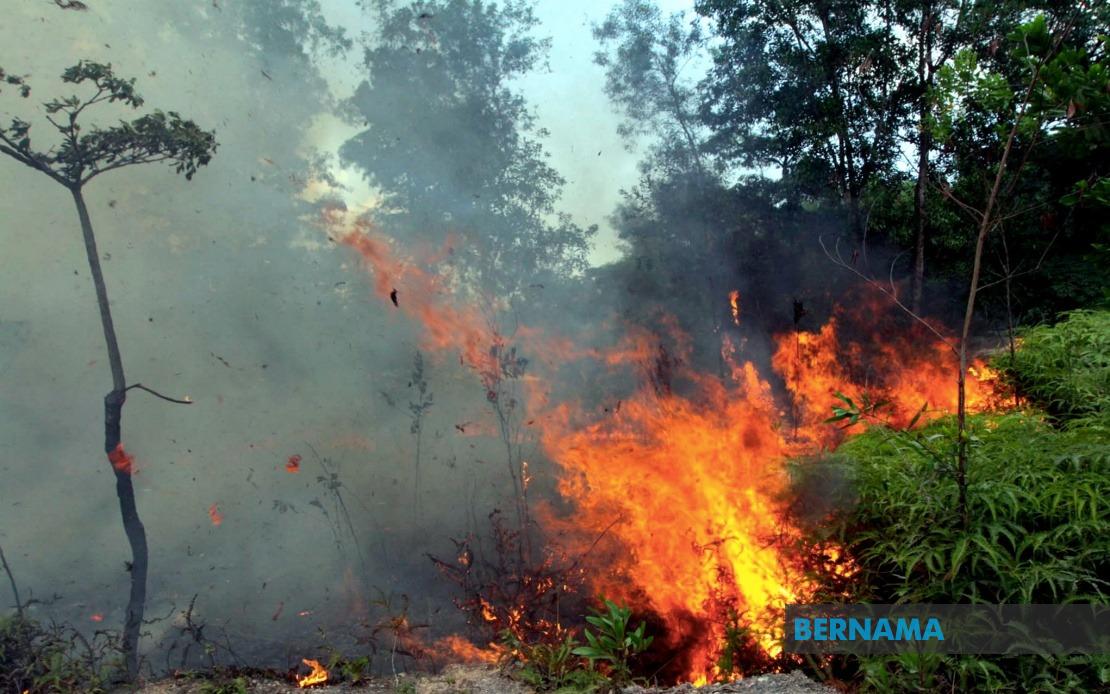
The Sabah Fire and Rescue Department has mounted an urgent public advisory against open burning as smoke from active forest fires in neighbouring Indonesian Kalimantan begins to degrade air quality across the state. According to director Mohd Pisar Aziz, the transboundary haze phenomenon has already reached populated zones including Kota Kinabalu and Kimanis, with southern and central Borneo's wind patterns channelling thick smoke plumes towards the northern portions of the island.
The timing of this haze incursion coincides with particularly favourable conditions for fire propagation across the region. The combination of elevated temperatures and prolonged dry spells has created an environment where atmospheric moisture is critically depleted, making vegetation exceptionally susceptible to ignition and rapid spread. Mohd Pisar emphasised that community cooperation remains fundamental to preventing the situation from deteriorating further, cautioning that open burning practices—already classified as illegal—pose compounded risks during such meteorological conditions.
Real-time air quality measurements recorded on August 11 indicated that Sabah's atmospheric conditions had crossed into moderate pollution territory. Kota Kinabalu, the state capital, registered the highest Air Pollutant Index reading at 83 points, trailed by Politeknik Kota Kinabalu at 81 and the coastal district of Kimanis at 76, according to the Air Pollutant Index Management System. While these figures technically remain within moderate parameters rather than hazardous thresholds, the trajectory and source of the pollution warrant serious consideration among vulnerable population segments.
Certain demographic groups face disproportionate health consequences from elevated airborne particulate matter, regardless of official API classifications. Individuals with pre-existing respiratory conditions such as asthma, paediatric populations whose pulmonary systems are still developing, and elderly persons with cumulative respiratory wear face heightened vulnerability to haze-related deterioration. Mohd Pisar consequently advised these high-risk cohorts to implement additional protective measures including mask usage and activity restriction, extending precautions beyond what the moderate readings might otherwise suggest necessary.
The drought conditions affecting specific regions have triggered implementation of formal open-burning prohibitions. Both Keningau and Pitas districts had experienced seven consecutive days without meaningful precipitation through August 10, satisfying the technical criteria established for invoking regional burning bans. These restrictions categorically prohibit the incineration of domestic refuse, dried vegetation, garden materials, construction debris, and comparable combustible substances capable of contributing to atmospheric degradation during haze episodes.
The practical health guidance disseminated by authorities addresses the temporal dimension of haze intensity, which typically exhibits diurnal variation. Members of the public have been counselled to minimise outdoor engagement during the afternoon window between 11 am and 4 pm, when solar heating intensifies stagnation of ground-level pollutants. Concurrently, maintaining adequate hydration assumes particular importance when breathing compromised air, as respiratory irritation and increased fluid loss accompany prolonged exposure to particulate-laden atmospheres.
Fire prevention measures extend beyond restricting open burning to encompass electrical safety protocols and vigilant waste management. The department has circulated guidance recommending household inspection of wiring integrity to prevent accidental electrical ignition, particularly given the propensity for dry conditions to render structures and furnishings combustible. Cigarette disposal practices likewise demand heightened attention, as carelessly discarded smoking materials can ignite ground-level vegetation in desiccated conditions where fire containment becomes exceptionally difficult.
The haze situation reflects a recurring seasonal challenge for Malaysian Borneo, stemming from the geographic reality that Indonesian territory occupies the southern and central portions of the island. Forest degradation and agricultural conversion in Kalimantan have progressively reduced natural fire suppression mechanisms, making anthropogenic burning for land clearance increasingly problematic during dry seasons. The prevailing wind patterns during these periods ensure that emissions drift northward into Malaysian airspace, creating an asymmetric environmental problem where actions taken across the border directly degrade conditions locally.
For Malaysian stakeholders, the immediate imperative centres on individual compliance with burning restrictions and heightened fire vigilance. The emergency contact line 999 has been designated for reporting suspicious activities or developing fires, enabling rapid response deployment. However, the longer-term challenge involves regional cooperation on transboundary fire management, coordination of enforcement mechanisms, and addressing underlying drivers of forest clearance burning in Indonesian jurisdictions that generate these periodic haze episodes affecting Sabah's population and economy.

