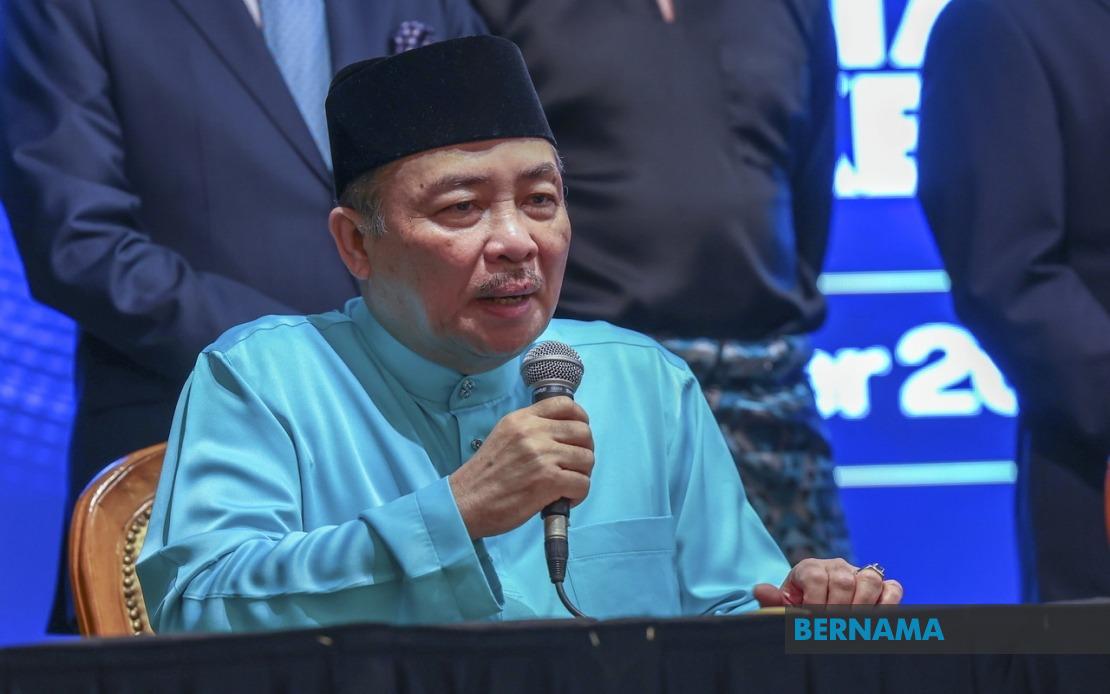
Sabah Chief Minister Datuk Seri Hajiji Noor has announced that the state is allocating more than RM100 million towards its scholarship initiatives this year, with the funds directed to both sustaining support for current scholars and welcoming 2,182 fresh recipients into the programme. This substantial financial commitment reflects the eastern Malaysian state's determination to prioritise education as a cornerstone of socioeconomic advancement, even as households grapple with mounting cost-of-living pressures across the region.
The Sabah State Government Scholarship (BKNS) has grown into one of the state's flagship educational support mechanisms. With over 13,389 students now benefiting from the scheme across various educational levels, the initiative demonstrates the tangible reach of state-level investment in human development. The emphasis on supporting students pursuing Science, Technology, Engineering and Mathematics fields reveals a strategic alignment with emerging labour market demands, particularly within sectors pivotal to Sabah's economic trajectory.
Hajiji's articulation of the scholarship programme within a broader educational vision highlights the interconnectedness of state policies. Beyond the main BKNS scheme, Sabah has introduced 14 supplementary assistance initiatives since 2021, each designed to address specific financial barriers that prevent capable students from pursuing further education. These programmes include the one-off Higher Education Institution Registration Cash Assistance (BUDI), which eases the burden of enrolment fees, and the Sabah Student Flight Ticket Assistance (GRS-SUBFLY), which tackles the particular challenge of inter-island travel costs for students in this geographically dispersed state.
The introduction of programmes such as the Special Examination Cash Assistance (BAKTI) and Ihsan Computer Assistance (BAIK) reveals an understanding that educational costs extend beyond tuition. Students face examination fees, digital device requirements, and registration expenses that can collectively prove insurmountable for lower-income families. By disaggregating these costs and creating targeted relief mechanisms, the state government has created a more comprehensive safety net than traditional scholarship alone could provide.
Education policy in Malaysia's states increasingly reflects recognition of external economic pressures on households. The timing of Sabah's announcement, coupled with explicit reference to rising living costs and education expenses, positions the scholarship expansion as a counter-measure to inflationary trends affecting families across Southeast Asia. For Malaysian readers familiar with similar pressures in their own states, this Sabah initiative offers both a benchmark for state-level commitment and insights into diverse approaches to educational financing.
The State Higher Education Student Contribution scheme (SENTOSA) represents a particularly innovative component of Sabah's approach. Rather than viewing student support as purely grant-based, this mechanism acknowledges that some families possess limited capacity to contribute yet retain agency within the system. Such tiered approaches to financing education remain relatively uncommon across Malaysian states and merit closer examination as models for replication elsewhere.
Hajiji's strategic emphasis on specific sectoral pathways—oil, gas and energy industries, Technical and Vocational Education and Training, and Artificial Intelligence—signals that scholarship allocation in Sabah operates within a deliberate economic development framework. This contrasts with undirected scholarship systems and suggests that the state government views educational support as an active labour market policy. For students in secondary and tertiary institutions, this means scholarship availability increasingly correlates with alignment with state-identified priority sectors.
The promotion of TVET pathways within scholarship criteria carries particular significance for Southeast Asian readers. While university degrees remain culturally privileged across the region, technical and vocational qualifications address genuine and growing labour shortages in skilled trades and technical roles. Sabah's integration of TVET into its scholarship programme implicitly validates these alternative educational pathways and potentially shifts perceptions among families considering their children's educational trajectories.
Artificial Intelligence emerges as a notable addition to Sabah's priority fields, reflecting global technological shifts now penetrating state-level policy frameworks across Malaysia. The inclusion suggests that even regional governments increasingly recognise AI competency as foundational to future economic competitiveness. For students in other Malaysian states and territories, Sabah's prioritisation of AI-related studies offers a signal about emerging labour market opportunities and the sectors likely to drive economic growth over the coming decade.
The RM100 million allocation, while substantial, must be contextualised within Sabah's broader budgetary constraints and revenue base compared to wealthier Malaysian states. This investment thus represents a proportionally significant commitment to education from a state government managing competing developmental priorities. The decision to expand scholarship access during a period of economic uncertainty underscores official prioritisation of education as essential infrastructure rather than discretionary spending.
For Malaysian policymakers observing from other states, Sabah's multi-instrument approach to educational support offers operational lessons. Rather than relying on a single scholarship scheme, the proliferation of targeted assistance programmes allows the state to address diverse barriers to education simultaneously. A student might receive BUDI support for registration, BAKTI for examination costs, and potentially BAIK for computer access, creating cumulative support that exceeds what any single programme could provide.
The emphasis on ensuring Sabah children access quality education reflects demographic and equity considerations particularly acute in an ethnically diverse state with significant geographic dispersal. Educational equity across rural and urban areas, alongside support for students from lower-income households, becomes more complex to achieve in Sabah's context than in more densely populated peninsular regions. The scholarship programme's scale thus addresses not merely individual aspiration but state-wide developmental equity.
Moving forward, the sustainability of this RM100 million commitment alongside the maintenance of 14 existing assistance programmes will depend upon Sabah's fiscal position and prioritisation of education within competing budgetary demands. For students and families across Malaysia and Southeast Asia, however, the Sabah model demonstrates that state governments possess meaningful levers to support educational access, even within constrained fiscal environments. The initiative suggests that educational expansion need not await federal direction alone.

